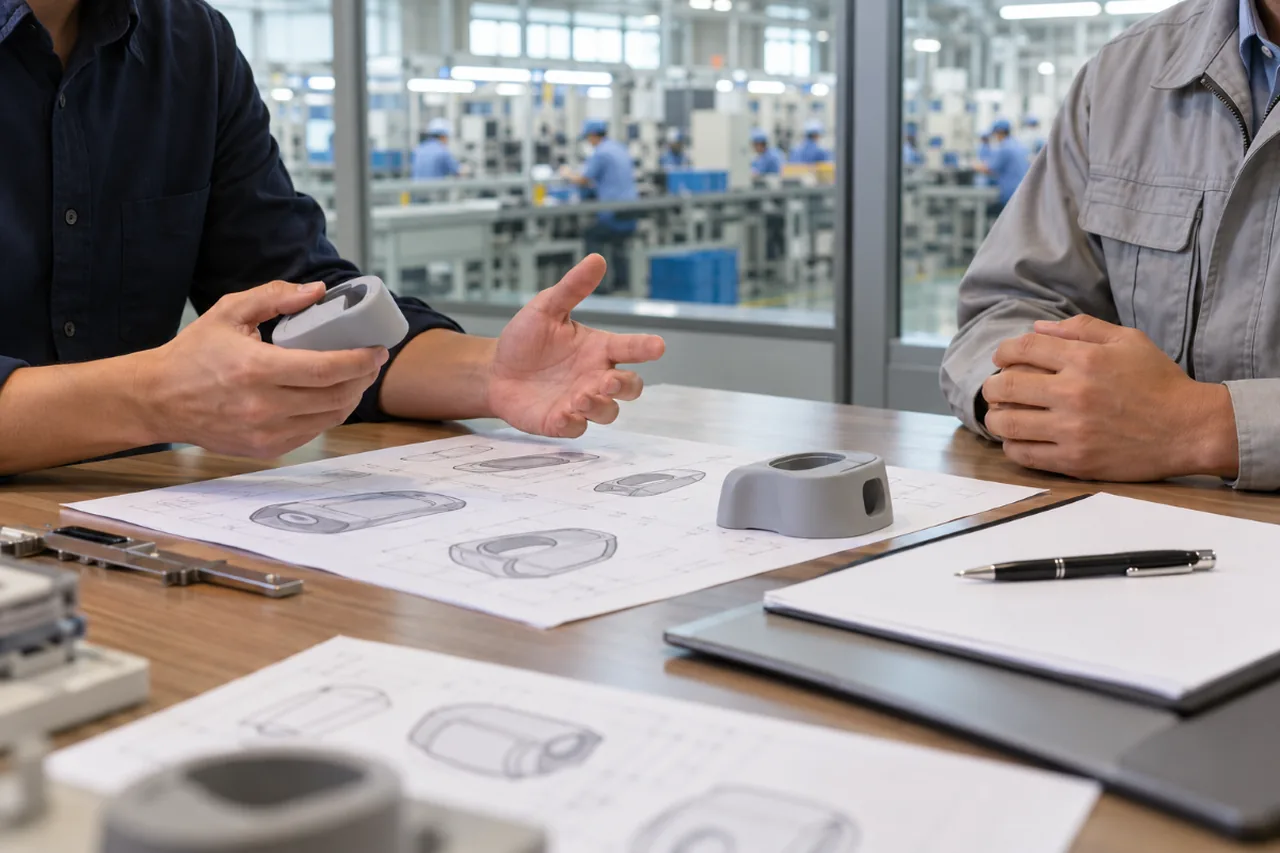
Yes, sign an NDA with a manufacturer before it sees your drawings, CAD files or prototype. Every shop you pay to quote, prototype or produce your product should sign first. If the factory is in China, ask for an NNN agreement, which adds non-use and non-circumvention terms to the usual promise of secrecy.
But an NDA has 3 limits. It won't stop a confidential sale from counting against your patent. It doesn't decide who owns your mold. And it can't register your brand in China, where the first valid trademark application owns the mark.
Every conversation with the 52Launch team is covered by a mutual NDA, acknowledged when you submit our first signup form. We've launched 730+ consumer products through a network of 170+ manufacturing partners.
What is an NDA with a manufacturer?
An NDA with a manufacturer is a contract that stops a factory, prototype shop or supplier from sharing your designs, files, samples and pricing, or using them for anything except your job. It keeps your confidential information private while you get quotes and build the product. It doesn't give you a patent or ownership of the idea.
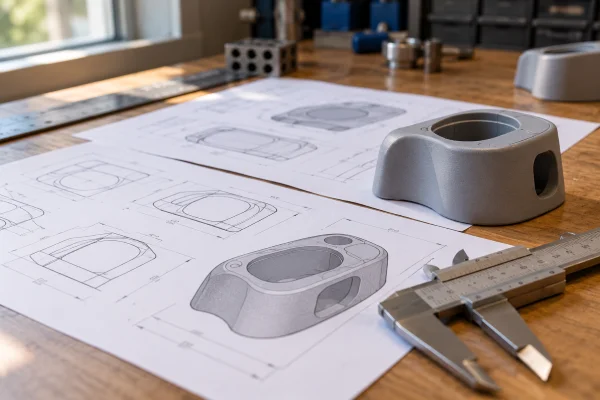
List what the NDA covers in plain words: CAD files, drawings, samples, the bill of materials, target pricing and your supplier list. A vague list invites an argument later.
The NDA does legal work too. Federal trade secret law, at 18 U.S.C. 1839, only protects information whose owner has taken reasonable measures to keep it secret. A signed NDA is evidence you took that step.
Who should sign before seeing your design
Anyone you pay to work on your design should sign before the files go out. Investors are the exception: most won't sign, so plan your pitch around that.
| Who sees your design | What to have in place | What to watch for |
|---|---|---|
| Prototype or machine shop | One-way NDA before you send CAD files | Who owns any design changes they suggest |
| US contract manufacturer | NDA plus a manufacturing agreement | Who owns the tooling and where it's stored |
| Factory in China | NNN agreement, plus your trademark filed in China | Bad-faith trademark filings by third parties |
| Product development firm | Mutual NDA, like the one 52Launch uses from first signup | Which outside suppliers will see your files |
| Patent attorney or agent | No NDA needed: USPTO rules 37 CFR 11.106 and 11.118 bar practitioners from revealing what you tell them, even in a first consultation | Confirm they're registered with the USPTO |
| Investor | Assume no NDA | Keep CAD files and supplier names out of the deck |
Shops you pay have the least reason to refuse, because confidentiality is part of the job. Your patent attorney doesn't need an NDA at all, and our directory of patent attorney partners lists 50+ independent firms in 30+ US cities if you don't have one yet.
Investors pass on NDAs because signing would limit every other deal they review in your category. A strong pitch works without one. It leads with what the product costs to make, market and ship, and it keeps CAD files out of the deck.
NDA or NNN: which does a factory in China need?
Use an NNN agreement. It covers non-disclosure, non-use and non-circumvention, so the factory can't share your design, make it for anyone else or sell around you to your customers.
The EU's China IP SME Helpdesk, a European Commission service, says NDAs are widely used in China and accepted by Chinese courts. For products not covered by registered IP, it points to the NNN agreement. If you haven't registered anything in China yet, that's you.
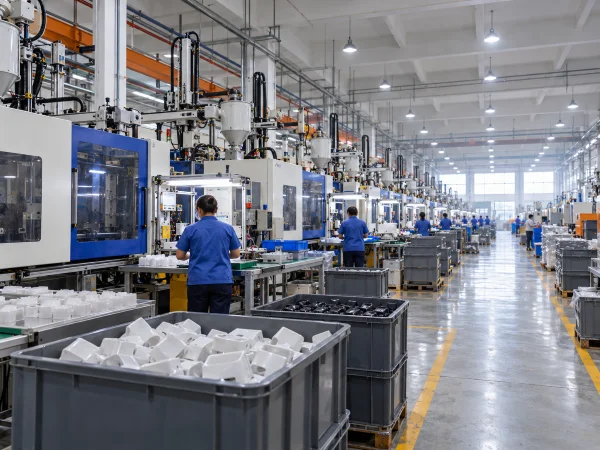
The same helpdesk calls background searches on Chinese partners necessary. We don't send designs out for open bids. We match each product to suppliers in our network with a real track record. On our September 2026 sourcing trip, our product development team spent nearly 3 weeks in China, covering 15+ cities and an estimated 30 to 45 active projects. Most days meant 2 factory visits.
A supplier that values an ongoing relationship fixes problems differently than one handling a single anonymous order. Some of the factories on that trip were making more than 1 product for us at the same time.
An NDA won't protect a sale
A signed NDA keeps a conversation private, but a sale can still count against your patent.
In Helsinn v. Teva, decided in 2019, the US Supreme Court held that a sale to a buyer who must keep the invention confidential can still put it "on sale" under patent law. That sale can count as prior art against your own patent. Some legal sites tell inventors that once an NDA is signed, sharing the invention puts no patent rights at risk. That holds for a private conversation and fails for a sale.
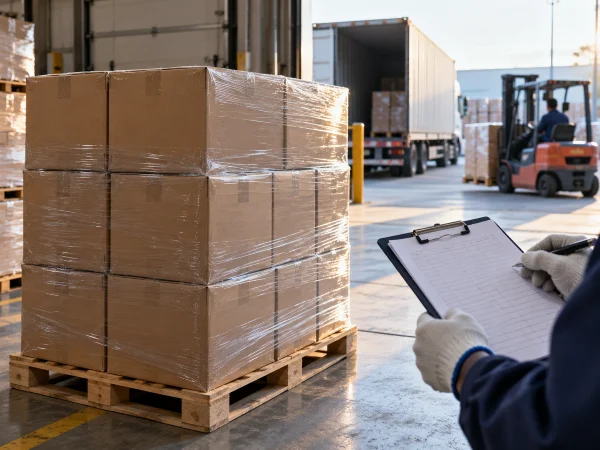
So file before you take pre-orders, sign a distribution deal or launch a crowdfunding campaign. In the US, your own disclosure, including your own sale, generally gets a 1-year grace period, which the USPTO covers in sections 2152 and 2153 of its examining manual. Treat that year as a backup, since it only covers US patent rights.
Should you file a provisional patent before talking to factories?
File when the design is close to what you'll build, and before any sale or public launch. Filing on an early sketch can protect the wrong version.
A provisional application costs little to file. The USPTO's fee schedule, in force since January 19, 2025, lists $325 at the full rate, $130 for small entities and $65 for micro entities. It lets you use the words "patent pending," it isn't examined, and it lasts 12 months. That deadline can't be extended.
The early date only covers what the provisional describes, because the USPTO says claims in the full application must have support in the provisional. And designs change on the way to production. On our September 2026 trip, the team's target was landing designs at 80% to 90% of the original concept. Factories often need to adapt tooling, materials or processes to make something new. If your provisional describes a version you won't build, its date may not cover the one you will.
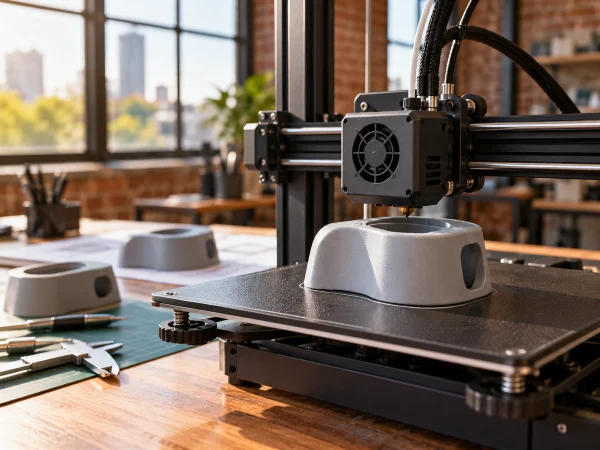
Our rule at 52Launch: "File on the product you are going to build, not the sketch you started with." Waiting has a cost too, because the US awards patents to the first inventor to file. A patentable design also isn't always one a factory can make. A patent attorney can tell you when yours is ready to file. If you don't have one, we make the introduction from our partner network, and you choose.
Your provisional also starts a foreign clock. Under the Paris Convention, you have 12 months from that first filing to file in other member countries and keep its date. Design and trademark filings run on separate 6-month clocks.
| Tool | What it does | What it won't do | Government fee |
|---|---|---|---|
| NDA | Bars the other side from sharing or using your confidential information | Give you patent rights, stop independent development, or decide who owns tooling | None, it's a private contract |
| NNN agreement | Adds non-use and non-circumvention to secrecy, for factories in China | Register your trademark or patent in China | None, it's a private contract |
| Provisional patent application | Holds a US filing date for 12 months and allows "patent pending" | Get examined, or cover changes it doesn't describe | $65 to $325 at the USPTO |
The NDA doesn't decide who owns the mold
Mold ownership belongs in your manufacturing agreement. An NDA covers information, and a mold is property.
The mold is where the money goes. It's machined from hardened steel for your part alone, and it's usually the single largest upfront cost in manufacturing. Our rule of thumb for clients: finding a flaw in a $20 print beats finding it in a $20,000 mold. That's why we 3D print prototypes in-house in Framingham before any steel gets cut.
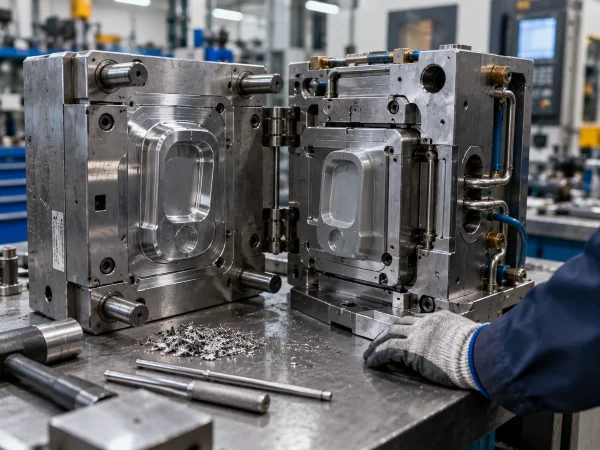
Write 4 terms into the agreement: who owns the tooling once it's paid for, where it's kept, whether the factory can run it for anyone else, and how you get it back if you move production. Add 1 more line saying any design change the factory suggests belongs to you.
The agreement does 1 more job. In a 2016 case under the older patent law, the full Federal Circuit ruled that a contract manufacturer's sale of manufacturing services to an inventor wasn't an invalidating sale. The factory in that case got neither title to the products nor the right to market them. Keep both of those rights with you, in writing.
Can a factory register your brand in China first?
Yes, if you haven't filed there. China gives a trademark to the first person or company that submits a valid application.
That's the opposite of the US, where trademark rights start with use in commerce. A 2024 briefing from the EU's China IP SME Helpdesk is blunt about it: for trademarks and patents, no registration means no protection in China, and bad-faith registrations from China are common.
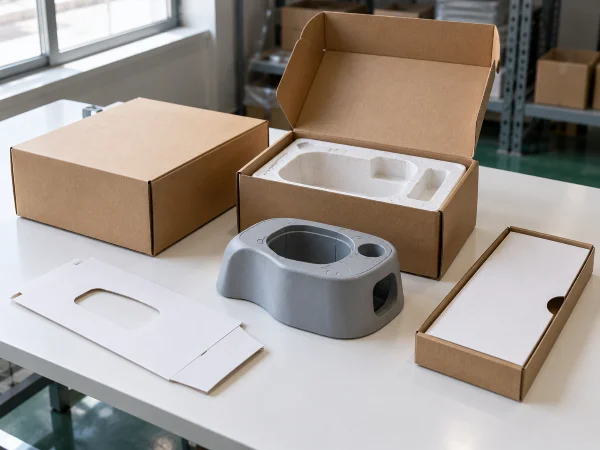
File your trademark in China before branded samples or packaging go to the factory. A US trademark application gives you 6 months of Paris Convention priority to file abroad, so start the China filing inside that window. If the look of the product is what sells it, ask your attorney about a Chinese design patent too.
What a manufacturer NDA should cover in 2026
A manufacturer NDA should name what's confidential, ban use as well as disclosure, and say what happens to your files when the job ends. Ask your attorney to check these 7 terms.
- Every file type it covers: CAD, drawings, samples, the bill of materials, quotes and supplier names
- A non-use clause, so the factory can't make your product for anyone else
- Non-circumvention, so it can't sell straight to your customers or retailers
- No reverse engineering of the samples you send
- Return or destruction of files and samples within a set number of days after the job
- Ownership of improvements the factory suggests
- A dispute venue your attorney says you can enforce where the factory operates
Mark each file "Confidential" before you send it. Marked files are harder to argue about later.
Enforcing an NDA against a factory
You enforce an NDA by suing for breach of contract in the court or arbitration the agreement names. So the venue clause matters as much as the secrecy clause.
In the US, you may also have a federal claim under the Defend Trade Secrets Act of 2016 if someone misappropriates your trade secret. The information has to be protected by reasonable measures, and its value has to come from not being generally known or easy to learn by proper means. Reverse engineering counts as a proper means, so once your product is on store shelves, anything a buyer can learn by taking it apart isn't protected as a trade secret.
For a factory in China, the EU's China IP SME Helpdesk says Chinese courts accept NDAs. A judgment you can't collect where the factory operates won't stop it.
Lawsuits take time and money, so the better defense is limiting who sees what. Send each supplier only the files its part needs, and keep the full assembly with your team.
How 52Launch handles your idea before it reaches a factory
Your idea is covered by a mutual NDA from the first signup form, and we don't share it outside our team unless you authorize it after hiring us.
Design, 3D-printed prototypes and production planning happen in a converted mill in Framingham, Massachusetts, where our 39-person team works under one roof. Early versions of your product don't sit in an outside print shop's queue.
When it's time to manufacture, we match your product to vetted suppliers in our network. Quality checks happen at the manufacturer's site, and a third-party team inspects random units and reports before anything ships.
Lava Lunch shows how that works. The client came to us with the Lava Rocks already patented and no manufacturer for them or the insulated bag. We found 2 manufacturers who could handle both parts and had them assembled before shipping. Then we worked with both to lower the minimum order, so the client could complete a first round of sales.
We don't file patents ourselves. When a client needs one, we introduce an attorney from our partner network, and the client chooses.
Frequently asked questions
Do I need an NDA with a manufacturer before getting a quote?
Yes. Send the NDA before any CAD files, drawings or samples, because quoting a part means showing how it's made. For a factory in China, use an NNN agreement, which adds non-use and non-circumvention terms.
Does an NDA with a manufacturer work in China?
It can. The EU's China IP SME Helpdesk says NDAs are widely used in China and accepted by Chinese courts, and it points to NNN agreements for products without registered IP. Register your trademark in China too, because China gives trademarks to the first valid applicant.
Do I need an NDA with my patent attorney?
No. USPTO rule 37 CFR 11.106 bars patent practitioners from revealing information about your representation without consent, with limited exceptions. Rule 11.118 also protects what you share in a first consultation, even if you don't hire them. Check that your attorney or agent is registered to practice before the USPTO.
Do investors sign NDAs?
Most won't, because signing would limit the other deals they review in your category. Build a pitch that works without one: show what the product costs to make, market and ship, and keep CAD files and supplier names out of the deck.
Does sharing my design under an NDA count as public disclosure?
A confidential conversation under an NDA generally isn't a public disclosure. A sale is different, because in Helsinn v. Teva, decided in 2019, the Supreme Court held that a confidential sale can still put an invention on sale. File before you take pre-orders or sign a distribution deal.
How much does a provisional patent cost in 2026?
The USPTO filing fee is $325 at the full rate, $130 for small entities and $65 for micro entities, under the fee schedule in force since January 19, 2025. Attorney drafting fees are extra. The provisional lasts 12 months, and that deadline can't be extended.
Who owns the mold for my product?
That depends on your manufacturing agreement, so put ownership in writing before tooling starts. A steel mold is usually the largest upfront cost in manufacturing, and we tell clients a flaw found in a $20 print beats one found in a $20,000 mold.
Before your files go to a factory
Put an NDA with a manufacturer in place before you send a single file, use an NNN for factories in China, and file your patent and China trademark before you sell. To map that order for your product, book a free consultation with our team. We aren't a law firm, so talk to a registered patent attorney before you file or sign.