There's never been a better time to be an entrepreneur.
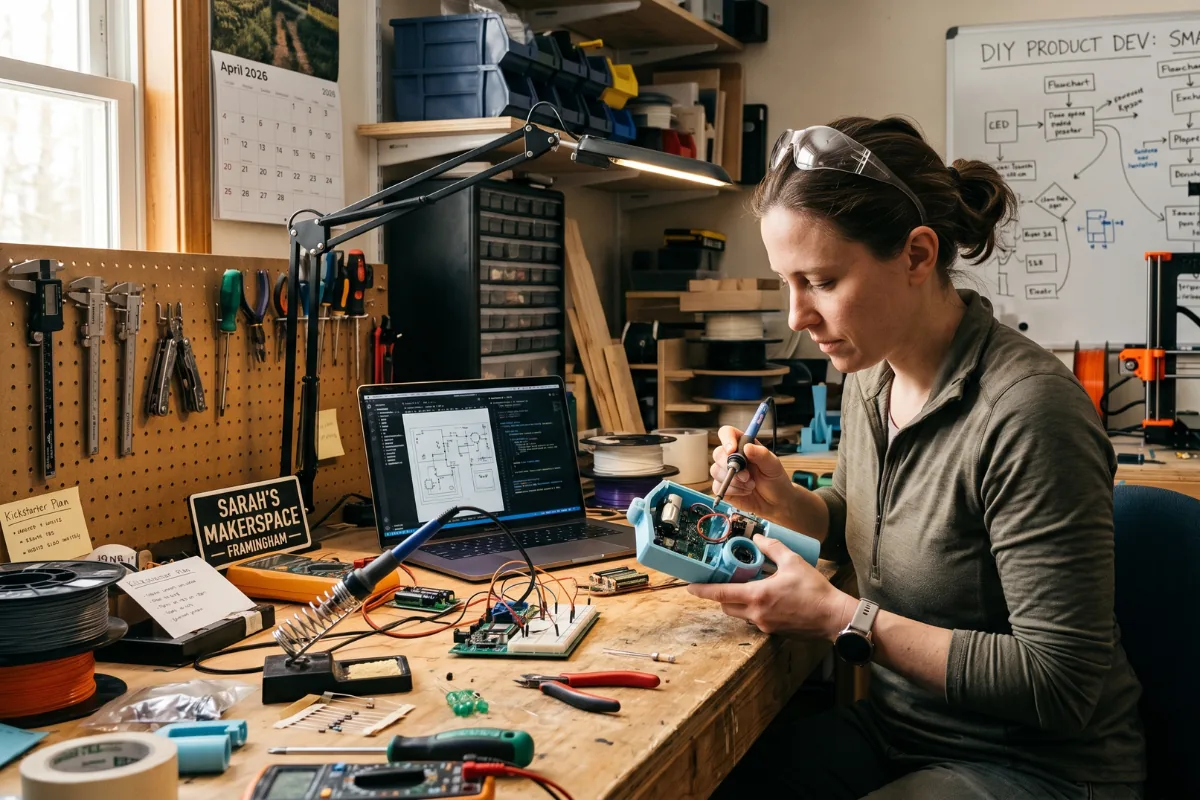
With access to CAD software, overseas manufacturers, no-code tools, and endless YouTube tutorials, it's tempting to believe you can take your product idea from concept to market entirely on your own.
And to be fair, you can get pretty far by doing everything yourself. But here's the reality: DIY product development has a ceiling. And most founders hit it sooner than they expect.
If you're serious about building a scalable, profitable product business, here are 5 reasons why a fully DIY approach will let you down – Plus, the solution to get you on the right track.
Where DIY Shines – At First
To give credit where credit's due, going DIY can be incredibly valuable in the early stages. This approach can help you:
- Validate your idea with quick prototypes
- Learn the fundamentals of your product category
- Save money upfront
- Maintain full control over your vision
For scrappy founders, this phase is essential as it builds conviction and helps you avoid investing in bad ideas.
But DIY is best suited for exploration, not execution at scale.
Where DIY Starts To Break Down
1. You Don't Know What You Don't Know
Product development looks straightforward on the surface, but underneath it's deeply complex.
What most DIY founders underestimate:
- Design for manufacturability (DFM)
- Material selection trade-offs
- Tolerance and engineering constraints
- Regulatory and compliance requirements
- Supply chain dependencies
These aren't things you can "figure out later." They impact every decision from day one, and mistakes here can be highly expensive.
2. Prototypes Don't Equal Production
Getting a prototype in your hands feels like a huge win.
And it is.
But it's also where many DIY journeys stall.
A prototype mostly likely is:
- Not optimized for cost
- Not built for scale
- Not durable or consistent
- Not manufacturing-ready
Bridging the gap between prototype and production is one of the hardest parts of the entire process and it's where most self-built products fail.
3. Supplier and Manufacturing Complexity
Finding a manufacturer on platforms like Alibaba is easy. But finding the right one, and managing them effectively, rarely is.
DIY founders often run into:
- Miscommunication due to language and technical gaps
- Inconsistent quality control
- Unexpected tooling costs
- Long lead times and missed deadlines
Without experience, it's difficult to know whether the issues you're facing are normal or signs of a bigger problem. And good luck trying to scale with a suboptimal manufacturer (if you find one that works, let us know.)
4. Time Becomes Your Biggest Cost
DIY is often framed as the "cheaper" option, yet that completely ignores the value of your time. In truth, every hour you spend:
- Troubleshooting design issues
- Coordinating with suppliers
- Learning technical skills
- Fixing preventable mistakes
…is time you're not spending on:
- Building your brand
- Developing your marketing strategy
- Generating sales
The hidden cost of DIY is the opportunity cost – and that can add up quite quickly.
5. Lack of Integrated Strategy
Even if you manage to piece everything together, DIY approaches are often fragmented. You might have:
- A product that works but is too expensive to produce
- A great design but no clear go-to-market plan
- Manufacturing lined up but no brand or positioning
Success in product-based business isn't about solving one problem, but rather it's about aligning all of them at once.
The Inflection Point: When DIY Stops Making Sense
Every successful founder who starts DIY eventually reaches the same realization: "I can keep struggling through this, or I can bring in experts who have done this before."
That inflection point usually comes when:
- Costs start spiraling
- Timelines keep slipping
- Quality becomes inconsistent
- The path to launch feels unclear
At that stage, continuing DIY is no longer "scrappy," but risky.
What A Full-Service Approach Changes
Partnering with a team like 52 Launch that handles product development end-to-end isn't about giving up on your dream – It's about taking your vision and bringing it to new heights.
Instead of guesswork, you get:
- Products designed for real-world manufacturing
- Clear cost structures and margin visibility
- Streamlined timelines with fewer surprises
- A cohesive strategy from concept to launch
Most importantly, you shift from "figuring it out" to executing with confidence.
DIY is a powerful starting point to validate your idea, but it's not a scalable strategy and rarely gets you all the way to a successful, market-ready product. If your goal is to build something that lasts, then you need more than tools and tutorials.
You need a proven system. You need 52 Launch.
Ready to turn your product idea into a reality? Contact us today at 52 Launch to get started.