Retail buyers say yes when the numbers work. So the fastest answer to how to get your product into retail stores is to build 4 numbers before your first meeting. You need a unit cost that leaves the store its margin, a wholesale price that leaves you yours, a lead time you can hit on every reorder, and proof that people already buy it. Most guides assume the product is already designed and costed. We start at the factory, because that's where those numbers get set.
We've taken 730+ products to market at 52Launch, and we work with 170+ manufacturing partners. Our clients' products sell at Amazon, Walmart, Target, Costco, Home Depot, Lowe's, REI and 7 other retailers.
Stores still take most of the money. E-commerce made up 17.1% of U.S. retail sales in the second quarter of 2026, according to the Census Bureau. Online sales grew faster, up 12.2% from a year earlier against 6.7% for all retail. That still leaves about 83% of retail sales outside e-commerce. The total counts car dealers and gas stations too, so treat it as a rough split.
What does "retail ready" mean?
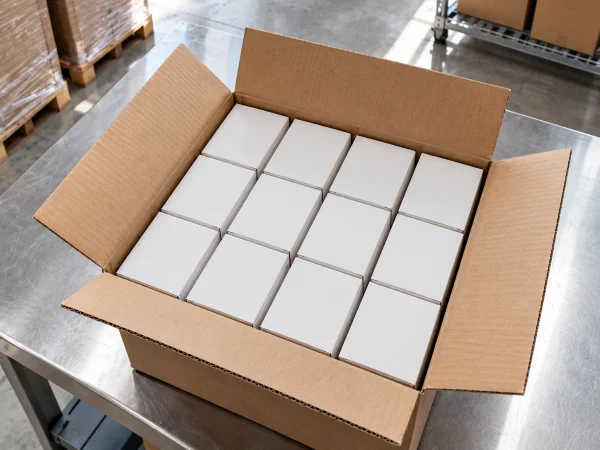
A retail-ready product is one a store can order, receive, shelve and reorder without extra work. That means a GS1 barcode the chain accepts, packaging that fits the shelf and survives shipping, a cost that leaves the store its margin, reorders that ship on time, and the paperwork the retailer asks for.
Chains put the paperwork in writing. Walmart's supplier requirements ask for a federal tax ID, a GS1 Company Prefix number, an audit of any new factory before Walmart commits to an order, and proof of insurance. None of that depends on how clever your idea is. All of it depends on how the product was built and sourced.
That's why retail readiness gets decided during development. On our side of the table, design errors cost hundreds of dollars to fix. Manufacturing errors cost tens of thousands, and they usually turn up after the money is spent.
Start with the shelf price, then work backward
Pick the price your product will sell for on the shelf and take out the store's cut to get your wholesale price. Your landed cost, meaning the factory price plus packaging, freight and duty for 1 unit, has to fit under that with room for your own margin.
Use the chain's own margins
Public retailers report what they keep. Target's gross margin rate was 27.9% of sales for its 2025 fiscal year, per its full-year earnings release. DICK'S Sporting Goods reported gross profit of 32.9% of net sales for fiscal 2025. Those are averages across every aisle. Treat the average at the chain you're pitching as your floor, then ask the buyer what margin they want in your category.
Run the shelf-back cost check
We run this check before any design goes to tooling. The numbers below are an example, so swap in your own.
| Step | Example | Where your number comes from |
|---|---|---|
| Shelf price | $30.00 | Similar products on the shelf you want |
| Store margin at 35% | minus $10.50 | The buyer's target for your category |
| Wholesale price | $19.50 | What the store pays you |
| Your margin at 40% | minus $7.80 | Your business plan |
| Max landed cost per unit | $11.70 | Factory price plus packaging, freight and duty |
We used 35% because it sits above both chain averages. A distributor between you and the store takes its cut out of your $19.50 too.
That last line is the number you design to.
When your factory quote plus freight and duty lands above $11.70, fix it in design. A better pitch won't close that gap. One example from our margin test: a product that costs $40 to make, redesigned to cost $20, might support a $49 to $59 shelf price instead of chasing $90.
Design the product for the shelf
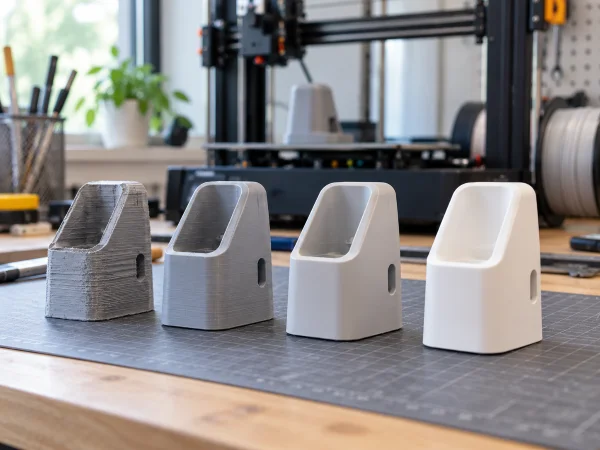
Your design sets your unit cost, package size and case pack long before a buyer sees the product. Changing a 3D print costs little, while recutting a steel mold after production starts costs thousands of dollars and adds weeks.
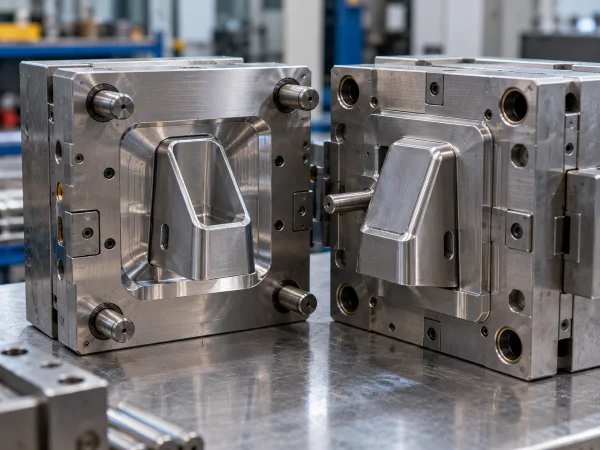
We prove a design with 3D-printed prototypes before anyone pays for a mold. A mold is machined from hardened steel for your part alone, so you want to cut it once. Good design for manufacturing is how you get there.
Chasing perfection costs money too. On our factory visits in China this year, the goal was to land each design at 80% to 90% of the original concept. Holding out for 100% can keep a product from ever reaching production.
Packaging is part of the product
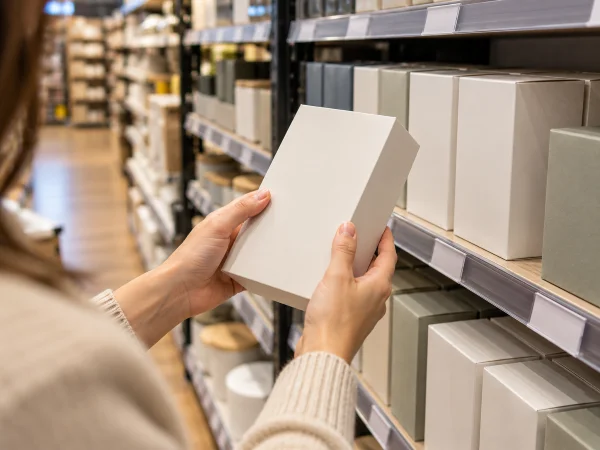
Packaging has to fit the product and the shelf, survive shipping, and land at a unit cost your margin can carry. It also has to sell, because a shopper decides in about 2 seconds.
Unshrinkit's founders, who were funded on Shark Tank, came to us for new retail packaging and a lower price per bottle. We designed and sampled packaging options until we settled on the classic Unshrinkit container. Then we found a domestic chemist who could mass-produce and package the formula at a lower cost.
What does it cost to get a product into stores?
Before the first purchase order, plan to pay for barcodes, testing, insurance, a factory audit, tooling and your first production run. Grocery adds slotting fees on top.
| Cost | What to expect | Source |
|---|---|---|
| Barcodes | $30 one-time for a single barcode. A GS1 Company Prefix costs $250 plus $50 a year for 10 barcodes, or $750 plus $150 a year for 100. | GS1 US |
| Barcode rules | Walmart requires a GS1 Company Prefix number on supplier applications. | Walmart supplier requirements |
| Grocery slotting fees | Average fees ranged from $2,313 to $21,768 per item, per retailer, per metro area. Most suppliers surveyed put the slotting cost of a national grocery launch at $1.5 million to $2 million. | FTC study of 7 retailers, 2003 |
| Factory audit | Walmart requires an audit of new factories before it commits to an order. The supplier pays the audit fee in advance. | Walmart supplier requirements |
| Kids' product testing | Products for children 12 and under that fall under a CPSC safety rule need a Children's Product Certificate based on tests at a CPSC-accepted third-party lab. | CPSC |
| Insurance | Walmart requires approved product suppliers to carry insurance and show proof of it. | Walmart supplier requirements |
| Tooling | A steel mold made for your part alone. It costs the same whether you make 50 units or 5,000. | 52Launch |
| First production run | Our runs typically start at 1,000 to 2,500 units. | 52Launch |
The barcode line trips up first-time sellers. GS1 US sells a $30 barcode that covers 1 product, but Walmart asks for a prefix. Budget for the $250 tier if Walmart is on your list.
The slotting numbers come from a 2003 FTC study of grocery slotting allowances, and the FTC called its own results suggestive. Fees vary by chain and category, so ask every buyer up front whether slotting applies to you.
For kids products, testing comes before shelf space. U.S. manufacturers and importers have to issue a Children's Product Certificate, and the CPSC requires it to rest on third-party lab results.
Why a small first run can sink your margin
Small test orders make sense for stores. They make less sense for your factory.
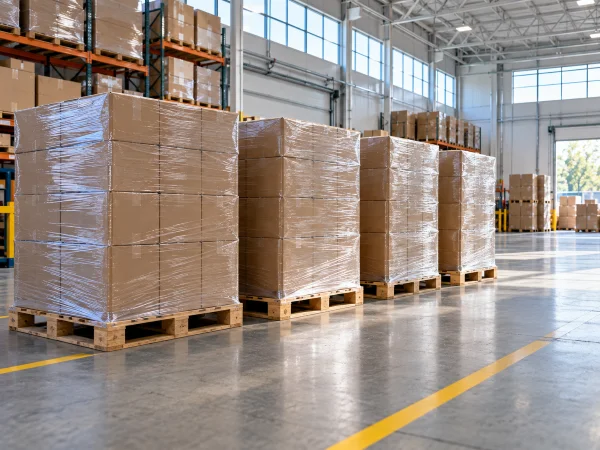
Tooling costs the same whether you make 50 units or 5,000, so a tiny run can push your unit cost past what the shelf math allows.
Retail guides often tell you to start small with local shops and pop-ups. That's good advice for choosing stores. It's bad advice for sizing production. Our production runs typically start at 1,000 to 2,500 units, and some factories quote minimums of 30,000 to 50,000 pieces. A low unit price doesn't help if it means ordering 10 times more inventory than you can sell.
So plan where every unit of your first run will sell before you pitch the first store. For pet products, we recommend 3 phases: sell direct first, add Amazon for scale, then take proven sales data to pet stores, boutiques and regional chains. The stores get a product with a track record. You get a run you can move.
Lava Lunch shows the other fix, which is negotiating the minimum. Its founder couldn't find anyone to make her insulated lunch bag or its patented heat packs. We found a manufacturer for each, had them assemble the product before shipping, and got both to lower their minimums for the first sales round. Lava Lunch now sells hundreds of units every week on Amazon and its own site.
We often see products reach break-even around 3,500 to 5,000 units sold. Your first run gets you partway there, so plan the second order before the first one ships.
How long it takes to get into stores in 2026
Most products we develop at 52Launch are launch-ready in 8 to 12 months. Manufacturing runs after our development program and adds at least 6 months before a product reaches a shelf, and freight and customs can add weeks.
| Stage | Typical time at 52Launch |
|---|---|
| Development program, 6 phases | About 6 months |
| Manufacturing: tooling, samples, inspection, production | 6 months or more |
| Ocean freight | Fast boat via Long Beach runs about 20 days quicker than standard ocean freight through the Panama Canal, for about 20% more |
| Customs | About 1 in 20 to 25 containers gets flagged. Paperwork checks clear in 2 to 3 days. A physical inspection can add 30 to 45 days |

The dates that move your timeline
Chinese New Year shuts factories, ports and even air freight for about a month, starting in late January or early February. On the U.S. side, the run-up to Christmas means booking freight weeks ahead, sometimes before final inspection is done.
Customs codes matter too. The code you file under the Harmonized Tariff Schedule sets the duty you owe. Pick the wrong one and you still owe the correct duty. We manage the codes and the customs process for our clients, so a first-time importer isn't guessing.
The last date belongs to the retailer. Ask every buyer when their next category review is, and plan backward from it.
Pitch the buyer with numbers
Walk in with the math done: shelf price, wholesale price, case pack, lead time, reorder time and what the product has sold so far. Bring a physical prototype when production is still months away, since it's what you put in front of a retail buyer before the first unit ships.
What goes on your sell sheet
- A product photo and the 1 problem it solves, readable in about 2 seconds
- Shelf price, wholesale price and the store's margin at that price
- Case pack and carton size
- Lead time for the first order and for reorders
- Units sold so far, by channel
- Barcode, test certificates and proof of insurance, ready to send
Sales data answers the question a prototype exists to test: will people buy this? A prototype shows the product. A sales record proves the demand.
How Eggmazing got onto national shelves
Eggmazing's inventor brought us a rough 3D model of an Easter egg decorator built around a patented spinning action. The design wasn't ready for mass production, so we reworked it until the factory math worked.
The geometry was hard to make at scale, and the electronics were new territory for the inventor. Our designers and engineers ran round after round of changes to cut manufacturing cost while keeping the features that made it work. We collected competing quotes for materials, manufacturing and shipping. Then we oversaw mass production at an overseas factory, which also made the custom packaging.
The money saved in manufacturing went into marketing. Eggmazing moved through mass production into national shelf placement and became a seasonal retail hit, with features on the Today Show's 2022 "Hoppy Easter" segment and CBS Morning Deals.
How to get your product into retail stores and keep it there
The first order gets you on the shelf. Reorders keep you there, and each one depends on having units in production, units in transit and units on hand at the same time.
Don't size the next order off the first sell-out. Selling 1,000 units from your first run doesn't mean you'll sell 2,000 from the next. Running out costs more than a sale, though. Customers who can't get your product often don't come back.
Quality has to hold at volume. Before anything ships, an inspector checks a sample of finished, boxed units against the spec. We prefer an outside inspector who has followed the product since the prototype. A failed check can mean the factory inspects and reworks the full run before a second inspection.
Shipping adds its own checks between the factory and your warehouse, including freight quotes and customs flags. The same planning applies once you're scaling a product that sells out.
Frequently asked questions
How long does it take to get your product into retail stores?
Most products we develop at 52Launch are launch-ready in 8 to 12 months. Manufacturing adds at least 6 months before a product reaches a shelf, and freight and customs can add weeks. Ask each buyer for their next category review date and plan backward from it.
How much does it cost to get your product into retail stores?
Plan for barcodes, testing, insurance, tooling and a first production run, which typically starts at 1,000 to 2,500 units for our clients. A GS1 Company Prefix for 10 barcodes costs $250 plus $50 a year. In grocery, the FTC found average slotting allowances of $2,313 to $21,768 per item, per retailer, per metro area.
Do I need a UPC barcode to sell in stores?
Plan on it. Walmart requires a GS1 Company Prefix number on supplier applications. GS1 US sells a single barcode for $30, but a prefix starts at $250 for 10 barcodes plus $50 a year.
What margin do retailers expect?
It varies by chain and category, so ask the buyer. For reference, Target's gross margin rate was 27.9% for its 2025 fiscal year, and DICK'S Sporting Goods reported 32.9%. Treat your chain's average as the floor when you set your wholesale price.
How many units should I make for my first retail order?
Our production runs typically start at 1,000 to 2,500 units. Tooling is a fixed cost, so a bigger run spreads it over more units. Size the run to what you can sell across every channel you have. We often see products reach break-even around 3,500 to 5,000 units sold.
Do I need a patent before pitching a retailer?
No. Walmart's published supplier requirements cover a tax ID, a GS1 Company Prefix, a factory audit and insurance, and a patent isn't on that list. If you want to protect your idea before launch, we refer clients to patent attorney partners.
Run the numbers before you pitch
Run the shelf-back cost check on your product before you book a single buyer meeting.
When the numbers hold, you know how to get your product into retail stores: build it for the shelf and bring the sales data. Numbers that don't hold yet point to a design problem, and design problems are our job. A free consultation covers feasibility, the route to market and a realistic budget range.