Most products are launch-ready in 8 to 12 months with 52Launch. That's our answer when inventors ask, "How long does it take to bring a product to market?" Complex mechanical or electronic products typically take longer. We've taken more than 730 consumer products from idea to market.
Our program fits 6 phases inside 6 months, because every phase reports to the same building. Manufacturing then adds at least 6 months before a product reaches a shelf. 2 more clocks run outside the factory: nearly all kids' products need third-party lab testing, and average total patent pendency reached 27.9 months in February 2026.
Where the time-to-market clock starts and stops

Time to market is how long a product takes to go from idea to inventory you can sell. For a 52Launch product, the clock starts at kickoff and runs through our 6-phase program and manufacturing until finished units clear US customs and reach a warehouse or shelf. In between sit design, prototypes, tooling, production, inspection, freight and customs.
A top-ranking answer to this question stops its clock at "ready for mass manufacturing." Ours runs to the shelf, because units sitting at a port aren't on sale yet. Our product development services cover that whole stretch, with design, rapid prototyping, manufacturing, branding and marketing handled by one team in Framingham, MA.
How long does it take to bring a product to market, stage by stage?
For most products, plan on 8 to 12 months from kickoff to shelf: up to 6 months in our Accelerator program, then at least 6 months of manufacturing before the product reaches a shelf. The table shows what happens in each stretch.
| Stage | What happens | What sets the pace | Time at 52Launch |
|---|---|---|---|
| Accelerator program | 6 phases: market research, brand creation, industrial design, manufacturing preparation, go-to-market strategy, production decision point | Phases run in parallel under one roof | Fits inside 6 months |
| Prototype rounds (inside the program) | 3D-printed models from our in-house printers | Mechanisms and electronics add rounds | Fewer rounds for a simple housewares item |
| Manufacturing, from tooling to shelf | Everything in the rows below | Factory calendar; Chinese New Year shuts factories for roughly a month | At least 6 months in total |
| Tooling and trial runs | Molds and tools go to the factory, which makes trial runs (T1, then T2) | How many trial runs it takes | Part of the 6+ months |
| First production run | Our minimums start at 1,000 to 2,000 units | Order size and factory schedule | Part of the 6+ months |
| Ocean freight | Port to port, then to your warehouse | Route: the fast boat into Long Beach is about 20 days faster for about 20% more | Part of the 6+ months |
| US customs | Entry filed and reviewed | About 1 in 20 to 25 containers gets flagged | 2 to 3 days for a paperwork flag; a physical exam can add 30 to 45 days |
| Patent (optional) | Provisional or full application on file | USPTO backlog | Runs alongside the rest; average total pendency of 27.9 months |
Customs inspections are outside your control. About 1 in 20 to 25 containers gets flagged for a closer look. A paperwork flag usually clears in 2 to 3 days once customs confirms the documents, and a physical inspection can add 30 to 45 days.
Don't announce a launch date until your container clears.
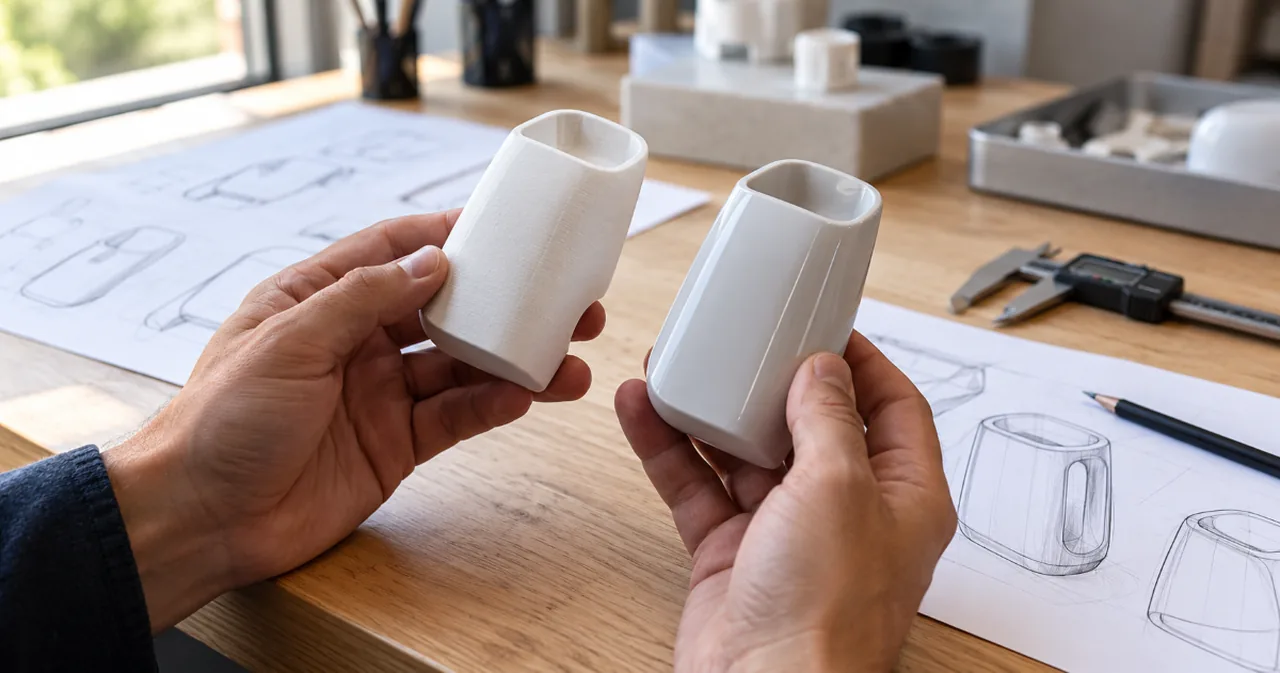
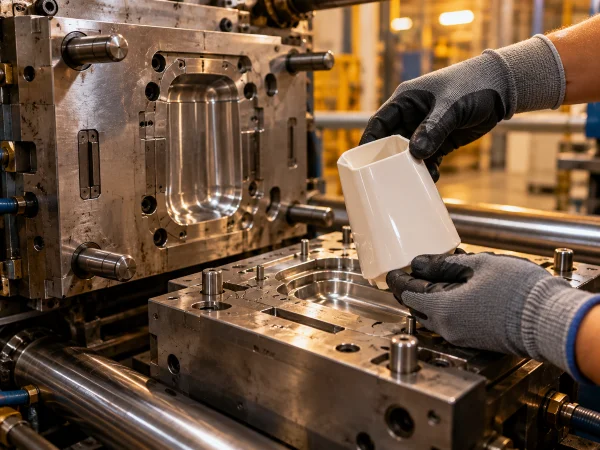
Tooling is where we work differently. Early models come off our in-house 3D printers, but after that we prototype at the manufacturer. The molds and tools go to the factory, and the factory makes a first trial run called T1. We fix what's off, and T1 becomes T2. That loop repeats until the product is ready to sell.
Because each round is a factory trial run from those molds and tools, you approve a sample the factory has already made.
Electronics add a regulatory step
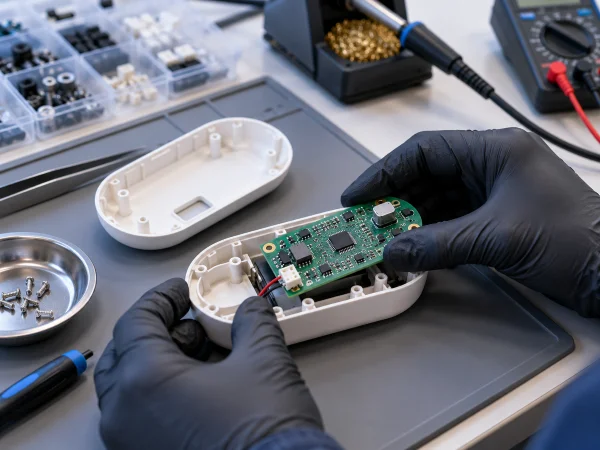
Complex mechanical or electronic products typically take longer than our 8 to 12 month range. If your product is a radio frequency device, it must be authorized under the FCC's rules in 47 CFR part 2 before it's marketed or imported into the US. The FCC lists 2 approval routes, Certification and a Supplier's Declaration of Conformity. Your engineer can tell you which one applies.
These products also need more prototype rounds. A simple housewares item takes fewer. Anything with a mechanism or electronics takes more, because each round answers a different question.
Eggmazing is a good example. Its inventor came to us with a rough 3D model and a description, and had limited experience with its electronic components. We took it from working prototype to mass production at a factory overseas and national shelf placement.
Do kids' products need lab testing?
Yes. Nearly all children's products must be third-party tested by a CPSC-accepted lab before you can certify them. Based on passing results, you issue a Children's Product Certificate. If you make a material change after certification, the finished product or the changed part must be retested, and you issue a new certificate. Products in continuous production need periodic testing too.
Put lab time on the calendar at kickoff, not after samples arrive. We've launched dozens of kids' products, including Chute 21, Lava Lunch, Resnug and Eggmazing.
What changed for importers in 2026
Since July 8, 2026, importers of regulated consumer products have to file certificates of compliance electronically before the goods enter US commerce. The CPSC says importers already had to create this information, and what changed is how it gets sent. Goods imported into Foreign Trade Zones and later entered for consumption or warehousing start on January 8, 2027.
Customs filings have their own deadlines. Under 19 CFR 149.2, most Importer Security Filing data is due no later than 24 hours before the cargo is loaded onto the ship at the foreign port. CBP requires entry documents within 15 calendar days of a shipment's arrival. The practical rule: finish the certificate data and the filing details before the container sails.
What slows shipping from China

3 things decide how long the trip from factory to warehouse takes: the route, customs and factory holidays. All 3 sit inside the manufacturing stretch, which adds at least 6 months before a product reaches a shelf.
The route is a cost decision. The fast boat into Long Beach runs about 20 days faster than the slow route and costs about 20% more. Customs takes 2 to 3 days to clear a paperwork flag, and a physical exam can add 30 to 45 days.
Holidays are the delay you can see coming. Chinese New Year shuts factories for roughly a month. In 2027, Lunar New Year's Day falls on Saturday, February 6, according to Hong Kong's Labour Department. If you want inventory for spring 2027, plan for production and inspection to finish before the shutdown. Golden Week in October is a shorter holiday that also affects timelines. We broke down what happens between finished and delivered, including inspection failures, freight booking, customs flags and HTS codes.
Should you wait for a patent before you sell?
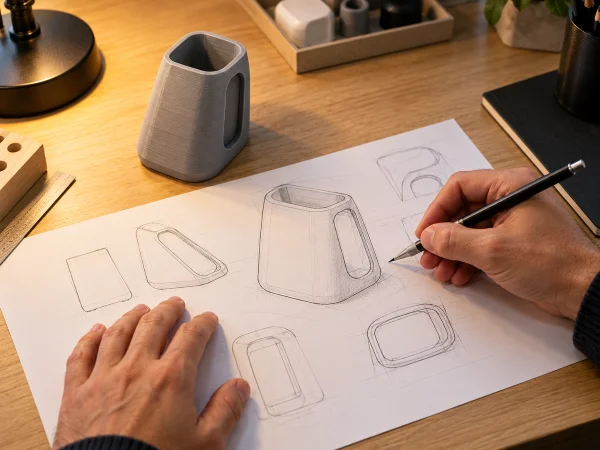
No. File first, then sell as patent pending. Waiting for a final decision on your application can add more than 2 years to your launch.
USPTO Director John Squires gave the numbers in March 2026 testimony to a House Judiciary subcommittee. Average total pendency grew from 26.2 months in January 2025 to 27.9 months in February 2026. The average wait for the first examiner response reached 22.2 months.
A provisional patent application gets you selling sooner. The USPTO says a provisional stays pending for 12 months, and that window can't be extended. It isn't examined on its merits, and it lets you use the term "Patent Pending" with your product. The trade-off is that those 12 months add to the total wait for the patent itself.
We think that's a good trade, because the goal is sales.
That puts us at odds with the patent-first pitch some invention-help programs make. Our view: waiting on a patent may slow you down more than it helps. Timing still matters, though. Get a provisional or full application on file before you offer the product for sale. An idea that's published or sold before filing can lose its patent rights worldwide. Talk to one of our patent attorney partners before you show the product to anyone outside your team.
Handoffs are why some products take years
When design, prototyping, tooling and production sit with different companies, every question crosses a gap, and the gaps add up. Our 8 to 12 month range depends on research, design, branding and manufacturing running in parallel under one roof, instead of in sequence across 4 vendors.
On one China sourcing trip, our team spent nearly 3 weeks visiting 15+ cities and 30 to 45 factory projects. Most US-China product communication happens remotely, often across a 12-hour time difference. That's how a single question about a color swatch can take a full day to resolve. On the ground, the team could correct samples on the spot instead of shipping them back and forth.
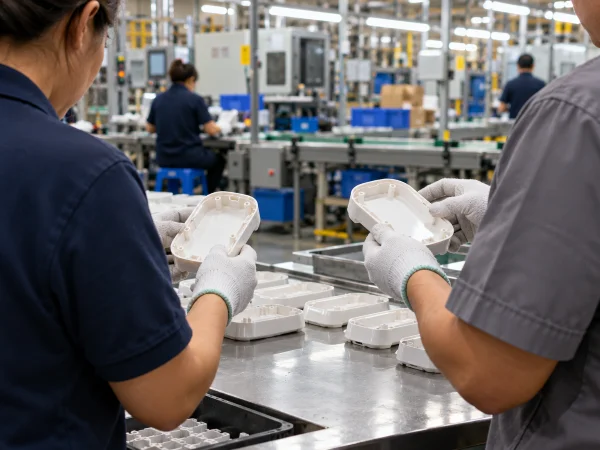
Our sourcing team's goal is worth copying: land designs at 80 to 90% of the original concept. Holding out for an exact match can keep a product from reaching production. That's also why we keep design, prototyping, manufacturing, branding and marketing under one roof.
Some advice online says a product developer earns more when your product gets more complex. At 52Launch, scope and the number of design review rounds are agreed in your consultation, so nothing is open-ended, and we don't take a commission after launch. Our most important rule is to keep it simple.
How to cut months off your launch
Start the slow clocks early, and skip work that doesn't move you toward sellable inventory.
Prove demand before you prototype. Prototyping is a later, more expensive step, and it assumes you've already proven the idea is worth building.
A rough prototype is fine at that stage. KlockIt Golf came to us as a homemade prototype: a dog leash tie-out stake and a rope tied to a golf ball. Once demand is clear, prototype at the manufacturer so the samples you approve come from factory trial runs.
Keep the first order small. Our minimums start at 1,000 to 2,000 units, compared with the 30,000 to 50,000 pieces a traditional manufacturer might require. For Lava Lunch, we worked with both of its manufacturers to lower the minimum so the first round of sales could happen. Lava Lunch has brought in nearly $3 million in revenue since 2020.
File your provisional before the first public showing. And book production so it wraps up before the 2027 Lunar New Year shutdown.
What else do inventors ask about time to market?
How long does it take to bring a product to market if it has no electronics?
Most products are launch-ready in 8 to 12 months with 52Launch. Complex mechanical products typically take longer. Our Accelerator program fits inside 6 months, and manufacturing adds at least 6 months before the product reaches a shelf. Customs inspections are outside your control and can add 30 to 45 days.
How long does it take to bring a product to market if it has electronics?
Complex electronic products typically take longer than the 8 to 12 months most products take with 52Launch. They need more prototype rounds. Radio frequency devices must also be authorized under FCC rules before they're marketed or imported into the US.
How long does a patent take in 2026?
USPTO Director John Squires testified in March 2026 that average total pendency reached 27.9 months in February 2026. The average wait for the first examiner response reached 22.2 months. That's why we tell inventors to file first and sell while the application is pending.
Can I sell my product while my patent is pending?
Yes. A provisional patent application stays pending for 12 months and lets you use the term "Patent Pending" with your product. File before you offer the product for sale, and ask a patent attorney about timing if you want protection outside the US.
How long does customs take for a container from China?
Most containers clear without a hold. About 1 in 20 to 25 gets flagged, and a paperwork flag usually clears in 2 to 3 days. A physical inspection can add 30 to 45 days. CBP requires entry documents within 15 calendar days of arrival.
What testing do kids' products need?
Nearly all children's products must be third-party tested by a CPSC-accepted lab. You then issue a Children's Product Certificate from the passing results. Since July 8, 2026, importers of regulated consumer products must also file certificates electronically before goods enter US commerce. Goods that come through Foreign Trade Zones follow on January 8, 2027.
When does Chinese New Year 2027 start?
Lunar New Year's Day falls on Saturday, February 6, 2027. Factories close for roughly a month around the holiday, so plan for production and final inspection to wrap up before the shutdown begins.
Get an estimate for your product
Every product runs on its own clock. If you want our answer to "how long does it take to bring a product to market" for your own idea, book a free consultation and we'll give you an estimate for your project.