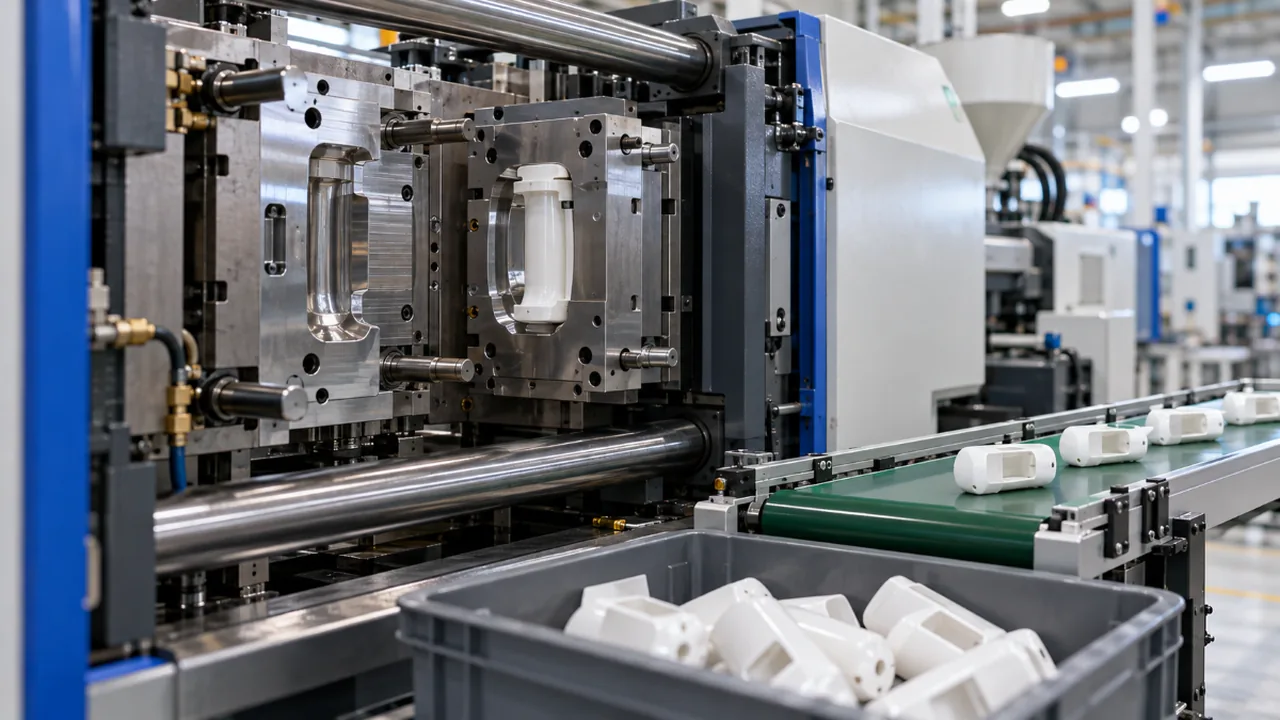
MOQ in manufacturing is the smallest order a factory will agree to run. At 52Launch, our production runs typically start at 1,000 or 2,500 units, depending on the product. The MOQ gets most of the attention. But tooling is usually the single largest upfront cost in manufacturing. A mold costs the same at 50 units as it does at 5,000. Cut your order in half and the mold bill stays the same, so every unit carries more of it. In 2026 there's a second cost that grows with your order: import duty. The $800 de minimis exemption is suspended, so even a small test batch from overseas now pays the duty owed on it.
What is MOQ in manufacturing?
MOQ in manufacturing, short for minimum order quantity, is the smallest number of units a factory will produce in a single production run. Factories set it so each order covers fixed costs: machine setup, molds, material lots, and line time. 52Launch production runs typically start at 1,000 or 2,500 units, depending on the product.
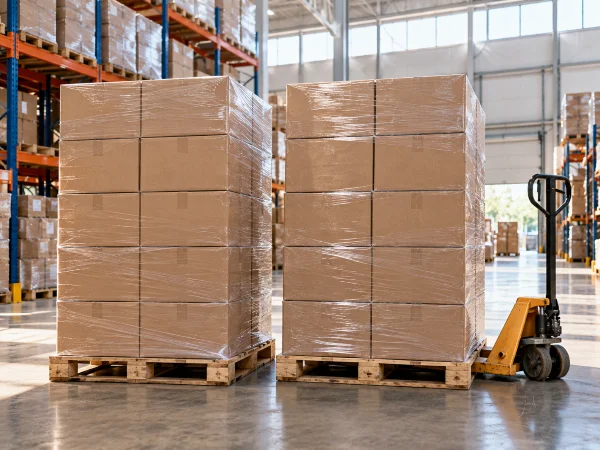
Factory quotes can state the MOQ per style, per color, or per order, and some use a minimum order value in dollars instead. Ask which one a quote uses before you compare 2 factories. A 1,000-unit MOQ per color turns into 3,000 units once you add 2 more colorways.
Why do factories set minimum order quantities?
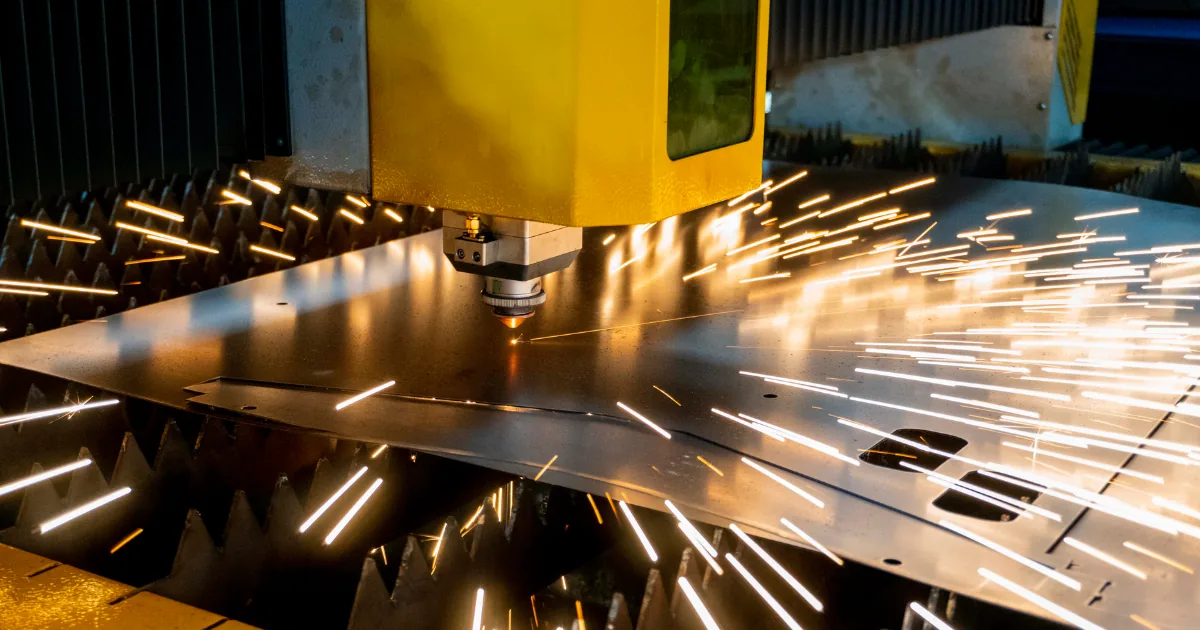
Factories set MOQs because every production run carries fixed costs that don't shrink with your order. Setup, tooling, and material buys cost about the same on a short run. So the factory needs enough units to cover them and still make money. And the press isn't cheap. Formlabs puts large industrial injection molding machines at $50,000 to $200,000+, so line time has to pay for itself.
Tooling is the custom equipment a factory builds to make your specific part: injection molds, jigs, and fixtures. Each tool is machined from hardened steel or aluminum for your part alone. Order 50 units and the mold price doesn't change. At low volume, tooling by itself can wipe out your entire margin.
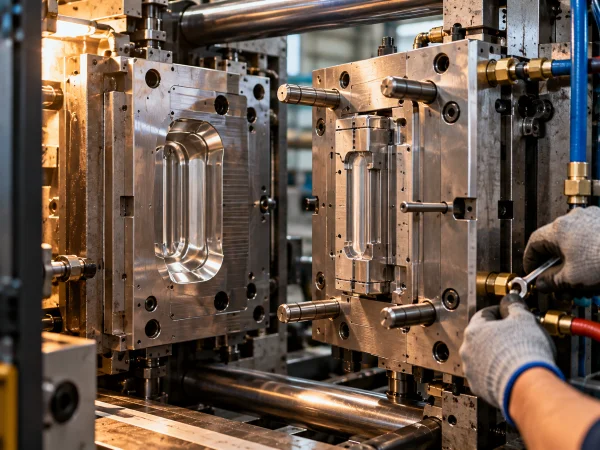
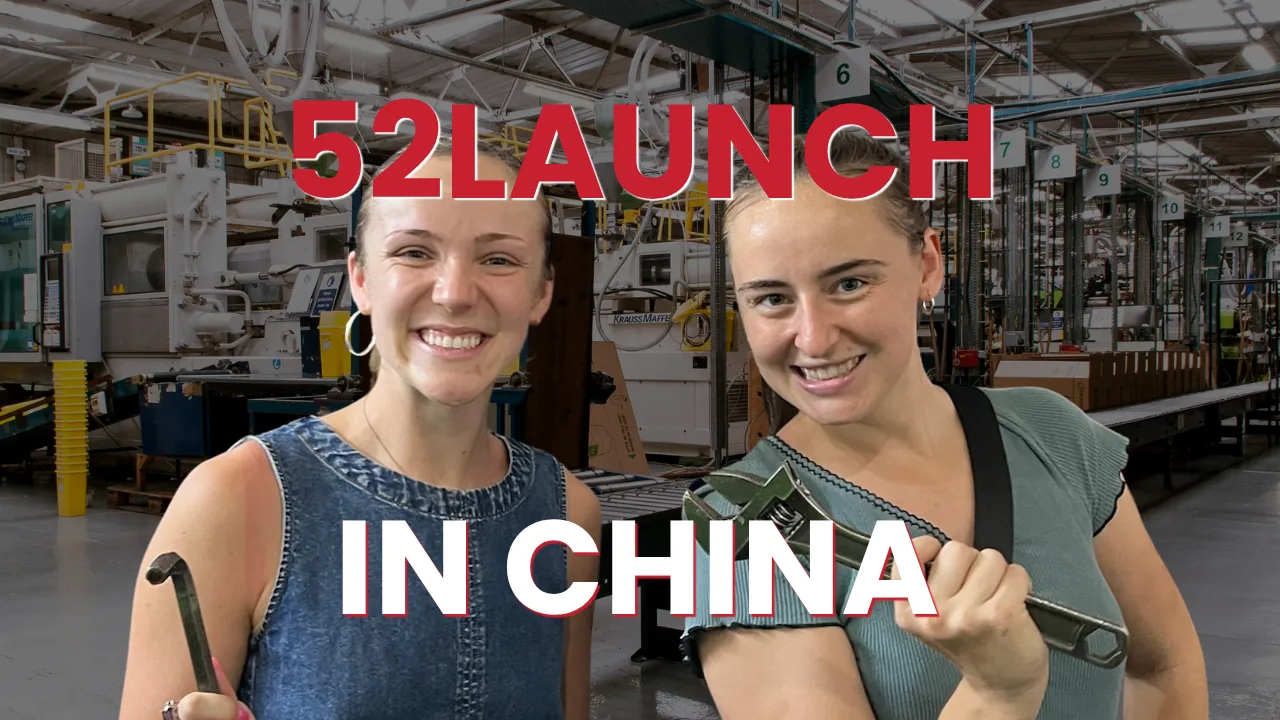
The factory's own suppliers have minimums too. Materials like resin, fabric, and printed packaging are often bought in lots, and those lots put a floor under your MOQ. New designs add friction on top of that. On our China sourcing trip, our team spent nearly 3 weeks visiting 15+ cities and 30 to 45 factory projects. Our sourcing team puts it this way: factories often have to adapt tooling, materials, or processes to make something that's never been made before. That gets harder at the small quantities startups usually ask for.
The 2 kinds of MOQ, and which one you can negotiate
In our experience, most MOQs trace back to the tooling or the supply chain. A supply-driven MOQ can often move. A tooling-driven MOQ rarely does, because the cost behind it is fixed.
| Tooling-driven MOQ | Supply-driven MOQ | |
|---|---|---|
| What sets it | The cost of molds, jigs, fixtures, and machine setup, spread across the run | Material lots, component suppliers, and packaging minimums |
| Common signs | Custom molded parts and new tools built for your design | Custom colors, printed boxes, or parts from a second supplier |
| Can it move? | Rarely. A smaller run raises your cost per unit | Often. Change the material, the color, or the supplier setup |
| What to do | Size the run to what you can sell, then match the tooling to that volume | Use stock materials and colors, and put components with fewer suppliers |
We put MOQs on the table early in our manufacturing process, before a quote arrives. Lava Lunch is a supply-side example. It's an insulated lunch bag with microwavable heat packs that keeps food warm for up to 5 hours. The client was stuck trying to find a manufacturer for the bag and the patented Lava Rocks. Our team found a set of manufacturers who could make both components. Then we worked with both manufacturers to bring the minimum down far enough to complete the first round of sales. The client went on to place a large production order, and Lava Lunch sells every week on Amazon and lavalunch.com.
Why a smaller first run can cost you more
A smaller run costs more per unit because the tooling bill doesn't shrink with it. Most MOQ advice tells you to push the factory's minimum down. For a molded product, we push back on that.
Take a $20,000 mold, the figure we use on our services page to explain why we test with $20 prints first. Spread across the run, the tooling alone adds this much to each unit, before materials, labor, packaging, freight, or duty:
| Units in the run | Tooling cost per unit on a $20,000 mold |
|---|---|
| 50 | $400.00 |
| 500 | $40.00 |
| 1,000 | $20.00 |
| 2,500 | $8.00 |
| 5,000 | $4.00 |
| 100,000 | $0.20 |
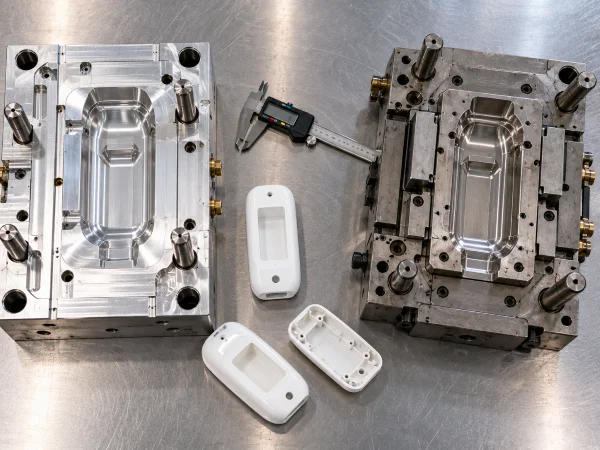
Published ranges put that mold in context. Formlabs estimates machined aluminum molds for runs of about 1,000 to 5,000 units at $2,000 to $5,000. For complex molds built for runs of 10,000+ units, its range is $5,000 to $100,000. In Formlabs' own example, an aluminum mold adds $30 to each part on a 100-part run, and a steel mold adds $200.
Tool material decides how many parts a mold can make. Formlabs points mid-volume runs to machined aluminum molds and large production volumes to high-grade steel. Volume also changes your next mold, and this one comes from our own factory relationships. Once a client has moved meaningful volume, around 100,000 units, factories are typically more willing to extend the next mold at reduced or no cost.
None of this means you should order 5,000 units to beat the tooling math. A low unit price is no help if it means ordering 10 times more inventory than you can sell. Size the first run to the demand you can prove, then match the tooling to that volume. At Formlabs' aluminum range, a 1,000-unit run carries $2 to $5 of tooling per unit, and a 2,500-unit run carries $0.80 to $2. Our horizontal manufacturing model pairs each product with a factory and a tooling process that fit its category.
What does a first production run cost in 2026?
A first production run costs more than the MOQ times the unit price. Budget for 8 line items. They map to the 6 stages of our manufacturing process:
| Line item | What it covers | What moves the number |
|---|---|---|
| Technical design package | Specs, 3D files, and production instructions the factory quotes from | How complete the design is when you request quotes |
| Tooling | Molds, jigs, and fixtures built for your part | Part size, complexity, cavity count, and aluminum or steel |
| Production samples | A functional sample, T1 then T2, before the full run | How many rounds of changes the design needs |
| The production order | Your MOQ times the unit cost | Quantity, materials, and how many colors or SKUs you run. Formlabs puts thermoplastic resin at about $1 to $5 per kg |
| Quality inspection | On-site checks plus a third-party report on random units | A failed check can mean a 100% inspection and rework |
| Freight | Air, fast boat, or standard ocean | Speed. Fast boat through Long Beach runs about 20 days faster than the slow route and costs about 20% more |
| Duty and customs | Duty on the customs value, HTS classification, and entry filing | Your HTS code and country of origin |
| Receiving and storage | Delivery to your warehouse or 3PL | Where the goods land and how long they sit |
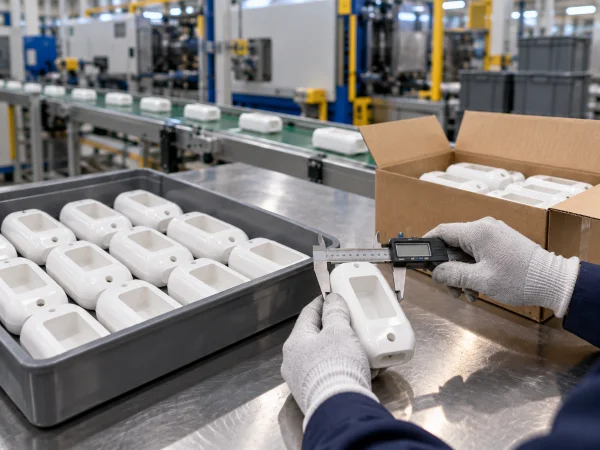
Tooling gets built before your samples and your production order, and it's usually the largest upfront cost. That's why our Accelerator ends at a production decision point. You see complete manufacturing costs and tooling investments before you decide whether to manufacture at all.
Then test the run against break-even. Break-even often lands at roughly 3,500 to 5,000 units sold, a range we cover in our profitability guide. If your product sits in that range, a 1,000-unit first run won't get there alone. So plan the second order before you place the first. And don't assume it sells as fast. Selling 1,000 units from your first production order doesn't guarantee you'll sell 2,000 after the next one. When we're scaling a product, we plan stock in 3 places at once: units in production, units in transit, and units on hand.
How 2026 duty rules change your MOQ budget
Any duty owed now applies to every unit you import, whatever the order size. That raises the landed cost of your MOQ, and it can make small overseas test batches cost more than they did in early 2025.
The $800 de minimis exemption has been suspended for imports from all countries since August 29, 2025, under Executive Order 14324. CBP made that suspension indefinite in an interim final rule effective June 24, 2026. Under that rule, shipments valued at $800 or less go through formal or informal entry, and CBP collects the duties owed. The rule covers every mode except international mail, and a companion rule covers mail. Congress also ended the exemption by statute in the One Big Beautiful Bill Act, effective July 1, 2027.
The tariff rules moved too. On February 20, 2026, the Supreme Court held in Learning Resources, Inc. v. Trump that the International Emergency Economic Powers Act doesn't authorize the President to impose tariffs. Section 301 tariffs on Chinese goods weren't part of that case, and USTR kept them in effect in an October 7, 2026 notice. If your product's HTS code falls under those actions, the added duty applies to every unit in your order.
Your duty rate comes down to your HTS code, so get it right before anything ships. An incorrect classification code can hold a container, add unexpected duty, or trigger a penalty. Have your freight forwarder verify the code independently before shipping. For our clients, we manage the codes and the customs process instead of leaving it to a first-time importer.
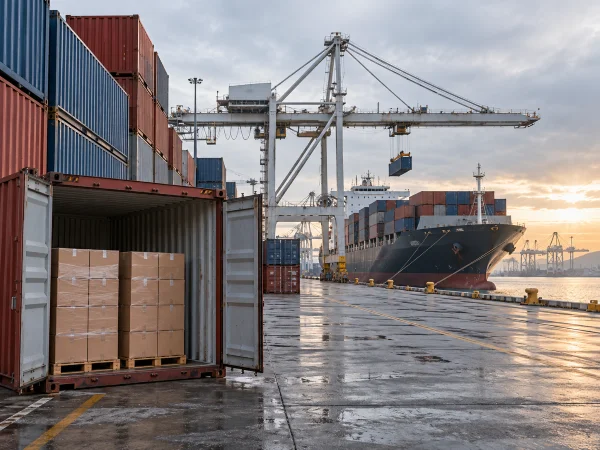
Build customs time into your launch date, too. Roughly 1 in 20 to 25 containers gets flagged for a closer look. A paperwork check usually clears in 2 to 3 days. A physical inspection can add 30 to 45 days, and nothing you do will speed it up.
Then there's where you build. We source from 170+ manufacturing partners, including domestic options, and we walk clients through the cost, timeline, and tariff tradeoffs between U.S. and overseas production.
How to lower your MOQ without raising your risk
Work on the supply-driven parts of the minimum first, then simplify the design. Both change what the factory has to buy or build. A harder push on price changes neither.
- Stock materials and colors usually carry lower minimums than custom ones, since a custom color or finish often has its own material minimum.
- Ask the factory to quote the product and the packaging separately. A printed box can carry its own minimum.
- Negotiate with each supplier in the chain. For Lava Lunch, we worked with both manufacturers on the job to bring the first-run minimum down.
- Cut features before you cut quantity. A common mistake is starting with a small batch, say 500 units, and then bolting on new features based on gut instinct. Every added feature is another point of failure and more cost to build.
- Leave room for compromise. Our sourcing team aims to land designs at 80 to 90% of the original concept. Insisting on 100% fidelity can keep a product from ever reaching production.
- Prove demand before you commit to a run. Our gut check comes before any development spend. Show the working concept to friends and family, and ask whether they'd invest $5,000 in it right now.
When you need a prototype shop instead of a factory
A prototype shop fits when you need units to hold, test, and pitch before production. Our FAQ says it this way: "If you only need a handful of units, you want a prototype shop, not an ODM. We will tell you that on the first call."
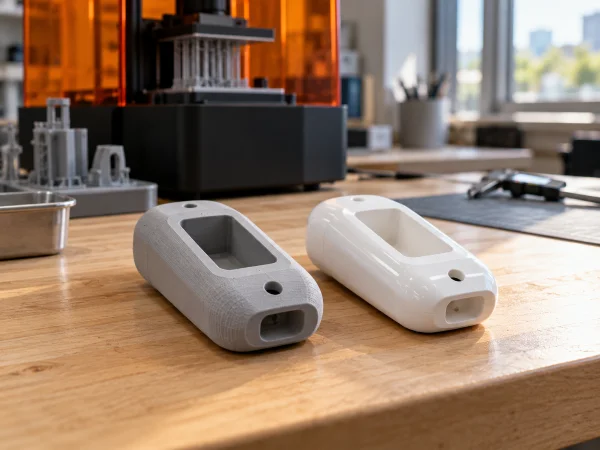
We 3D print constantly during prototyping, and it's one of the most valuable things we do. Printing still doesn't replace production. When a product moves to production, we cut real tooling. Printed parts can't hit the cost, the strength, or the finish a retail product needs.
The order protects your money. Finding a flaw in a $20 print beats finding it in a $20,000 mold. Recutting a steel mold after production starts costs thousands of dollars and weeks of time. Once the design holds up, we prototype at the manufacturer. The factory's first trial run is T1, and after tweaks, T1 becomes T2.
Treat MOQ in manufacturing as a cost question before it's a quantity question. Bring the factory quotes you have to a free consultation. It covers feasibility, timeline, and a realistic budget range for your product.
MOQ in manufacturing FAQ
What is a typical MOQ in manufacturing?
It depends on the product, the process, and the factory. At 52Launch, production runs typically start at 1,000 or 2,500 units, depending on the product. If you only need units to test or pitch, a prototype shop is the better fit.
Can you negotiate MOQ in manufacturing?
Often. In our experience, minimums driven by materials, colors, components, or packaging can move. A minimum set by tooling rarely moves, because a mold costs the same at 50 units as it does at 5,000. A smaller run only raises the tooling cost per unit.
How much does an injection mold cost?
Formlabs estimates machined aluminum molds for runs of about 1,000 to 5,000 units at $2,000 to $5,000, and complex molds for runs of 10,000+ units at $5,000 to $100,000. Your quote depends on part size, complexity, and the number of cavities. Either way, tooling is usually the single largest upfront cost in manufacturing.
Do small test orders still pay import duty in 2026?
Yes. The $800 de minimis exemption has been suspended for all countries since August 29, 2025, and CBP made the suspension indefinite on June 24, 2026. Shipments valued at $800 or less now go through formal or informal entry and pay the duties owed.
What happens if you order less than the MOQ?
Expect the factory to decline the order or raise the unit price to cover setup. On a molded part, the tooling cost stays the same, so a $20,000 mold adds $40 to every unit in a 500-unit run. Ask for quotes at 2 or 3 quantities so you can see how the unit price changes.
Does MOQ apply per color or per style?
It can apply per style, per color, or per order, depending on the factory. Ask which one the quote uses before you compare factories. A per-color MOQ multiplies with every colorway you add.
How many units do you need to sell to break even?
Break-even often lands at roughly 3,500 to 5,000 units sold. If your product sits in that range, a 1,000-unit first run won't get there alone. Budget for the reorder before you place the first order.