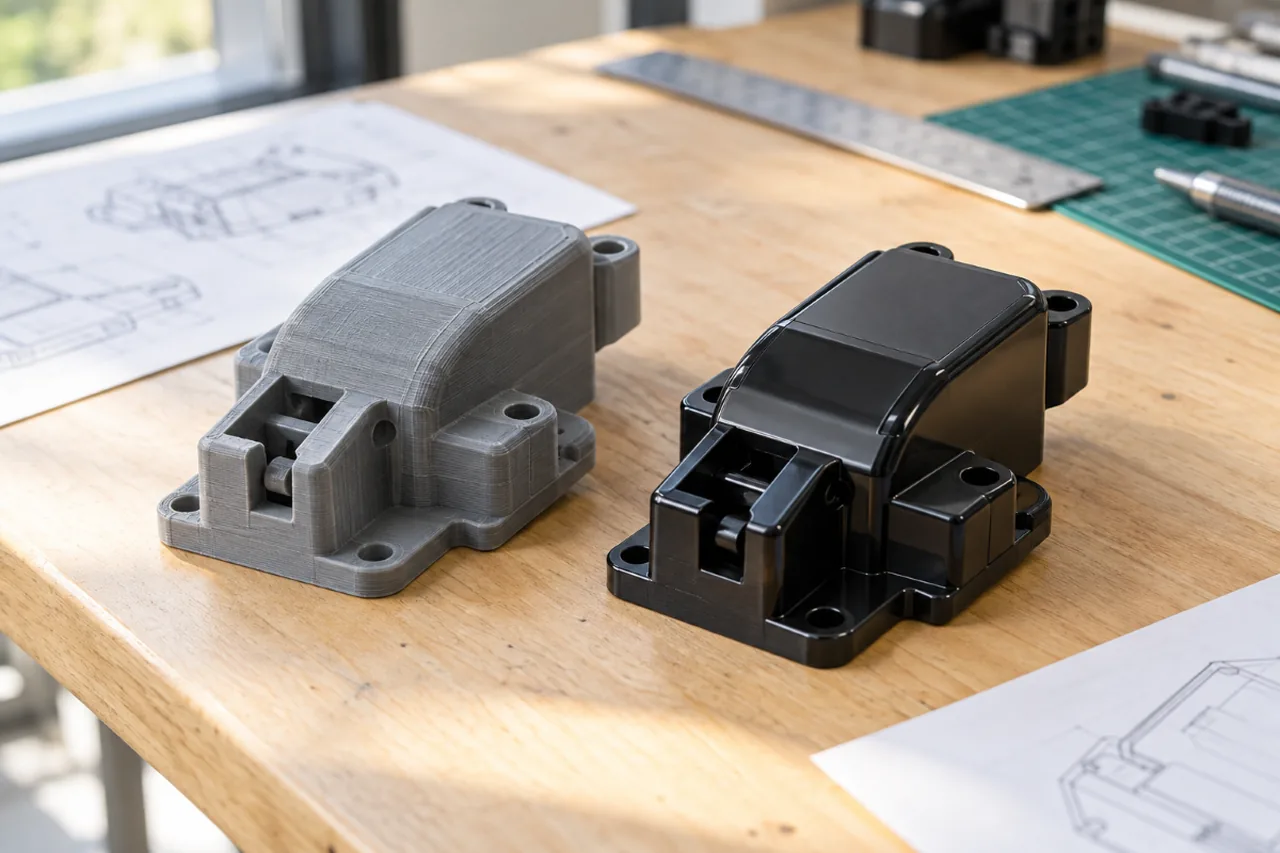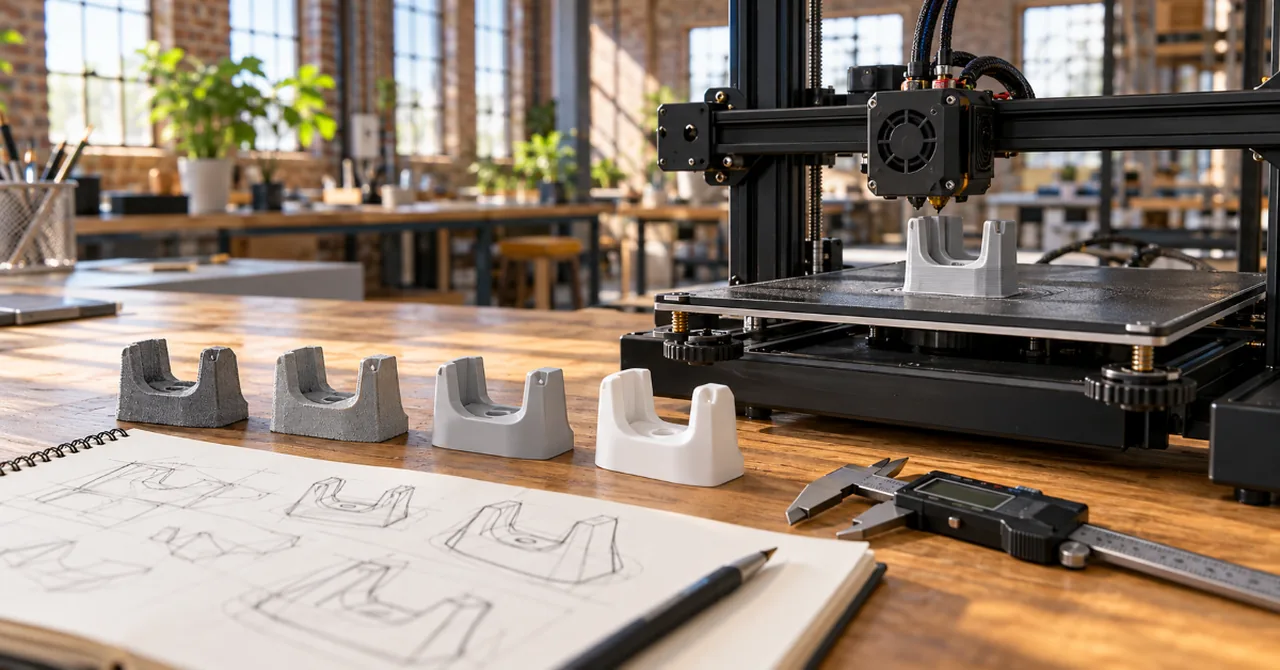
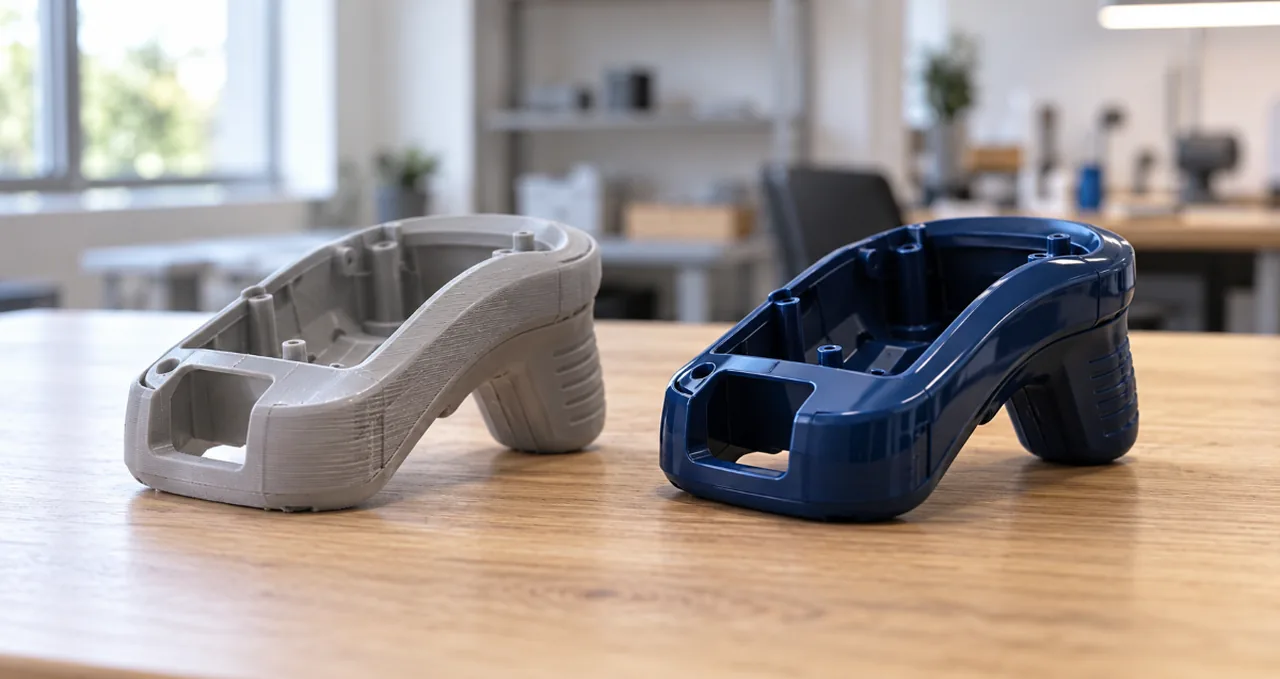
The advantages of rapid prototyping come down to 2 things: speed and cheap mistakes. In our studio in Framingham, Massachusetts, a design change made in the morning is in your hand the same week. That's how you catch a flaw in a $20 print instead of a $20,000 mold.
We 3D print constantly, and it's one of the most valuable things we do. But printing isn't production. After more than 730 consumer product launches, we know printed parts can't hit the cost, strength or finish a retail product needs. Use prints to settle shape and fit questions fast, then get the rest of your answers from a factory.
What is rapid prototyping?
Rapid prototyping is the practice of turning a CAD file into a physical part within hours or days, usually on a 3D printer or a CNC machine. Product teams use it to test form, fit and function before paying for production tooling. It sits between product design and manufacturing, and it's stage 2 of the 5 stages we run.
Those 5 stages are design, prototyping, manufacturing, branding and marketing, all handled by one team at Saxonville Mills. Our in-house prototyping runs in the same building as the designers who drew the CAD file a factory will quote from.
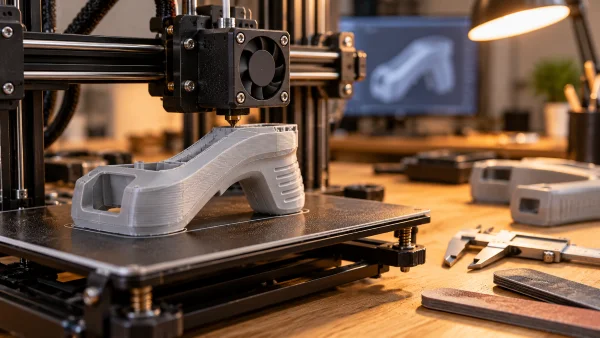
The 6 advantages of rapid prototyping we see on real projects
Rapid prototyping lets you test a real part before tooling locks in the design. On our projects, that pays off in 6 ways.
- Mistakes stay cheap. Changing a print costs little, but recutting a steel mold after production starts costs thousands of dollars and weeks of time. The mold is where the money sits. In a lamp holder study covered by a 2014 NIST literature review, the mold made up 84.6% to 97.7% of the injection molding cost.
- Answers come back in days. Our industrial designers run the printers themselves, so nothing waits in a vendor queue.
- Fit gets settled before tooling. HurtSkurt, a slide-on hot and cold therapy sleeve, went through prototypes for a knee, an ankle and an elbow before it launched into sporting goods retail.
- You can pitch before you produce. A final looks-like prototype in production colors and finishes is what you show retail buyers, investors and licensing partners.
- Complex shapes cost little extra. The same NIST review notes that complexity doesn't raise production cost the way it does with traditional methods, though some designs need support structures. That lets you test a bold shape before you pay a mold maker to cut it.
- The whole team reacts to the same object. Design desks, 3D printers and the people who manage production share the same floors of our studio.
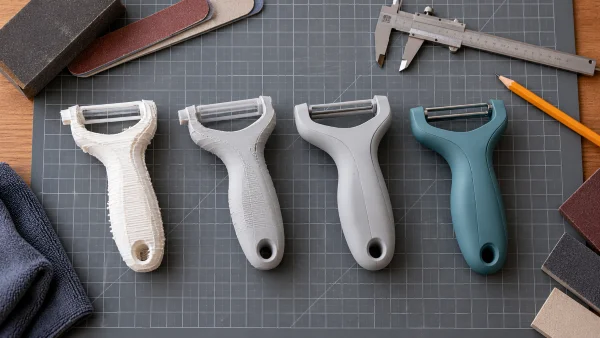
Match the prototype to the question
Each type of prototype answers 1 question. Build the wrong one and you pay for a round that answers the wrong question.
| Prototype | The question it answers | Typical build | What it still can't tell you |
|---|---|---|---|
| Proof of concept | Does the idea work at all? | Rough, hand-built parts | Whether anyone will pay for it |
| Looks-like | Does it look right and fit the hand? | 3D printed shell, final rounds in production colors | Whether it survives daily use |
| Works-like | Does it do its job every time? | Printed and machined parts with working mechanisms | Whether a factory can make it at your price |
| Production sample | Can the factory make it right? | Parts off the real production tool | How fast it will sell |
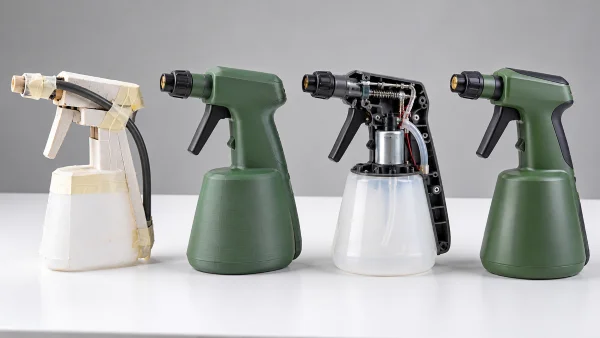
The rung inventors skip is the first one. A proof of concept can come out of a garage, and a failed one saves you from paying for the next 3.
4 things a 3D print can't prove before you pay for a mold
A print can confirm shape and basic fit. It can't confirm production strength, moldability, unit cost or demand, and those 4 decide whether a product makes money.
A top-ranking guide on this topic says rapid prototyping makes sure the final product meets every spec. We disagree. A passing print is early evidence, and the proof comes from a production sample made on the real tool.
1. Strength in the production material
Printed plastic is built from beads and layers, and the bonds between them are weaker than the plastic itself. A 2002 study in the Rapid Prototyping Journal tested printed ABS against injection-molded ABS. Depending on which way the printed beads ran, the printed parts reached 10% to 73% of the molded part's tensile strength. Even with the beads set to overlap slightly, the cross-hatched patterns reached only 65% to 72%. Compression held up better, at 80% to 90%.
Layer direction still matters on today's printers. A printed part pulled across its layers breaks sooner than one pulled along them. A molded part has no beads or layers to split.
Use a works-like print to test the mechanism, and save the strength test for parts off the real tool.
2. Whether a factory can mold it
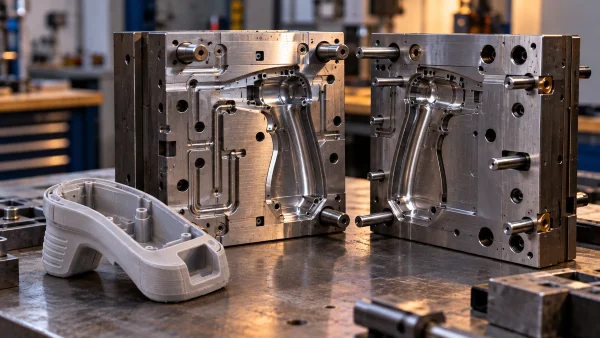
A printer can build almost any shape. A steel mold can't. Molded parts need draft so they release from the tool and even walls so they cool without warping. They also need as few undercuts as possible, since each one adds moving parts to the tool, and as few separate parts as the design allows. That's the work of design for manufacturing, and a print checks none of it.
Production tools are cut from hardened steel or aluminum, and changing one after it's cut often means paying for a new tool.
Eggmazing shows the gap. The inventor came to us with a rough 3D model and a product description. The geometry wasn't ready for a factory, and the inventor had limited experience with the electronics. Our designers and engineers ran design rounds to cut manufacturing cost while keeping its core features. The savings left money for marketing, and Eggmazing reached mass production and national shelf placement. By Easter 2018, it ranked first in Amazon's toy category, according to a 2019 Texas House resolution.
We aim to land most designs at 80% to 90% of the original concept. Chasing a perfect match to the first model can cost you your margin.
3. Your real unit cost
A print's price won't tell you your unit cost. Tooling costs the same whether you make 50 units or 5,000, so volume decides your margin. Our production runs typically start at 1,000 to 2,500 units.
The break-even point moves with the part. In the same NIST review, laser sintering stayed cheaper than injection molding up to 73,000 lamp holders on an EOS P730 and up to 87,000 on an EOS P390. In another study, it beat high-pressure die casting only below 42 parts, for a landing-gear assembly on a 1:5 scale model aircraft.
No print can run that math for you. A factory quote on a manufacturable CAD file can, and we get those quotes through more than 170 manufacturing partners.
LavaLunch is a good example. Its founder was stuck trying to find a manufacturer for the insulated bag and the patented Lava Rocks. We redesigned the bag so it could be made in mass quantities, found manufacturers who could make both parts and assemble them, and negotiated a lower minimum order for the first round of sales. Early sales and the cost savings led to a large production order.
4. Whether anyone will buy it
A print can't answer this, and a nicer print won't either. Our rule is to prove the concept first with a cheap, hand-built version, then ask friends and family whether they'd invest $5,000 in it right now. Spend on prototypes after that. It's why we check for a real market before any development money moves.
When should you stop prototyping and pay for tooling?
Stop when your works-like prototype passes its function tests and a factory has quoted a manufacturable CAD file at a unit cost that leaves you margin. Until both are true, another print is cheaper than a mold.
A simple housewares item may need about 2 rounds of prototypes. Products with mechanisms or electronics need more.
Before anyone cuts steel, we hold a final review we call the Bridge Meeting. It's the last check before production tooling. Design errors cost hundreds of dollars to fix, and manufacturing errors cost tens of thousands. After tooling, the factory builds a functional production sample before the full order, and a third-party team reviews random units and reports on them before anything ships.
Most of our products are launch-ready in 8 to 12 months.
What are the disadvantages of rapid prototyping?
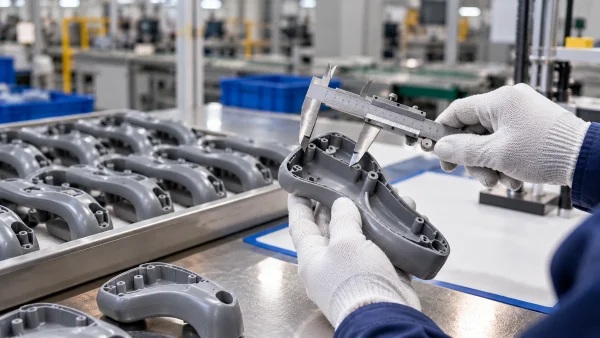
The biggest one is false confidence: a part that looks finished but hasn't been tested in production material or priced by a factory.
- Printed materials behave differently from molded ones, so drop and stress tests on prints can mislead you.
- Rounds add up when each one tests a looks question instead of a works question.
- Sink marks and warp from uneven cooling in the mold are molding defects a print can't predict.
- A design can be printable, even patented, and still be impossible to manufacture at scale.
That last one is why we hold a hard rule: if we can't make it, we won't take on the project.
Is rapid prototyping worth it for a first-time inventor in 2026?
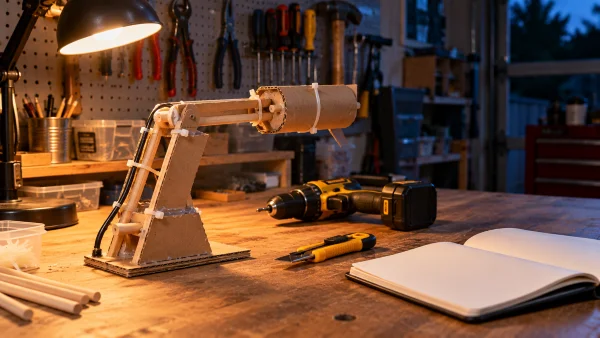
Yes, once a proof of concept works and people have shown they'd put money behind it. Before that, a rough build in your garage will teach you more than a polished print.
After that point, the speed pays for itself. With 39 people in 1 building, revisions from each print go straight back into the CAD file you'll own. If you'll never need a production run, a prototype shop is a better fit than an original design manufacturer, or ODM, like us.
Rapid prototyping FAQ
Short answers to common questions about prototyping a physical product.
What are the advantages of rapid prototyping for a first-time inventor?
You can hold and test your product before you pay for tooling, so you fix flaws while a fix costs the price of a print. Changing a print costs little, while recutting a steel mold after production starts costs thousands of dollars and weeks. A final looks-like prototype also gives you something real to show buyers and investors.
Do the advantages of rapid prototyping carry over to production parts?
Only partly. A 2002 study in the Rapid Prototyping Journal found printed ABS reached 10% to 73% of molded ABS tensile strength, depending on which way the printed beads ran. Use prints to test shape and mechanisms, then confirm strength on a production sample made on the real tool.
How long does rapid prototyping take?
A single printed part takes hours. In our Framingham studio, a design change made in the morning is in your hand the same week. A full product program takes longer: most of our products are launch-ready in 8 to 12 months.
How many prototype rounds does a product need?
It depends on how many unknowns the product has. A simple housewares item may need about 2 rounds, while products with mechanisms or electronics need more. Give each round 1 question to answer so you don't pay to learn the same thing twice.
Do I need a prototype to file a patent?
No. A patent application stands on its written description and drawings. Under 37 CFR 1.91, a model generally isn't admitted into the record unless it substantially conforms to the paper and drawing rules, the Office asks for one, or the applicant petitions with a fee and an explanation. Ask a patent attorney about timing, since a patent and a prototype answer different questions.
What's the difference between a looks-like and a works-like prototype?
A looks-like prototype checks appearance and ergonomics, with the final rounds in production colors and finishes. A works-like prototype checks function, such as a hinge or a circuit, without worrying about looks. Some products need both, often built in parallel.
Your next prototype
If you're weighing the advantages of rapid prototyping against what's left in your budget, start with the rung you're on. Bring what you have, a sketch or a rough build, to a free consultation with our Framingham team, and we'll tell you which prototype you need next, or whether you need one yet.