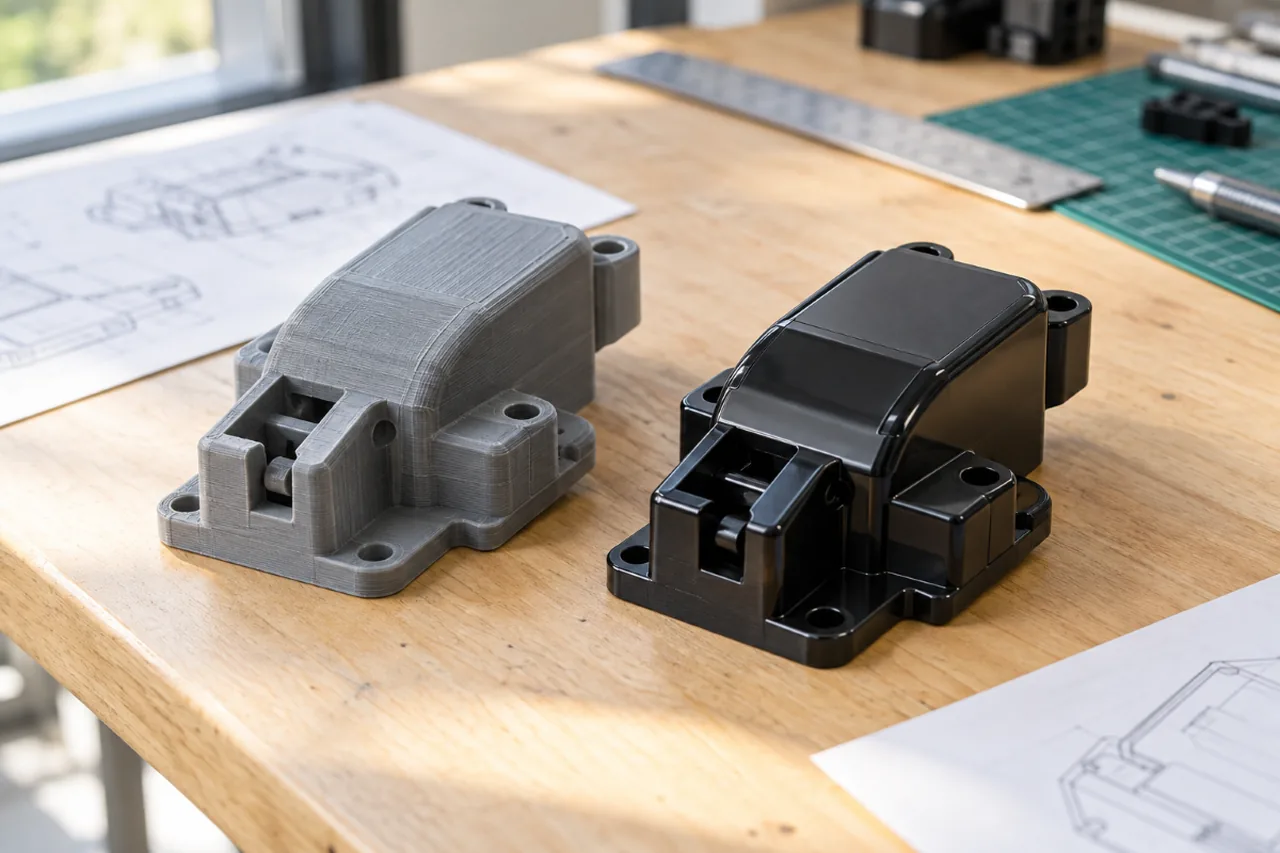
Prototype testing before mass production proves something your workbench can't: that a factory can make your product right, unit after unit, before you pay for thousands of them. A working prototype proves the idea. The product you'll sell gets made a different way, by different people, often from a different material. 52Launch has taken 730+ products to market with a network of 170+ manufacturing partners. Our rule: the production sample has to be fully approved before the full run starts.
These are the 5 sign-offs we'd want in hand before your run starts:
- The works-like prototype does its job in real use.
- The design is frozen before tooling is cut.
- T1 samples from the production tool pass fit, function and finish checks.
- Required safety testing passes at the right lab.
- You approve a production sample that becomes the standard.
What is prototype testing before mass production?
Prototype testing before mass production is the series of checks that proves a product works, meets safety rules, and can be made the same way at scale. It runs in stages. The prototype tests the design. Factory samples test the tooling and materials. Labs test compliance. A signed production sample becomes the standard every unit has to match.
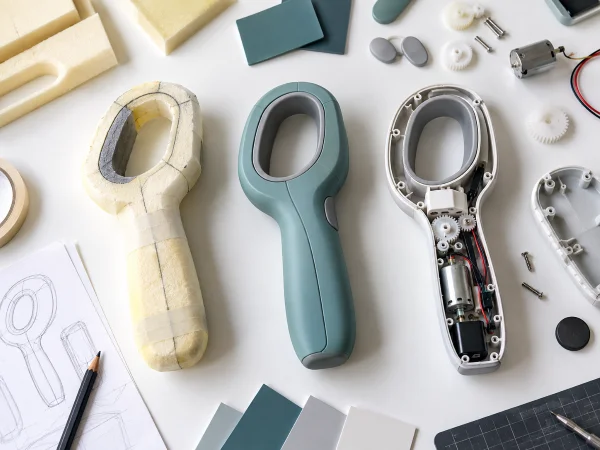
3 terms get mixed up here. A prototype is any early build made to learn something. We make 3 kinds of prototypes: a proof of concept that shows the core idea works, a looks-like model with final colors and finishes, and a works-like model with the real mechanics or electronics inside. A T1 sample is the first set of parts shot from your production mold. A pre-production sample is a full unit built with final materials and the factory's real process. Once you approve one, it's signed and kept as the golden sample, the unit the factory and inspectors judge every run against. Electronics teams use 3 more labels for the same climb: EVT, DVT and PVT, short for engineering, design and production validation testing.
Your prototype isn't the part you'll sell
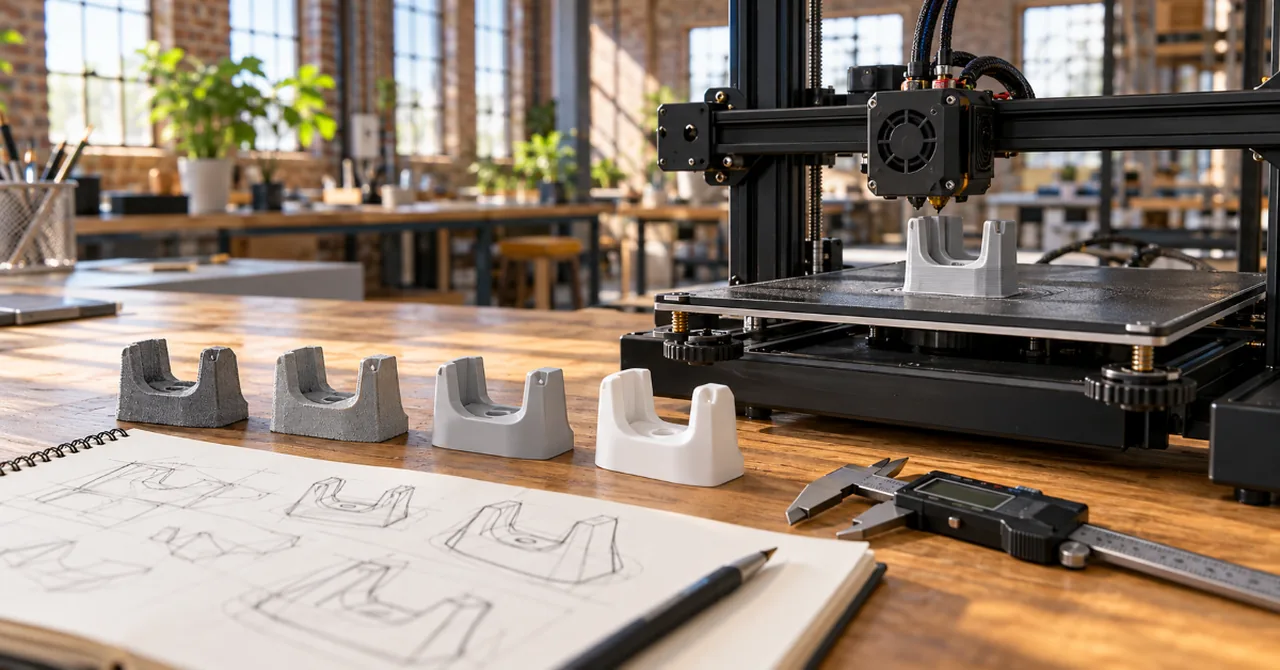
Most testing checklists test the prototype and assume the results carry over. Often they don't, because the 2 are made differently. We've said it before: a prototype is not a product. We 3D print constantly during prototyping. But printing isn't production, and your production parts will likely come out of a steel or aluminum mold.
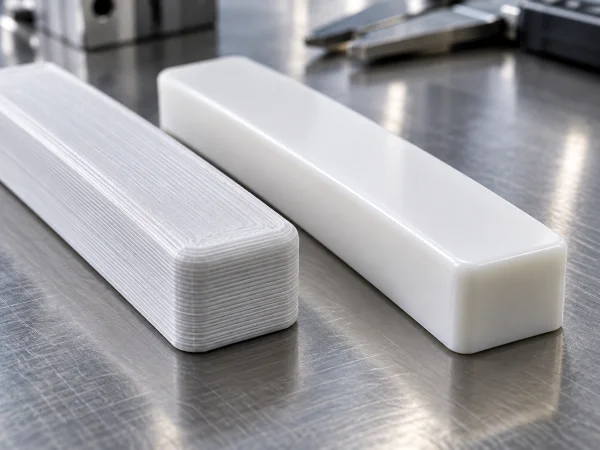
The gap is measurable. A 2002 study in the Rapid Prototyping Journal compared 3D-printed ABS parts with injection-molded parts made from the same ABS. With the print paths overlapped, the printed parts reached 65% to 72% of the molded parts' tensile strength. With the paths touching but not overlapped, they failed at 10% to 73% of it, depending on print direction. So a printed latch that bends or snaps tells you about the print. It tells you much less about the molded latch.
That's why we develop prototypes with the manufacturer instead of on a separate track. We send the molds and tools to the factory along with the product's core functions, get a first trial run called T1, fix what T1 shows, and run T2. The loop repeats until the product is ready to sell. Prototype tests still earn their place. They catch design flaws while a fix costs a reprint. But the tests that decide if you're ready for mass production run on parts from the real tool.
The 5 sign-offs before your production run
Run the 5 sign-offs in order. Each one answers a different question, and skipping one moves its risk to a later stage, where fixes cost more.
1. The works-like prototype does its job
Use the works-like prototype the way your customer will, then the way your customer shouldn't. Load it, drop it, wash it, and leave it in a hot car if that's where it'll live. Hand it to people who've never seen it and watch where they hesitate.
The Chute21 inventors, Bryan and Tyler Wilcox, did this before they ever called us. They tried different heights, sizes and distances and landed on a 3-foot tower that plays at 8 to 10 feet, where regular cornhole needs at least 30, and it fits under a 10x10 pop-up tent. Then they took it to tailgates, where people asked where they could buy one.
Some tests are brutal and specific. KlockItGolf's first prototype was a dog-leash tie-out stake with a rope tied to a golf ball. The idea worked. But the ball had to stay attached under the impact of a golf club, so we developed a proprietary core that anchors the rope permanently inside a ball that looks like a standard one.
Our 39-person team works in 1 building in Framingham, and the industrial designers who draw the part also run the 3D printers, so no outside vendor queue sits between finding a problem and printing the fix. Fix everything you can here. Finding the flaw in a $20 print beats finding it in a $20,000 mold.
2. The design is frozen before tooling is cut
Freeze the CAD before anyone cuts a mold. Production molds are machined from hardened steel or aluminum, so a change after this point means reworking metal instead of editing a file. In our Accelerator program, a Bridge Meeting revalidates every decision before anyone commits to production tooling. Tooling cut too early is the first expensive mistake our manufacturing team warns clients about.
Tooling is also where the money goes. An October 2026 episode of our Pitch to Product podcast, hosted by co-founder Peter Drakulich and idea consultant Bobby Quintero, breaks down how tooling ranges from about $3,200 to $72,000, depending on the product and materials. A September 2026 episode with CEO Dan Gonyea and Peter Drakulich covers why a single design change can cost 1 to 8 weeks.
NASA measured how fix costs climb. A 2004 NASA study set the cost of fixing an error at the requirements stage as 1. The same fix cost 3 to 8 times more during design, 7 to 16 times more during the build, and 21 to 78 times more during integration and test. Those were spacecraft-scale hardware and software projects, so your numbers will be smaller. The curve points the same way. Our rule of thumb: a design error costs hundreds of dollars to fix, and a manufacturing error costs tens of thousands.
This is also the moment for a design for manufacturing review. Wall thickness, draft angles and part count get adjusted so the part can be molded cleanly. Eggmazing, an Easter egg decorator with a spinning action and electronics, came to us as a rough 3D model that wasn't ready for mass production. Its geometry and its electronics both needed rework, and we iterated the design until the manufacturing cost came down.
3. T1 samples hold up off the production tool
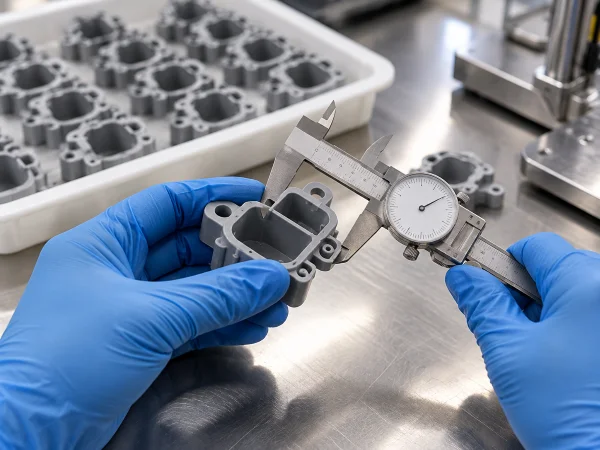
Test the first parts off the real tool against the approved prototype. Check that parts assemble without force, that colors match the approved swatch, and that surfaces don't show flaws your prototype never had. Then rerun the use and abuse tests from sign-off 1, because the material and the process both changed. Expect a T2. In our process, T1 is a starting point.
Being there in person speeds this up. On our 2026 sourcing trip to China, the team spent nearly 3 weeks covering 15+ cities and an estimated 30 to 45 active factory projects. From the US, a 12-hour time difference can turn a single color-swatch question into a full day. On the factory floor, answers came in minutes and samples got corrected on the spot.
4. Required safety testing passes at the right lab
Send the lab production-equivalent units. Parts made a different way can pass a test the real product fails. The rules depend on what you're making, and the table below covers the common cases. Start with these 2.
If your product is designed mainly for kids 12 or younger, CPSC requires testing by a CPSC-accepted third-party lab and a Children's Product Certificate from the US manufacturer or importer. Under 16 CFR 1107.21, that testing repeats at least once a year, or every 2 to 3 years under certain testing plans. If your product has Bluetooth, Wi-Fi or another radio transmitter, the FCC requires equipment authorization before it's marketed or imported. Most transmitters need full certification, with testing at an FCC-recognized lab.
5. You approve a production sample
Approve a production sample built with final materials, final tooling and the factory's real process. Pre-production and golden samples need a production order and finished tooling first, so this is your last stop before the full run. Our rule is firm here: the factory provides a functional production sample, and it has to be fully approved before the run starts. Once approved, it's the standard. Before your goods ship, a third-party team inspects random units and issues a report. If product fails inspection, the factory may have to check 100% of the units and rework the failures before the lot gets inspected again.
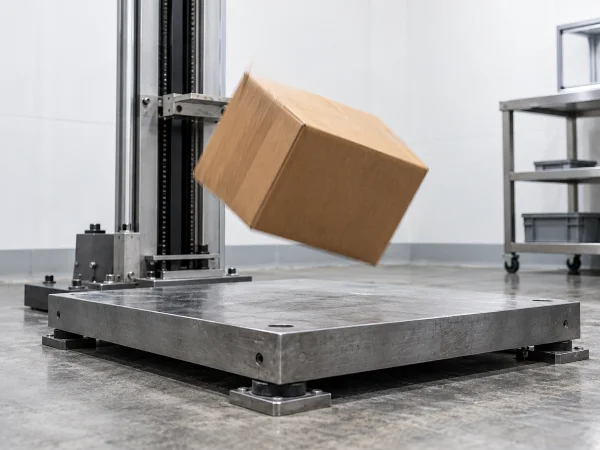
If you sell online, test the box too. The International Safe Transit Association's Procedure 3A, written for parcel shipments of packages up to 150 lb, puts a standard box through 9 drops plus vibration testing.
Which tests does your product need?
Every product needs sign-offs 1, 2, 3 and 5. Sign-off 4 depends on what you're making and where you sell it.
| If your product... | What applies | Who tests | What you end up with |
|---|---|---|---|
| Is designed mainly for kids 12 or younger | CPSC children's product rules | A CPSC-accepted third-party lab | A Children's Product Certificate, plus periodic retests |
| Has Bluetooth, Wi-Fi or other electronics | FCC equipment authorization | An FCC-recognized lab for certification | A certification grant for radios, or a Supplier's Declaration of Conformity where the rules allow it |
| Touches food or drink | FDA food contact rules | A testing lab, plus your material supplier's documents | Proof each food-contact material is listed in 21 CFR or covered by an effective food contact notification |
| Is sold in California | Proposition 65 | You decide, with your supplier's material data | A clear and reasonable warning if it exposes people to a listed chemical. Businesses with fewer than 10 employees are exempt. |
| Ships by parcel | ISTA Procedure 3A, a voluntary standard | A packaging lab | A box spec that survives drops and vibration |
| Any product | Your own spec | You, the factory and an inspection team | An approved production sample |
This table covers the common cases. Your product may fall under more than 1 rule, so confirm with the agency or a test lab before you book. We've launched dozens of kids products, including Lava Lunch, Chute21 and Eggmazing.
Why we aim for 80% to 90% of the original concept
Your production sample won't be a perfect copy of your first sketch, and it shouldn't be. Our sourcing team aims for final designs at 80% to 90% of the original concept. Chasing the last 10% to 20% means more sample rounds and more tool changes. Before T1, write down what can't move: the function, the safety rules and the fit with mating parts. Let the rest flex.
What changed for product testing in 2026?
Paperwork moved to the border. Since July 8, 2026, CPSC has required importers of regulated consumer products to e-file their compliance certificates before the goods enter US commerce. Shipments through foreign trade zones follow on January 8, 2027. CPSC says the rule adds no new testing, and domestic manufacturers aren't covered. But if you import under your own company name, your test reports and certificate need to be done before the goods arrive, because the filing happens before entry.
Who should run each test?
Split the work 4 ways. You and your design team own the prototype tests, because you know how the product should work and how it's likely to fail. The factory runs T1 and the production sample, with your team checking every round. Anything the law requires, like CPSC or FCC testing, goes to an outside lab. An independent team handles the pre-shipment inspection.
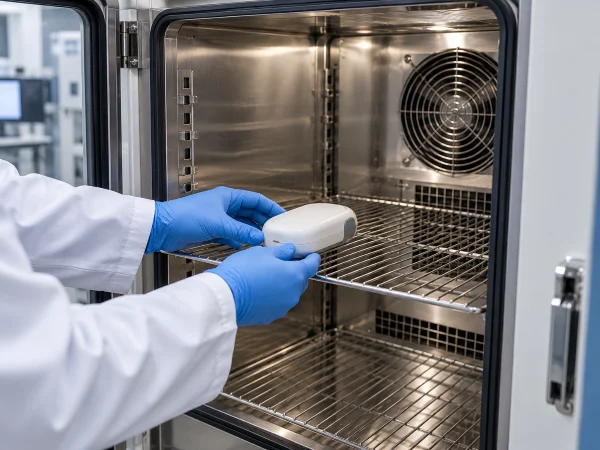
We add 1 rule. The people inspecting your production run should be the same team that's known the product since the first prototype.
If you have a working prototype and a factory quote, get your plan for prototype testing before mass production checked before you sign a purchase order. Our free consultation covers feasibility, timeline and a realistic budget range.
Frequently asked questions
Can I do prototype testing before mass production with a 3D-printed part?
Yes, for the design, but don't treat it as final proof. A 2002 study in the Rapid Prototyping Journal found 3D-printed ABS parts reached 65% to 72% of the tensile strength of injection-molded parts made from the same ABS. Use printed parts to find design flaws, then rerun the same tests on T1 samples from the production tool.
Does prototype testing before mass production include safety certification?
It should whenever a federal rule covers your product. Products designed mainly for kids 12 or younger need testing by a CPSC-accepted third-party lab and a Children's Product Certificate. Products with a radio transmitter, like Bluetooth or Wi-Fi, need FCC equipment authorization before they're marketed or imported. Test production-equivalent units, because the result has to match what you ship.
What is a golden sample?
A golden sample is the pre-production sample you approve as the standard for your order. It's built with final materials, tooling and process, then signed and kept so the factory and inspectors can compare production units against it. At 52Launch, the factory's functional production sample has to be fully approved before the full production run starts.
How much more does a mistake cost after tooling is cut?
More at every stage. A 2004 NASA study of large hardware and software projects set the cost of fixing an error at the requirements stage as 1. The same fix cost 7 to 16 times more during the build and 21 to 78 times more during integration and test. Our rule of thumb for consumer products: a design error costs hundreds of dollars to fix, and a manufacturing error costs tens of thousands.
How many prototypes do I need before manufacturing?
We build up to 3 kinds of prototypes: a proof of concept, a looks-like model and a works-like model. After that, the factory runs trial samples, starting with T1 and T2, until a production sample can be approved. The count depends on how many parts and materials your product has.
How big should my first production run be?
Plan the run around your tooling. Tooling costs the same whether you make 50 units or 5,000, so at low volume the tooling alone can eat your entire margin. On our Pitch to Product podcast, Peter Drakulich and Bobby Quintero explain why 1,000 units is a reasonable test run.
Do children's products need retesting after the first certificate?
Yes. Under 16 CFR 1107.21, children's product makers need periodic third-party testing at least once a year under a periodic testing plan. The interval can stretch to 2 years with a production testing plan, or 3 years if your production testing uses an ISO/IEC 17025 accredited lab.