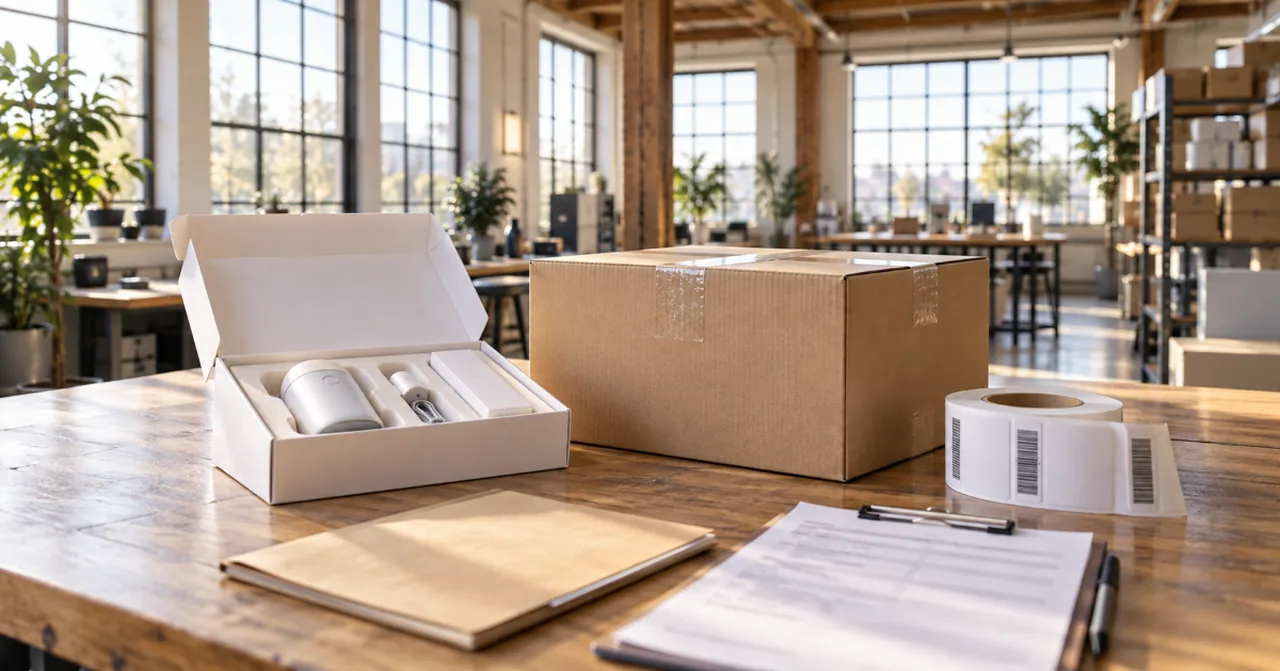
Big-box retailers require more than a good pitch before they'll carry your product. The buyer needs a wholesale price that leaves the store its margin, retail-ready packaging and proof that people buy it. Then the vendor setup asks for paperwork: GS1 barcodes, liability insurance, EDI ordering and any safety certificates your product calls for. You also need a factory that can fill the first purchase order, or PO, on time. The pitch gets you the meeting. These requirements decide whether you leave with a PO you can fill at a profit.
We've helped launch 730+ products at 52Launch, with 170+ manufacturing partners and 55 million+ units produced. Our clients' products sell at 14 retailers, including Walmart, Target, Costco, Home Depot and Lowe's. Our work sits on the factory side of the deal: the product, the cost and the timeline.
Big-box retailer requirements are the rules a national chain such as Walmart, Target, Costco, Home Depot or Lowe's sets for new suppliers. They cover price, supply, product safety, insurance, barcodes, electronic ordering and packaging. A buyer approves the item, and the retailer sets you up as a vendor only after you meet them.
What big-box retailers require from every new vendor
Every chain writes its own vendor rules. But a buyer who likes your product still has to see 5 things: margin, supply, compliance, packaging and proof of demand. Have an answer for each before the first meeting.
| Requirement | What to have ready |
|---|---|
| Margin | A wholesale price that leaves the retailer its target margin and still covers your landed cost |
| Supply | Your factory's minimum order, lead time and monthly capacity, in writing |
| Compliance | GS1 barcodes, liability insurance, EDI ordering, a tax ID and any safety certificates or factory audits your product needs |
| Packaging | Retail-ready packs with the barcode, warnings and only claims you can back up, plus shipping cases built to the retailer's specs |
| Demand | Sales history, reviews or test results that show people buy it |
3 of those 5 rows live on the factory side of your business. Packaging is a good example: it has to fit the product, survive shipping and land at a unit cost the margin can carry. That's why our Accelerator Program runs design, marketing and manufacturing work at the same time. No job gets handed off to a different vendor halfway through.
How do you price a product for a big-box retailer?
Start with the shelf price and work backward. The retailer's margin comes off the top, and what's left is your wholesale price. That number has to cover your unit cost with room to spare.
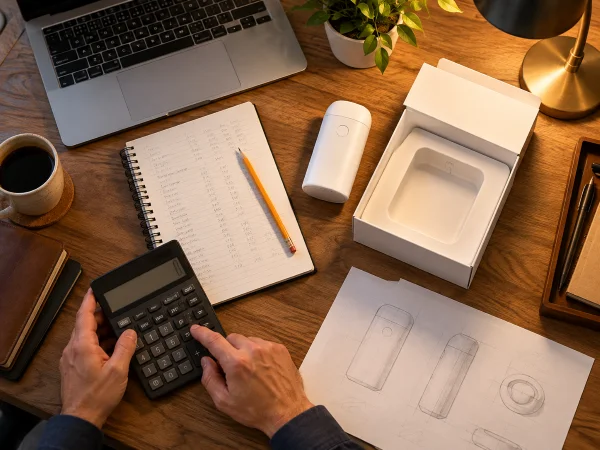
On our Pitch to Product podcast, we use a keystone-style rule of thumb: a $100 retail price means a $50 wholesale price and a $25 unit cost. Treat it as a starting point. Ask the buyer for the category's target margin before you quote, then run the margin math line by line.
| Line | Our working example | What it covers |
|---|---|---|
| Retail price | $100 | What the shopper pays |
| Wholesale price | $50 | What the retailer pays you; the other $50 is its margin |
| Unit cost | $25 | What it costs to make each unit |
| Left per unit | $25 | Before freight, duties, deductions, marketing and overhead |
Then stress-test it with what we call the Goldilocks test. Check whether the product still sells if unit cost rises to $30, wholesale to $60 and retail to $120. Also run the math at your real volume. Small first runs of about 1,000 units often cost 20% to 25% more than you'd expect.
2 fixed costs need their own line. The first is tooling, the molds and fixtures a factory makes for your product. It's usually the largest upfront cost in manufacturing. Our podcast puts the range at about $3,200 to $72,000, depending on the product and materials. Tooling costs the same whether you make 50 units or 5,000. At low volume, it can eat your whole margin.
The second, for grocery items, is slotting fees. In a 2003 FTC study of 5 grocery categories, retailers estimated that 50% to 90% of new grocery products carried slotting fees. The average fee ran $2,313 to $21,768 per item, per retailer, per metro area. The FTC called its sample small, so treat those figures as a warning, not a quote.
If the math doesn't work, change the product before you change the price. That's why we design for manufacturing from the first sketch, and the Eggmazing story below shows what it saves.
Minimums and the first purchase order
Your factory's minimum order quantity, or MOQ, sets the floor for your first PO. We treat 1,000 units as a reasonable test run. A traditional manufacturer might require 30,000 to 50,000 pieces.
That gap matters because big-box orders vary in size. Walmart says Open Call deals can range "from a handful of local stores to supplying hundreds of stores." Before you pitch, get 3 numbers from your factory in writing:
- MOQ per item and per color
- Lead time from deposit to finished goods
- Monthly capacity once production starts
Minimums can move. LavaLunch is an insulated lunch bag with microwavable heat packs, and the client couldn't find a maker for both parts. We found manufacturers who could make the bag and the heat packs and assemble them, then worked with both to bring the minimum down. That let the client fund its first round of sales, and the early success led to a large production order. LavaLunch has brought in nearly $3 million in revenue since 2020.
Ask the buyer about payment terms early, and line them up against your factory's deposit schedule.
The paperwork and specs big-box buyers ask for
Every chain has its own vendor rules. But 6 items keep coming up on official supplier pages and federal sites: barcodes, insurance, EDI, safety certificates, shipping specs and honest labels.
Barcodes
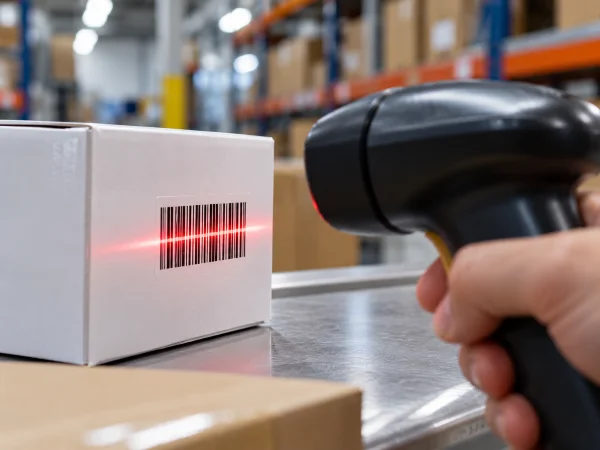
Walmart asks for a GS1 Company Prefix number on its supplier application. GS1 US licenses a prefix starting at $250 for 10 barcodes, plus $50 a year. A single GS1 barcode costs $30 with no annual fee, but check what your retailer accepts before you buy. GS1 warns that a barcode tied to another company can get your product rejected or force you to relabel.
Liability insurance
Walmart publishes its minimums. Suppliers need commercial general liability of at least $1 million per occurrence and $2 million aggregate. Product liability limits climb with the product category. They run from $1 million per occurrence for Category I up to $10 million for Category III. Walmart must also be named as an additional insured. Target asks for a certificate of insurance, and Home Depot says partners must meet its insurance standards.
EDI ordering
Walmart and Target both send purchase orders electronically. Walmart's supplier checklist says you need EDI, or electronic data interchange, for any Walmart banner other than Walmart.com. Target lists receiving POs through EDI as a requirement.
Safety certificates
If your product is made for kids 12 and under, the CPSC requires third-party testing at a CPSC-accepted lab. The U.S. manufacturer or importer then issues a Children's Product Certificate. Some general-use products need a General Certificate of Conformity instead. Since July 8, 2026, importers of regulated products have had to file those certificates electronically before the goods enter U.S. commerce. If you're launching a kids' product, budget for lab testing before you print packaging.
Shipping case specs
Walmart tells suppliers to pack, label and ship products to the specs in its supply chain packaging guide. It asks suppliers to check that they can meet its rules for case durability and size, case markings and labels, palletizing and trailer loading. It also notes that high-priced products often require anti-theft tagging. Give those specs to your factory before it quotes the shipping cartons.
"Made in USA" claims
Don't print "Made in USA" on the box unless the product is "all or virtually all" made here. Under the FTC's standard, final assembly or processing has to happen in the U.S., and so does "all significant processing." All or virtually all parts also have to be made and sourced in the U.S. The FTC finalized its Made in USA Labeling Rule in August 2021. Since then, marketers can face civil penalties for an unqualified label on a product that doesn't meet that bar.
Where you manufacture changes what retailers require
Where you make the product decides which programs you qualify for, which audits you pay for and what you can print on the box. It also changes what you file at the border.
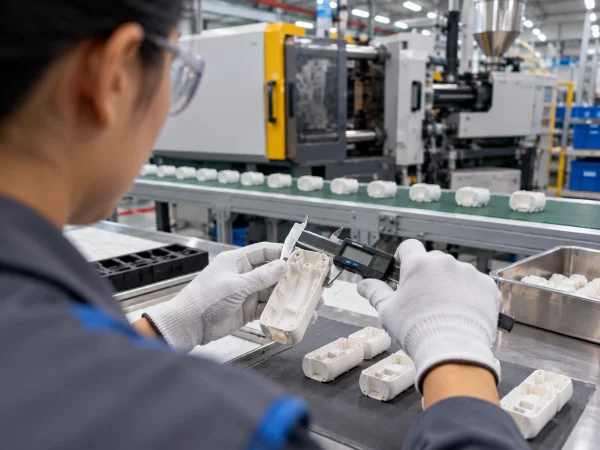
Walmart's Open Call only takes products made, grown or assembled in the U.S. But "Assembled in USA" has its own FTC test: the principal assembly has to happen in the U.S. and be substantial. A simple "screwdriver" assembly of imported parts usually doesn't qualify. And imports of regulated products now need CPSC certificates filed electronically before entry, a step U.S. manufacturers skip.
Overseas factories can face an audit of their own. If Walmart buys a non-food product as a direct import, any new factory needs a Factory Capability & Capacity Audit before the retailer commits to an order. Walmart picks the third-party auditor, and the supplier pays the fee up front. Book the audit late, and the order gets placed late. Target also asks suppliers to commit to its audit program and its Standards of Vendor Engagement.
Cost can push the other way. In 1 podcast episode, our CEO Dan Gonyea and co-founder Peter Drakulich priced 1 component for a product that retails at $19.99. On a 2,000-unit order, the piece price was $0.60 overseas and $3.19 in the U.S. Tooling ran about $2,500 overseas and $17,774 domestic, and tariffs and freight still didn't close the gap.
Both routes can work. The right answer depends on your product's materials, volume, margin and lead time. We work with 170+ manufacturing partners worldwide, including domestic options. For Unshrinkit, we found a chemist to make the formula in the U.S. For Eggmazing, an overseas factory made the product and its custom packaging. Our manufacturing team walks each client through the real cost, timeline and tariff tradeoffs before they commit.
Wherever it's made, we run quality checks at the factory on materials, production and finished goods. A third-party team reviews random units and sends a report before anything ships. On 1 sourcing trip to China, our team spent nearly 3 weeks visiting 15+ cities and 30 to 45 factory projects.
Do you need online sales before a buyer will say yes?
Not on paper. None of the 5 retailer supplier pages we checked in October 2026 lists online sales history as a requirement. But a buyer still has to believe the product will sell. A steady sales record on Amazon or your own site is the clearest proof you can show.
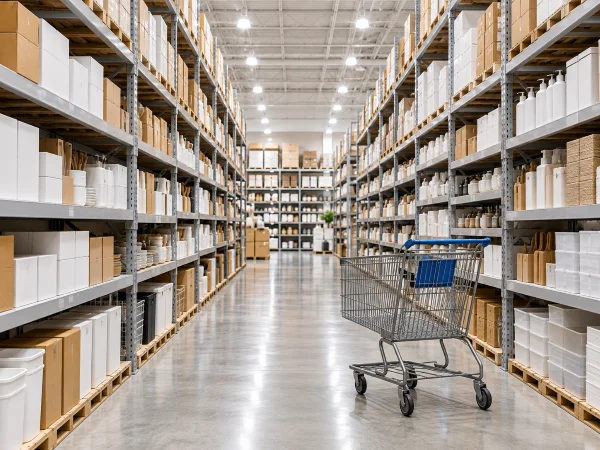
Our pet product launch plan works that way. Expand on Amazon first, then use proven sales data to win shelf space with pet stores, boutiques and regional chains. Walmart's own Open Call page points businesses to Walmart Marketplace as another way to work with the company.
Shelf space is still worth chasing. The Census Bureau's quarterly e-commerce report put U.S. e-commerce at $340.2 billion out of $1,986.5 billion in total retail sales for the second quarter of 2026. That's 17.1%, which leaves 82.9% outside e-commerce. The figures are preliminary, adjusted for seasonal swings but not for price changes.
How 5 big-box chains take new products in 2026
Each chain publishes its own intake route, and the routes differ. This is what their official supplier pages said in October 2026.
| Retailer | How new suppliers apply | Requirements it names |
|---|---|---|
| Walmart | Open Call for products made, grown or assembled in the U.S., with applications through RangeMe; supplier registration; or Walmart Marketplace | Insurance, a GS1 Company Prefix, EDI for store orders, a DUNS number, a tax ID |
| Target | Supplier Intake Form on its corporate site | EDI for purchase orders, a certificate of insurance, electronic funds transfer for U.S. vendors, a commitment to its audit program |
| Costco | Contact the corporate office for non-food items or the right division office for food | None listed on the page |
| Home Depot | New Product Submission site, with a reply from the merchant team within 60 days | Legal, insurance and safety compliance, and possibly EDI |
| Lowe's | Vendor Gateway, with applications reviewed through RangeMe | Tax ID, DUNS number, product certifications, annual revenue |
Read the fine print, too. Walmart, Home Depot and Lowe's all say in writing that applying or signing up doesn't guarantee business.
Why we'd skip the cold FOMO email
A popular tactic tells founders to email a buyer 1 line built on fear of missing out. A pitch deck rides along as an attachment. We'd skip it. Walmart's pitch program for U.S. entrepreneurs, Open Call, runs on a formal application with a deadline.
Walmart's 13th annual Open Call took place in October 2026 in Bentonville, Arkansas. Applications ran July 9 to August 3 through an exclusive RangeMe link. Invited suppliers heard back the first week of September. Products had to be shelf-ready and made, grown or assembled in the U.S. RangeMe's application guide was blunt: "Do not reach out to Walmart buyers as they are reviewing applications."
The odds are tight, too. Walmart says nearly 150 entrepreneurs came to pitch, picked from "a pool of several thousand applicants." Each pitch was a 30-minute meeting, and merchants gave out 54 Golden Tickets. A Golden Ticket gives a business the chance to sell on Walmart or Sam's Club shelves or on Walmart.com. What gets you into that room is a product that's priced, packaged and ready to ship.
How long does it take to get a product on store shelves?
From a raw idea, plan on about a year. Our Accelerator Program fits 6 phases into about 6 months. Manufacturing adds at least 6 more before a product reaches a shelf. Our podcast calls the full run a 52-week timeline. 1 design change can cost 1 to 8 weeks, so lock the design before tooling.
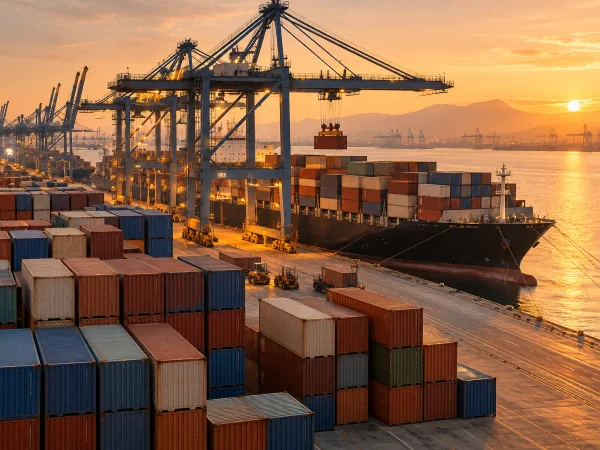
Freight runs on its own clock. In our shipping experience, the fast boat through Long Beach is roughly 20 days faster than standard ocean freight through the Panama Canal. It costs about 20% more. Roughly 1 in 20 to 25 of the containers we see gets flagged by customs. Most flags clear in 2 to 3 days, but a full inspection can add 30 to 45 days. Chinese New Year also shuts down factories, ports and even air freight for roughly a month.
Retailer calendars stack on top of that. Walmart's 2026 Open Call took applications in July and August, sent invitations in early September and held pitches in October. Home Depot says its merchant team replies to new product submissions within 60 days.
Vendor setup after the buyer says yes
A yes starts the vendor setup, and the paperwork moves fast. Walmart's supplier checklist asks for a DUNS number to register, a current W-9 from U.S. suppliers and a U.S. bank account for payments. It wants a certificate of insurance within 30 days of accepting its Supplier Agreement. You'll also acknowledge its Standards for Suppliers and its product safety documents. Target pays U.S. vendors by electronic funds transfer.
Then the shelf test starts. A new item has to sell, so plan launch marketing before the product ships. Our marketing team builds that plan during development so it's ready when the product lands. And when the PO comes in, we stay on as the manufacturing partner. The team that built the product runs the scale-up.
How Eggmazing got to national shelves
Eggmazing, a spinning egg decorator, reached national shelves after a redesign that cut its manufacturing cost. Its creator came to us with a rough 3D model, and the design wasn't ready for mass production. Our designers and engineers worked through design change after design change. The goal was to bring the cost down without losing the features that made it work.
We collected quotes on materials, manufacturing and shipping, and an overseas factory produced the product and its custom packaging. The cheaper design left the client with money for marketing. Eggmazing went from prototype to mass production and national shelf placement as a seasonal product. It's been featured on the Today Show and in Good Housekeeping. The full Eggmazing case study covers the design work.
Big-box retailer requirements: FAQ
What paperwork do big-box retailers require?
Expect to provide proof of insurance, barcodes, EDI ordering and company details such as a tax ID and DUNS number. Walmart, for example, requires a GS1 Company Prefix and at least $1 million per occurrence in general liability coverage. It must also be named as an additional insured. Products for kids 12 and under also need third-party lab testing and a Children's Product Certificate.
How do you get your product into big-box stores?
Apply through each retailer's own intake route. Target uses a Supplier Intake Form, Home Depot a New Product Submission site, Lowe's its Vendor Gateway and Walmart its Open Call. Before you apply, line up a wholesale price that covers the retailer's margin. You'll also want GS1 barcodes, liability insurance and a factory that can fill the first order.
Can you email a Walmart buyer directly?
Not during Open Call. RangeMe's 2026 application guide told applicants not to reach out to Walmart buyers while they reviewed applications. Apply through the exclusive RangeMe link when the next window opens.
Do big-box retailers require products made in the USA?
No, though Walmart's Open Call does. That program only takes products made, grown or assembled in the U.S. The supplier pages for Target, Home Depot and Lowe's don't list that rule. Since July 8, 2026, importers of regulated products must also file CPSC certificates electronically before the goods enter U.S. commerce.
How much does it cost to get a product into a big-box store?
It depends on the product, but some costs are predictable. Tooling runs about $3,200 to $72,000, depending on the product and materials, and GS1 barcodes start at $250 for 10, plus $50 a year. Walmart requires at least $1 million per occurrence in general liability coverage. Grocery items can also carry slotting fees, which averaged $2,313 to $21,768 per item, per retailer, per metro area in the FTC's 2003 study.
What's the minimum order for a big-box store?
There's no single number. Walmart's Open Call FAQ puts the range "from a handful of local stores to supplying hundreds of stores." What you control is your factory minimum. We treat 1,000 units as a reasonable test run, while a traditional manufacturer might require 30,000 to 50,000 pieces.
How long does it take to get your product into big-box stores?
From a raw idea, plan on about a year. Our Accelerator Program takes about 6 months, and manufacturing adds at least 6 more before a product reaches a shelf. The retailer's own calendar adds time on top.
3 of the 5 things big-box retailers require get settled at the factory, long before the pitch. Price backward from the shelf. Line up barcodes, insurance and EDI, decide where the product gets made, and get your MOQ and lead time in writing. Then pitch. If you want a second set of eyes on your retail math, book a free consultation with our team.