To reduce manufacturing costs on a new product, get 4 decisions right before the first production run: the design, the tooling, the order size and the landed cost to your warehouse. Most guides on this topic are written for plant managers. They tell you to run lean, train the floor team and cut the plant's energy bill. If a factory builds your product, those jobs belong to the factory. Your savings come from what you hand the factory and how you buy from it.
As a product development company, we've taken 730+ products to market through a network of 170+ manufacturing partners. The 3 mistakes we warn founders about most are tooling cut too early, order minimums that outrun demand and the wrong customs code. All 3 happen before a single unit ships.
What is manufacturing cost per unit?
Manufacturing cost per unit is the full cost of getting 1 finished, sellable unit into your warehouse. It includes the factory's price for materials, labor and overhead, plus your share of tooling, packaging, inspection, freight, duties and customs fees. For a product you outsource, that landed number is the one to cut.
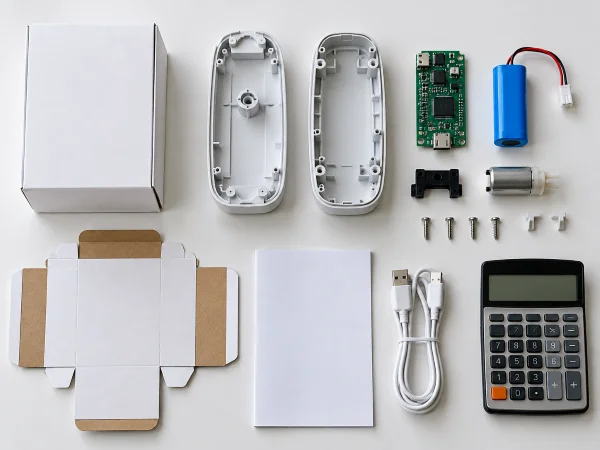
If all you have is a parts list, triple its total as a baseline. Multiply it by up to 10 if the parts need a circuit board, software or licensing, or have to talk to each other. That's the rule of thumb in our guide to product costs. A factory already has the parts list. What you pay for is the work of turning it into a product.
Each piece of that cost has a deadline. Miss it, and changes get expensive.
| Cost piece | What sets it | When it's still cheap to change |
|---|---|---|
| Design | Part count, materials, tolerances, draft angles | Sketch, CAD and prototype stages |
| Tooling | Molds, jigs and fixtures made for your part | Before the steel is cut |
| Order size | The factory's minimum and its price breaks | Before you sign the purchase order |
| Landed cost | Shipping term, freight mode, HTS code, tariffs, fees | Before you book freight |
| Quality | The inspection plan and who runs it | Before the goods leave the factory |
Does design set 80% of your manufacturing cost?
Not on the evidence. The claim that design locks in 70% to 80% of a product's cost gets repeated everywhere, but the research behind it is thin. An MIT cost model found the factory moved cost slightly more than the design did.
MIT researchers Karl Ulrich and Scott Pearson went looking for the source. The 70% figure in a widely used design textbook traced back to an internal Ford study, and when they asked Ford about it, an employee called it an informal survey. The 80% version leans on a Rolls-Royce study that measured something else: how many cost-cutting opportunities needed a design change. A 2001 review in the Journal of Engineering Design disputed the 70% claim as well.
Then Ulrich and Pearson ran the test. They studied 18 drip coffee makers that brew coffee of equal quality and modeled what each would cost to build in 6 different plant setups. Under their plant assumptions, design differences moved cost slightly less than factory differences did. A revised, retitled version of the study appeared in Management Science in 1998. The 1993 working paper's Krups example shows the split:
| Krups coffee maker scenario, MIT cost model | Cost per unit |
|---|---|
| Original design, poorly run plant in a high-cost location | $14.54 |
| Original design, poorly run plant in a low-cost location | $9.73 |
| Redesigned, same high-cost plant | $9.72 |
| Original design, well-run plant in a low-cost location | $8.06 |
| Redesigned, well-run plant in a low-cost location | $4.98 |
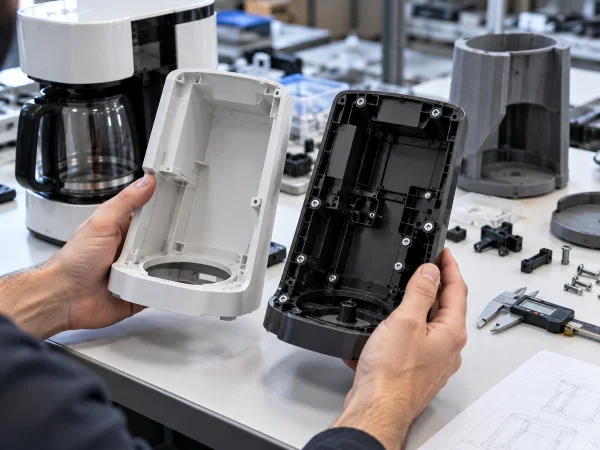
Redesigning the coffee maker saved about as much as moving it to a cheaper location: $9.72 vs $9.73. Running the cheaper plant well cut it to $8.06, and doing all 3 got it to $4.98. Our take: design is the cheapest place to change cost, and the factory you pick matters as much. Design errors cost hundreds to fix. Manufacturing errors cost tens of thousands, and you usually find them after the money is spent. So fix the design first, then pick the factory with the same care.
Decision 1: design out the parts and features you don't need
The cheapest part is the one the factory never makes. Fewer parts, standard components and tolerances that are tight only where they matter cut cost before anyone quotes the job.
Design for manufacturability covers material choice, wall thickness, draft angles, tolerances and assembly. Skip it, and the problem shows up months later, when a factory quotes the part and the numbers don't work, or a mold has to be recut because nobody checked the draft angles. Extra features cost money too. In one case we've written about, a product designed with AI carried 8 layers of internal circuitry it didn't need, which turned a $20 part into a $150 one.
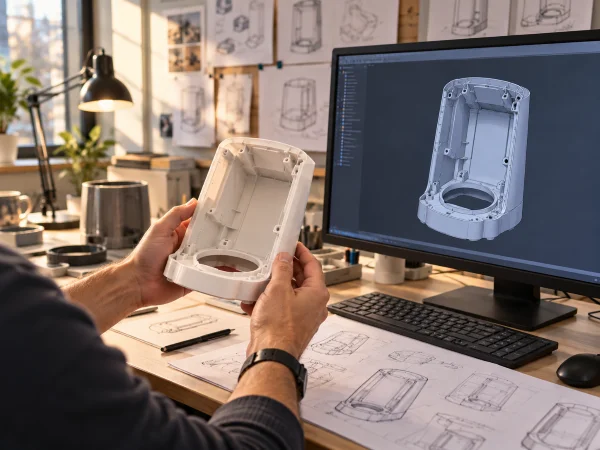
The Eggmazing egg decorator shows the payoff. The inventor came to us with a rough 3D model, and the product's geometry and electronics were the hard parts. We worked through round after round of design changes to bring the manufacturing cost down, then gathered competing quotes for materials, manufacturing and shipping. The client had money left over for marketing, and Eggmazing went on to sell tens of millions of units.
The pricing math is why this matters. A $40 item redesigned to cost $20 to produce can support a $49 to $59 price instead of $90. Expect some compromise along the way. On a recent China sourcing trip, our team found the hardest part was turning a new idea into something a factory could produce. The realistic goal was landing at 80% to 90% of the original concept. Build in room for that, because chasing perfection can eat the profit.
Decision 2: cut tooling only after the design is frozen
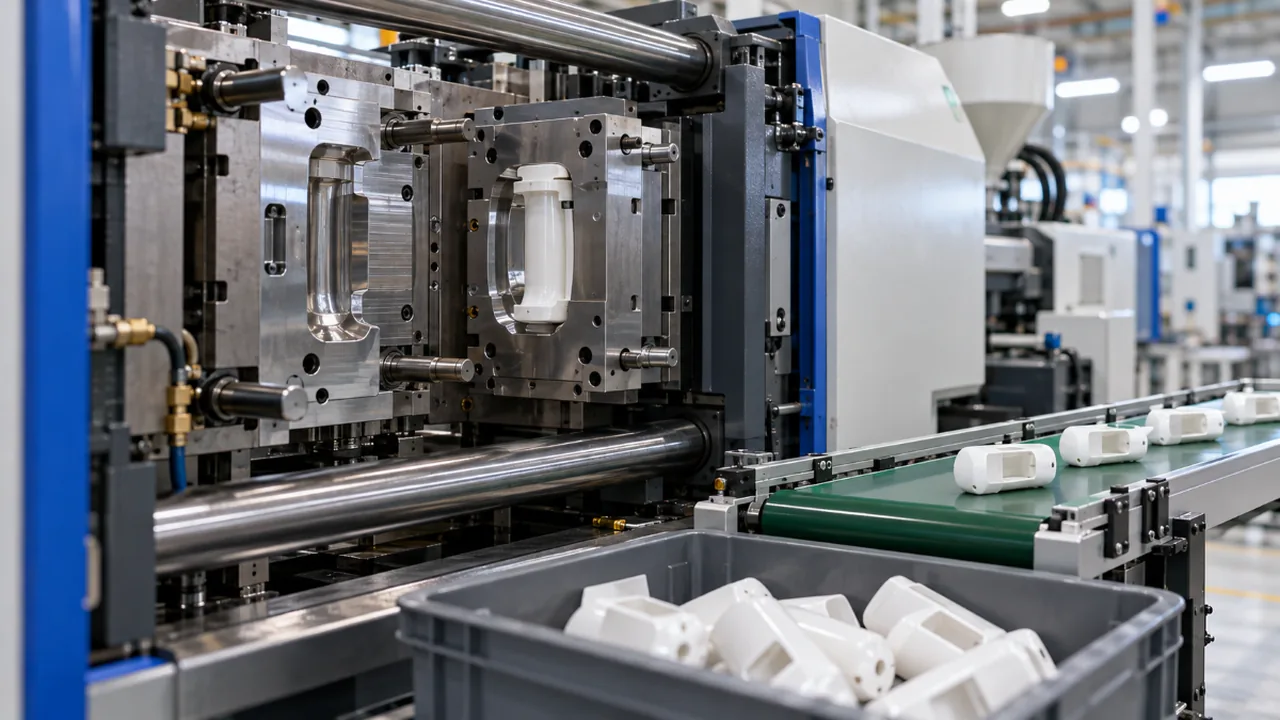
Tooling is usually the biggest upfront cost, so buy it once. Molds, jigs and fixtures are made for your part alone, and a mold cut too early often has to be cut again.
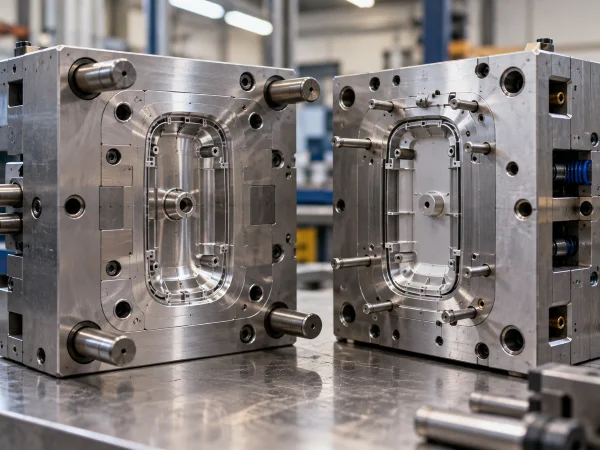
Each mold is machined from hardened steel for a single part. Change that part later and you often need a new mold. Recutting a steel mold after production has begun costs thousands of dollars and weeks of time. Changing a 3D-printed part costs a fraction of that, which is why we prototype in our Framingham studio before any steel gets cut. Printed parts can't hit the cost, strength or finish a retail product needs. They prove the design, and the mold makes the product.
Volume decides how much tooling makes sense. Tooling costs the same whether you make 50 units or 5,000, so on a small run it can eat your whole margin. Get it in writing that you own your molds and design files. Our clients own their CAD models and packaging artwork, so they're never tied to one supplier. And once a product moves real volume, around 100,000 units in our experience, factories get more willing to make the next mold at a reduced cost or none at all.
Decision 3: size the first run to what you can sell
Order the quantity you can sell, even if a bigger order would drop the unit price. Our production runs typically start at 1,000 or 2,500 units.
A low unit price is no help if it means ordering 10 times more inventory than you can sell. Minimum order quantities, or MOQs, vary by process and material, so raise them in your first factory conversation. On our China trip, the team saw factories adapt tooling, materials or processes to make products that had never been made before, especially at the small minimums startups request.
Our Lava Lunch project shows how that works. Lava Lunch is an insulated lunch bag with microwavable heat packs, and its inventor couldn't find one manufacturer for both the bag and the patented Lava Rocks. We found manufacturers who could make both parts, then worked with both to bring the minimum down far enough to fill the first round of sales. The client then placed a large production order.
Plan the run around break-even, too. Our pricing guide puts typical break-even at roughly 3,500 to 5,000 units sold. For most independent founders, the realistic first goal is 1,000 customers.
Decision 4: compare factories on landed cost
Landed cost is the factory price plus everything it takes to get the goods to your door: freight, insurance, duties, tariffs, customs fees and the broker. Compare quotes on that number. A cheap unit price on the wrong shipping term can cost more than a higher price that includes freight.
Start with the shipping term on each quote. Under the International Chamber of Commerce's Incoterms rules, EXW, or Ex Works, leaves almost every cost after the factory door to you. FOB, or Free on Board, has the factory load the goods onto the ship, and you take over from there. DDP, or Delivered Duty Paid, puts freight, import clearance and duties on the seller. Quotes on different terms aren't comparable until you add the costs each one leaves out.
Then price the duty. Your rate comes from your product's code in the Harmonized Tariff Schedule. Pick the wrong code and you owe the correct duty, and customs can add penalties if it decides the error was careless or deliberate. That's why experienced teams have their freight forwarder check the classification before anything ships.
U.S. Customs and Border Protection adds fees on top. For fiscal year 2027, which started October 1, 2026, the merchandise processing fee on formal entries is 0.3464% of the goods' value, with a $34.58 minimum and a $670.86 maximum. Ocean cargo also pays a harbor maintenance fee of 0.125%.
| Landed cost line | What it covers | Where to check it |
|---|---|---|
| Factory price | Unit price on the quote's shipping term: EXW, FOB or DDP | Your factory quote |
| Freight and insurance | Air, fast ocean or standard ocean | Your freight forwarder |
| Duty | The rate set by your HTS code | USITC Harmonized Tariff Schedule |
| Extra tariffs | Section 301 tariffs and any new trade actions | USTR and CBP notices |
| Merchandise processing fee | 0.3464% of value on formal entries, $34.58 to $670.86 in fiscal 2027 | CBP fee notice |
| Harbor maintenance fee | 0.125% of value on ocean cargo | CBP user fee table |
| Customs broker | Files your entry and arranges your bond | Your broker's quote |
| Inspection | A third-party check before shipment | Your inspection quote |
Is manufacturing overseas still cheaper in 2026?
It can be, but not by default. The answer depends on your materials, volume, margin and lead time, so price landed cost for each option before you pick one.
We source from 170+ partners, including domestic options, and compare U.S. and overseas cost, timeline and tariff tradeoffs for your product. Both routes show up in our work. Eggmazing went into mass production with an overseas factory that made the product and its custom packaging. Unshrinkit came to us to cut its price per bottle. We sampled packaging types, settled on its classic container and found a lower-cost chemist to make and package the formula in the U.S.
Tariffs are the moving part this year. On February 20, 2026, the Supreme Court ruled that IEEPA doesn't authorize tariffs. That struck down the tariffs imposed under that law, including the drug-trafficking tariffs on goods from China, Canada and Mexico and the "reciprocal" tariffs.
A temporary 10% import surcharge under Section 122 of the Trade Act followed on February 24 and ran 150 days, through July 24, 2026. In July, the U.S. Trade Representative added Section 301 tariffs of 10% or 12.5% on goods from the 60 economies that supply 99.4% of U.S. imports, with exemptions for some products. The older Section 301 tariffs on Chinese goods weren't part of the court ruling, and the White House has kept duty-free de minimis entry suspended for imports from every country. Rerun your landed cost before every purchase order, at the rates in force when your goods clear customs.
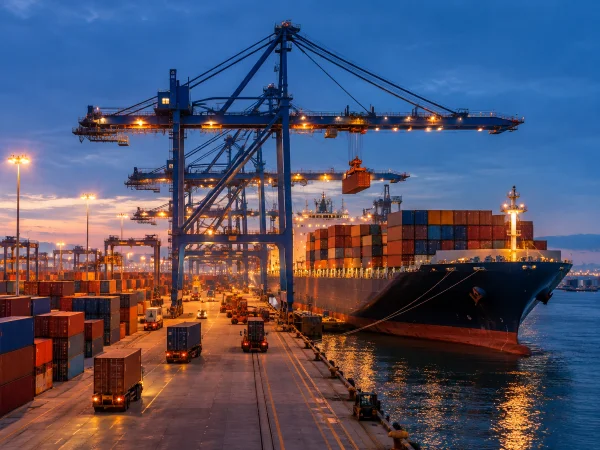
Overseas, time is part of the price too. The usual freight options, from our write-up on what happens between finished and delivered, look like this:
- Air freight is the fastest and works for small quantities, like units for influencers before launch.
- A fast boat into Long Beach, then truck or train across the country, runs about 20 days faster than the slow route and costs about 20% more.
- Standard ocean freight through the Panama Canal is the slowest and cheapest.
Plan around Chinese New Year as well. Factories, ports and even air freight shut down for roughly a month starting in late January or early February. The run-up to Christmas brings container shortages, so freight may need booking weeks ahead, sometimes before the final inspection is done.
Customs adds its own risk: roughly 1 in 20 to 25 containers gets flagged for a closer look. Most clear in 2 to 3 days once the paperwork checks out. An intensive exam, where customs opens the container and checks for restricted materials like lead, can add 30 to 45 days.
Distance slows decisions, too. Across a 12-hour time difference, a single question about a color swatch can take a full day to settle. That's why our team spent its recent China sourcing trip on the ground. It covered 15+ cities and 30 to 45 factory projects, and the team corrected samples on the spot. Either way, manufacturing adds at least 6 months before a product reaches a shelf.
Inspect at the factory, before the goods ship
Find defects while the goods are still at the factory, where fixing them is the factory's job. Once they're in your warehouse, the cost is yours.
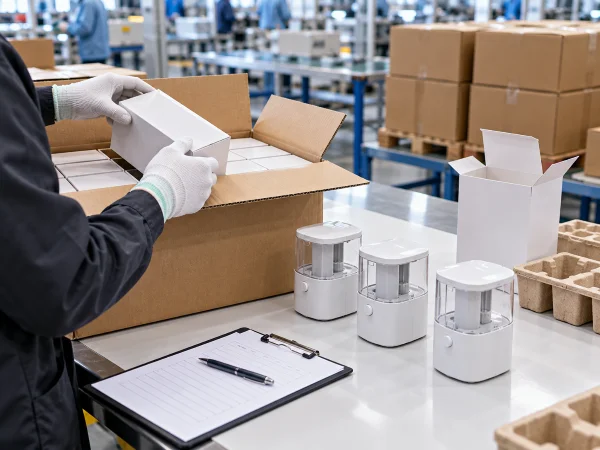
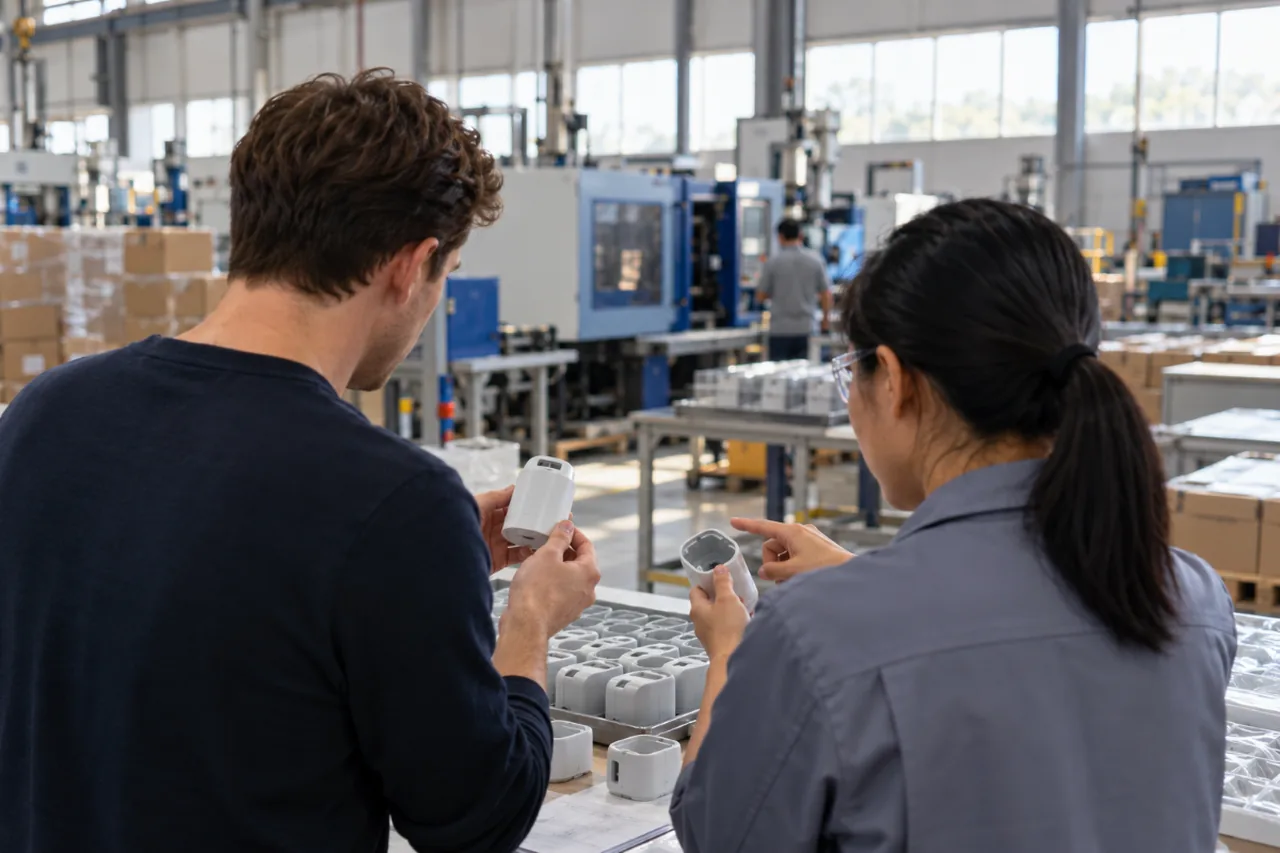
We run quality checks at the manufacturer's site on materials, production and finished products, and a third-party team reviews random units and sends a report before anything ships. The last check, called a Final Quality Check or FQC, happens once the product is finished and boxed. Inspectors test a sample to confirm it works, looks right and is packed properly. It works best when the inspectors have followed the product since the first prototype, because they catch issues faster. If a sample fails, the factory's QC team may have to run a 100% inspection and rework the problem before the goods are re-inspected.
How much does packaging add to your costs?
Packaging changes your shipping bill directly, because carriers charge for the space a box takes up as well as its weight.
UPS figures dimensional weight as length times width times height, in inches, divided by 139 at its daily rates and 166 at retail, and rounds any fraction up to the next pound. A 12-inch cube works out to 13 pounds of dimensional weight, even if the product inside weighs 3. Trim it to a 10-inch cube and it drops to 8 pounds. That's why we design retail packaging alongside the product. It has to sell on the shelf and ship without paying for empty space.
The cheapest place to reduce manufacturing costs
The cheapest time to reduce manufacturing costs is before tooling, while a change means a new 3D print instead of a new mold. Bring us a sketch or a CAD file. If your product is already selling, our manufacturing team can still help with a production fix, a supplier change or a lower unit cost. A free consultation covers feasibility, the route to market and a realistic budget range.
Manufacturing cost questions founders ask
What's the fastest way to reduce manufacturing costs on a new product?
Fix the design before you pay for tooling. Changing a 3D-printed part costs a fraction of changing a mold, while recutting a steel mold after production starts costs thousands of dollars and weeks of time. Fewer parts, standard components and the right draft angles cut cost before a factory quotes the job.
How much does tooling add to the cost of each unit?
It depends on your volume, because tooling costs the same whether you make 50 units or 5,000. On a small run, it can eat your whole margin. Size your mold and your first order to what you can sell, and get tooling quotes from finished CAD.
How many units should a first production run be?
At 52Launch, production runs typically start at 1,000 or 2,500 units. Order what you can sell, since a low unit price is no help if it means buying 10 times more inventory than you can move. Typical break-even comes at roughly 3,500 to 5,000 units sold.
Does ordering more units always reduce manufacturing costs?
It lowers the unit price, but it doesn't always lower your total cost. A bigger order ties up cash in inventory you may not sell, and minimums vary by process and material. Ask about minimum order quantities in your first factory conversation.
Are tariffs part of manufacturing cost?
Yes, they're part of landed cost. In 2026, the Supreme Court struck down the IEEPA tariffs on February 20, a temporary 10% surcharge ran from February 24 through July 24, and in July new Section 301 tariffs of 10% or 12.5% hit goods from 60 economies. Check your HTS code and the rates in force before every purchase order.
Is it cheaper to manufacture in the U.S. or overseas?
It depends on materials, volume, margin and lead time, so compare landed cost for both. Overseas freight also costs time: a fast boat into Long Beach runs about 20 days faster than the Panama Canal route but costs about 20% more. Either way, manufacturing adds at least 6 months before a product reaches a shelf.