The most expensive mistakes when manufacturing a product for the first time are the ones that surface after you've paid for tooling or inventory. First-time inventors most often get burned by minimum order quantities, tooling surprises and quality drift. At 52Launch, we put the gap this way: design errors cost hundreds of dollars to fix, and manufacturing errors cost tens of thousands. That gap shapes how we've approached the 730+ consumer products we've launched for first-time inventors and founders.
NASA put numbers on the same pattern in a 2004 study of large spacecraft-style systems. Fixing an error during design cost 3 to 8 times more than fixing it at the requirements stage. During build, it cost 7 to 16 times more. Once the system was in operation, the cost ran 29 to more than 1,500 times higher. A lunch box isn't a satellite, so treat those multipliers as direction rather than a quote. The direction is clear: the later you find a problem, the more it costs.
What counts as a first-time manufacturing mistake?
A first-time manufacturing mistake is any design, sourcing or ordering choice that makes you spend more on tooling, material, labor, inventory or shipping than the product needs. Most of these choices look fine on paper or in a prototype. They break down when a factory tries to mold, assemble, pack and ship thousands of units at your target price.
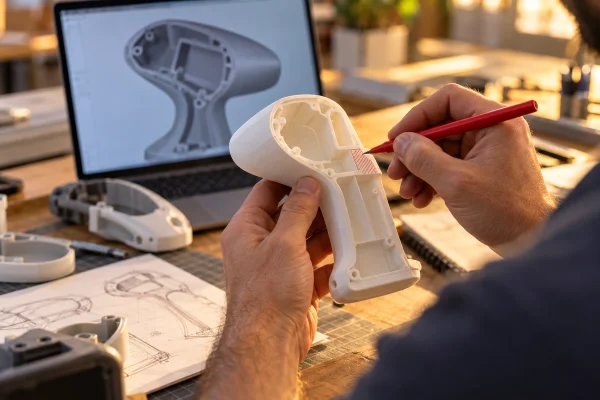
Design for manufacturing, or DFM, is the habit of checking each design choice against how the part will be built. We don't save it for the end. Our designers weigh material, tolerances and assembly from the first sketch, and check wall thickness and draft as the CAD takes shape.
How much more does a mistake cost after tooling?
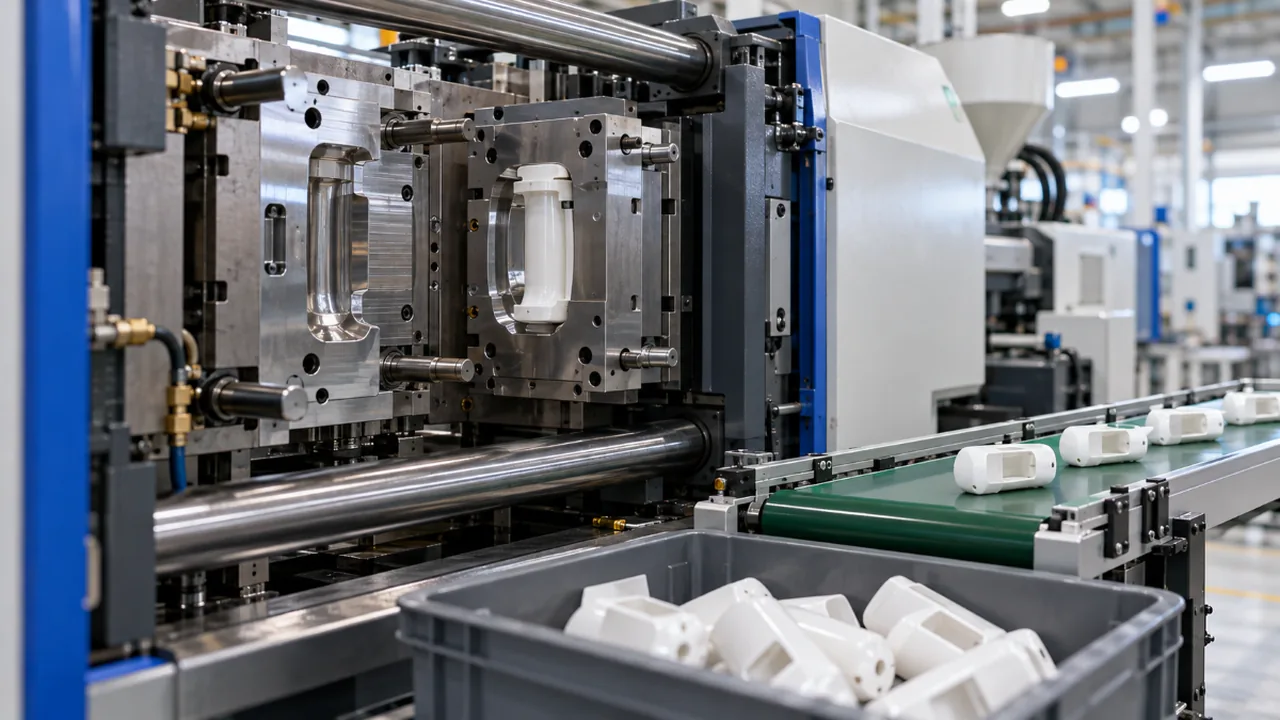
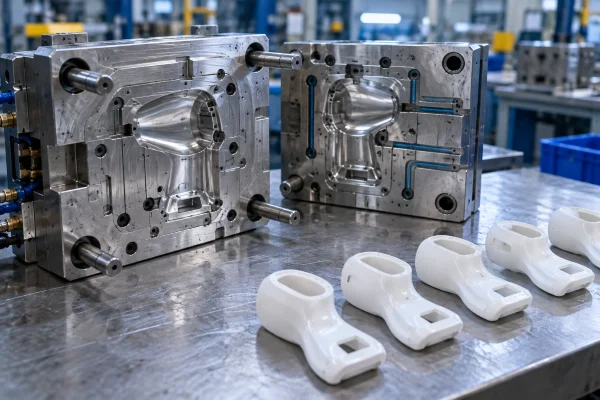
The cost jumps when the tool gets cut. Before tooling, a change means editing a file or reprinting a part. After tooling, it often means paying for a new tool, because each mold is machined from hardened steel or aluminum for 1 product.
We give founders a simple comparison: finding a flaw in a $20 print beats finding it in a $20,000 mold. Recutting a steel mold after production starts costs thousands of dollars and weeks of time. The table below lines up each stage of a consumer launch with the closest phase in NASA's study of error cost escalation.
What a design change costs at each stage
| Stage | What a change involves | What it costs, in our experience | Closest NASA phase, cost vs. requirements |
|---|---|---|---|
| Concept and requirements | Rethink what the product has to do | Design time only | Requirements: 1, the baseline |
| Sketch, render and CAD | Edit the model | Hundreds of dollars | Design: 3 to 8 times |
| 3D-printed prototype | Reprint and retest the part | A fraction of a mold change, and the new part can be in hand the same week | Design: 3 to 8 times |
| Tool cut | Rework or recut the mold | Thousands of dollars and weeks, often a new tool | Build: 7 to 16 times |
| T1 and T2 trial samples | Adjust the tool, resample and retest | Another round of tool work and samples | Integration and test: 21 to 78 times |
| Product on shelves | Rework stock, handle returns, retool | Tens of thousands of dollars | Operations: 29 to more than 1,500 times |
NASA's multipliers come from large aerospace systems. We matched each one to the nearest step in a consumer launch, so read that column for direction only.
Is 70% of manufacturing cost locked in at design?
The evidence doesn't support it as a fixed number. The 70% claim gets repeated on manufacturing blogs, and the researchers who tested it didn't back it up.
A 2001 review in the Journal of Engineering Design by J.A. Barton, D.M. Love and G.D. Taylor disputed the claim. MIT's Karl Ulrich and Scott Pearson asked whether design determines an 80% share of manufacturing cost in a 1993 working paper. Their 1998 study in Management Science took apart competing drip coffee makers and found design-driven differences that spanned about 50% of the average estimated manufacturing cost.
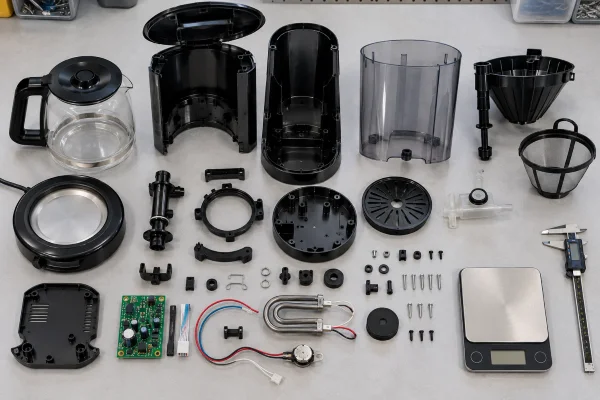
That's still a big share, and it comes from 1 product category. Our case for DFM rests on timing, which the NASA data supports. A flaw caught on screen is a quick edit. The same flaw found after tooling can mean a new mold.
8 costly mistakes when manufacturing a product for the first time
Each of these is cheap to fix before tooling and expensive once a factory starts work. We've ordered them by when they tend to show up in a first launch.
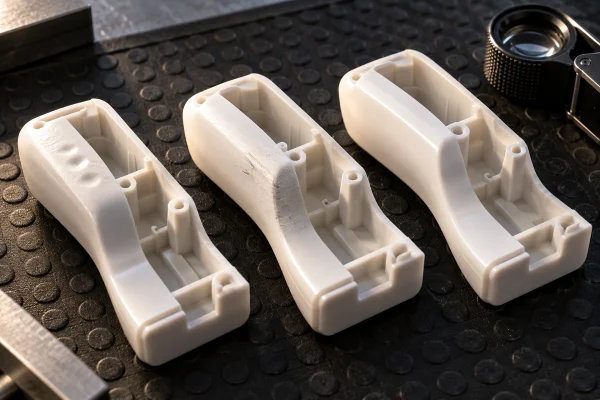
1. Designing for the 3D print instead of the mold
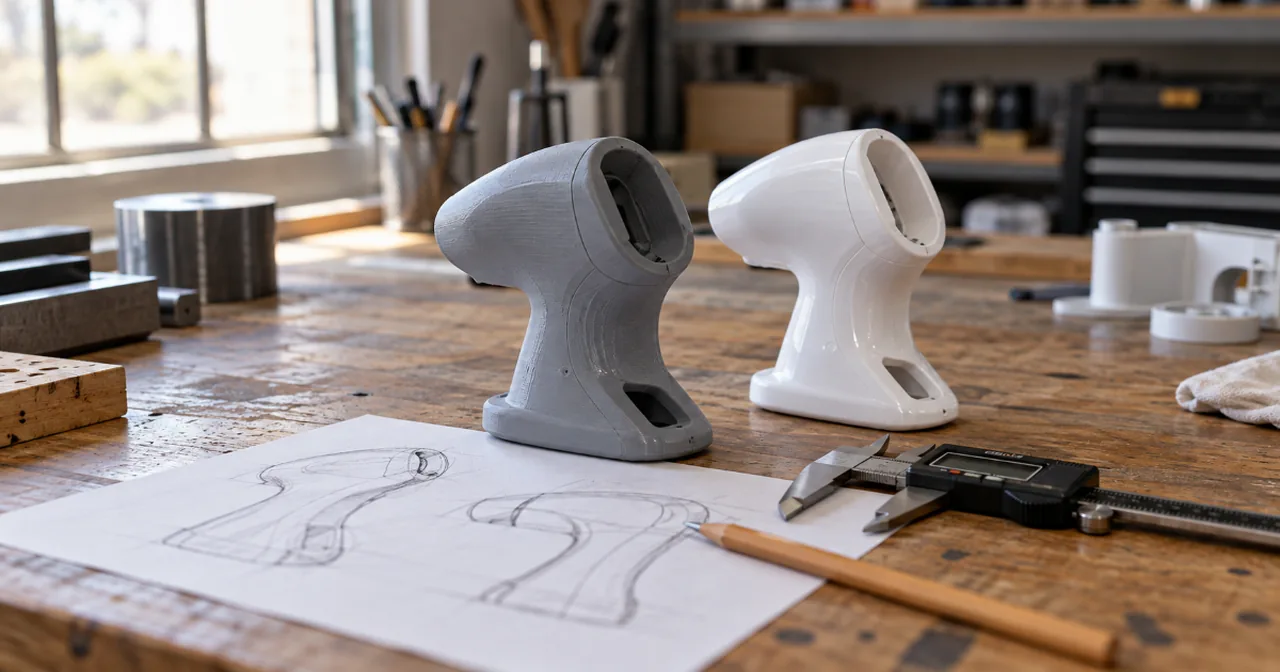
A 3D print proves the idea works. It doesn't prove a factory can mold it. Printed parts can't hit the cost, strength or finish a retail product needs, so production runs on real tooling.
Prints also forgive things a mold won't. A wall with no draft, the slight taper that lets a part slide out of the tool, can stick or scuff. A thick section can sink as it cools. A hook or overhang that traps the part in the tool, called an undercut, can add moving parts to the mold.
The right draft depends on the resin and any surface texture, and our design team works with the supplier on the tooling. Rules of thumb from blogs vary too much to trust. We test fixes on the in-house 3D printers at our Framingham studio, so a revised part can be in hand the same week.
2. Tooling ordered before the design is frozen
Tooling is usually the largest upfront cost in manufacturing, and each tool is built for 1 product. Change the part after the tool is cut, and you'll often pay for a new one.
We prototype at the manufacturer. The factory runs the first trial parts from the new tool, called T1. We review them, adjust, and T1 becomes T2. That loop repeats until the part is ready to sell. It stays cheap when the design is frozen before the tool order, so each trial is tuning instead of a redesign.
3. Features version 1 doesn't need
Every feature is another way a product can fail and another line on the bill of materials. We tell founders a second feature doubles the ways a product can fail, and a third, fourth or fifth multiplies them again.
Ship 1 core feature well. A 4.3-star rating without a pile of returns is a strong first launch, and it leaves room for version 2. Each extra molded part also tends to need its own tool and more time on the assembly line. So we push founders to keep version 1 simple.
4. Custom electronics where a stock part works
Electronics can push a quote up fast. For a basic product, we triple a parts-list estimate as a starting point. Once components have to connect to a circuit board, run software, talk to each other or carry licensing, the estimate can grow by as much as 10 times.
In one example our team discussed, an AI-designed product called for 8 layers of internal circuitry it didn't need. That choice turned a $20 part into a $150 part, which is why a parts-list estimate is a poor guide to real cost. Start with stock modules and boards where they do the job, and save custom electronics for the 1 feature your buyers pay extra for.
5. A unit price that forces an MOQ you can't sell
A low unit quote often comes with a high minimum order quantity, or MOQ. Chase the lowest price and you can end up ordering 10 times more inventory than you can sell.
Tooling costs the same at 50 units as it does at 5,000, so a small run spreads that cost over too few units. Our production runs typically start at minimums of 1,000 or 2,500 units, and break-even for a new product often lands around 3,500 to 5,000 units sold.
DFM can change that math. In an example we walk founders through, cutting unit cost from $40 to $20 through DFM could support a $49 to $59 price instead of $90.
6. Holding out for 100% of the original concept
A new idea often needs a factory to add equipment, adjust machines or change a process. On one China sourcing trip, our team covered 15+ cities and 30 to 45 factory projects in nearly 3 weeks. Our sourcing team aims for 80 to 90% of the original concept, and we tell clients to build in room for compromise.
As one of our team members put it, chasing perfection can undermine profitability. Get a strong version to market, then improve it over time.
7. Packaging, shipping and testing left for last
Packaging is part of the product design. Carriers can bill by the space a box takes up, called dimensional weight, when that's higher than its actual weight. In May 2026, USPS announced it would align its dimensional-weight divisor with industry standards for Priority Mail Express, Priority Mail, Ground Advantage and Parcel Select, starting July 12.
Customs is a design input too. The HTS code assigned to your product sets the duty you pay, and a wrong code can hold a container, add duty or bring a penalty. That's why the shipping steps need as much planning as the CAD file.
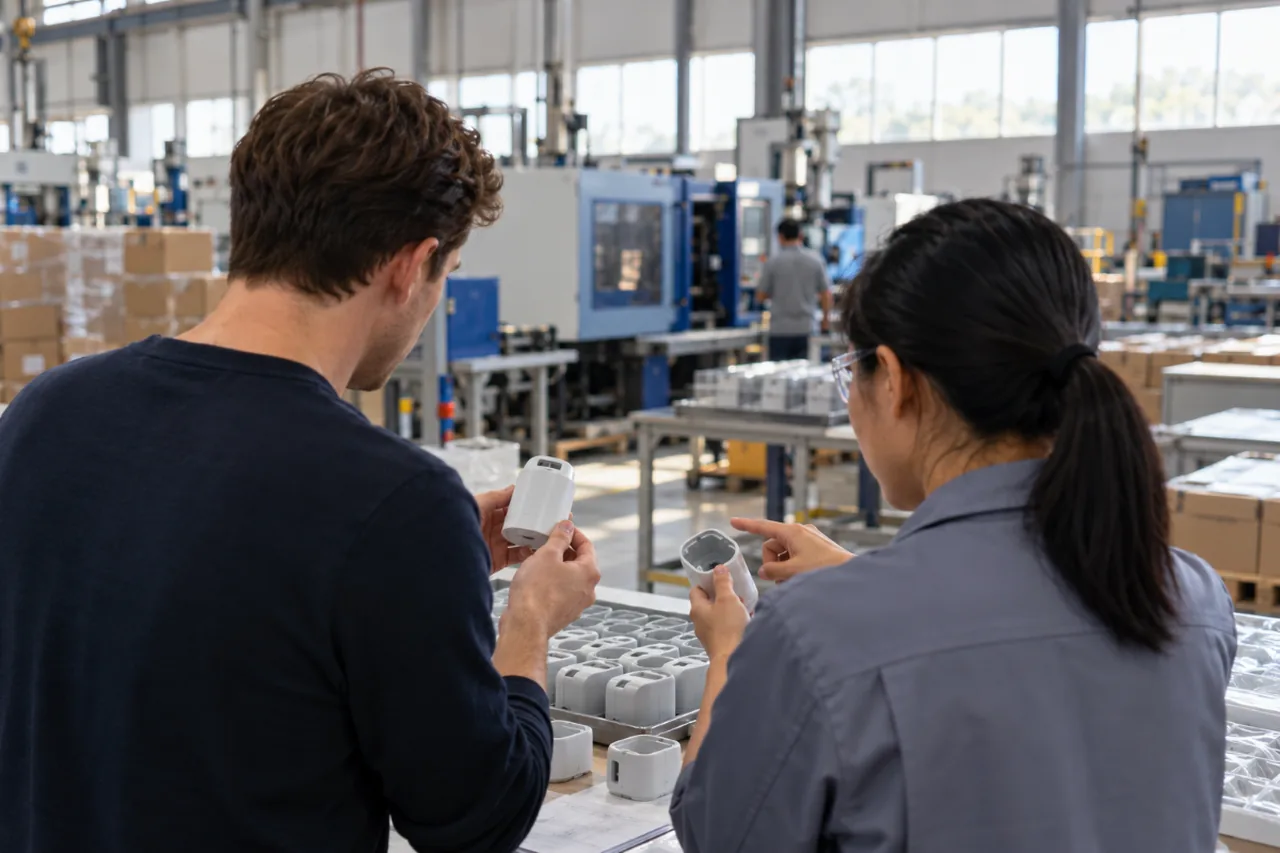
Quality needs a plan as well. Once a product is finished and boxed, an inspector should check a sample for function, appearance and packaging before it leaves the factory. Ideally, that's a team that has followed the product since the first prototype. If the order fails, the factory may have to inspect every unit and rework the batch before re-inspection. That final check is how you catch quality drift: units in the run that stop matching the approved sample.
Kids' products add a test budget. The CPSC defines a children's product as one designed or intended primarily for kids 12 or younger. If a CPSC safety rule covers it, it needs testing at a CPSC-accepted third-party lab and a Children's Product Certificate from the manufacturer or importer. Since July 8, 2026, importers of most regulated consumer products must also file certificates electronically with U.S. Customs and Border Protection.
8. A patent filed before a factory sees the design
A patent attorney judges whether an idea can be patented. They don't judge whether a factory can build it, and that's why patentable doesn't mean manufacturable.
One client wanted a sustainable, chemical-free product, but there was no way to manufacture it without a bonding agent or chemical process. We worked out a version a factory could make that kept what the client cared about most, and it came out more functional and more sellable. Another inventor paid an invention help company $30,000 for a vehicle snow-assist design before anyone asked whether automakers would add the hardware. They rarely add new hardware to existing vehicle designs.
Our rule: if we can't make it, we won't take on the project. Ask your patent attorney about filing timing, and ask a manufacturer whether the design you're protecting can be built.
How DFM and sourcing changed Eggmazing and LavaLunch
On Eggmazing, DFM changed the design and freed up money for marketing. On LavaLunch, sourcing changed the supplier plan and lowered the first order.
The creator of Eggmazing, a spinning egg decorator, came to us with a rough 3D model and a product description. It wasn't ready for mass production: the geometry was complicated, and so were the electronics. Our design team and engineers reworked it over round after round of iterations to bring the manufacturing cost down without compromising its main features. Our sourcing team also collected competing quotes for materials, manufacturing and shipping. The final design was factory-friendly enough that the client had money left for marketing. Eggmazing went on to a Shark Tank deal and national shelf placement.
LavaLunch is an insulated lunch bag with microwavable heat packs that keep food warm for up to 5 hours. Its creator had trouble finding a manufacturer for both the bag and the patented Lava Rocks heat packs. Our manufacturing team found factories that could make both and assemble them before shipping, then worked with both to lower the minimum order for the first sales round. LavaLunch now sells in the low hundreds of units every week on Amazon and lavalunch.com.
When should you run a DFM review?
Start at the first sketch, then run a formal check before any tool is ordered. The later you start, the fewer cheap changes you have left.
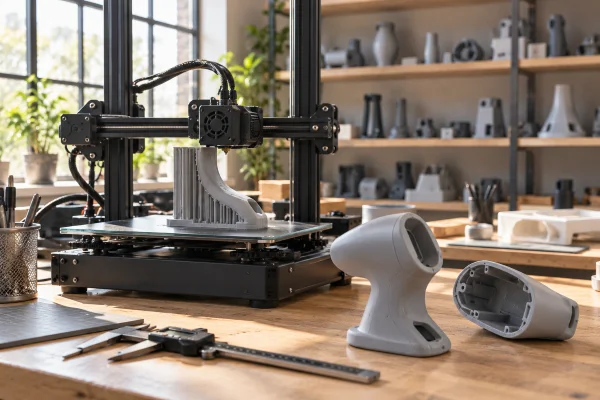
Our product design work runs in 6 stages: sketching, rendering, CAD, rapid prototypes, design for manufacturability and packaging. DFM has its own stage, but our designers weigh materials, tolerances and assembly from the first sketch. The CAD model is built so a factory can quote from it.
Then our sourcing and production team takes over with a technical design package, custom tooling, production samples, quality checks at the factory, mass production and freight. A third-party team inspects random units and issues a report before anything ships. Most products that go through 52Launch's 6-phase program are launch-ready in 8 to 12 months. Mechanical or electronic products typically take longer.
How do you get a manufacturing cost you can trust in 2026?
Get quotes from real factories working off a full technical design package, then add freight, duty and testing. A parts-list total from a spreadsheet or an AI tool will come in low.
We quote through a network of 170+ manufacturing partners in the U.S. and overseas, and we weigh cost, timeline and tariff tradeoffs for each product. Our launch program ends with a production decision point, where founders see manufacturing costs and the tooling investment before they commit.
Shipping choices move the number as well. A fast boat through Long Beach runs about 20 days faster than the slow route through the Panama Canal and costs about 20% more. And Chinese New Year shuts down factories, ports and air freight for about a month, starting in late January or early February. A quote should come with a calendar.
The cheapest time to catch mistakes when manufacturing a product for the first time is before a factory quotes the tool. Bring us a CAD file, a prototype or a sketch and book a free consultation. Our Framingham team will cover feasibility, suppliers and a realistic budget range before you pay for tooling.
Frequently asked questions
What are common mistakes when manufacturing a product for the first time?
There are 8 to watch. The first 4 are designing for the 3D print instead of the mold, ordering tooling too early, adding features version 1 doesn't need, and using custom electronics where a stock part works. The other 4 are chasing a low unit price with a high MOQ, holding out for 100% of the concept, leaving packaging and testing for last, and filing a patent before a factory sees the design.
How much more does a design change cost after tooling?
NASA's 2004 study of large aerospace systems found that fixing an error during build cost 7 to 16 times more than at the requirements stage. During integration and test, it cost 21 to 78 times more. For a consumer product, a change after the mold is cut often means a new tool. Recutting a steel mold after production starts costs thousands of dollars and weeks.
Is 70% of a product's manufacturing cost decided during design?
The 70% figure isn't well supported. A 2001 review in the Journal of Engineering Design disputed it. A 1998 Management Science study of drip coffee makers found design-driven cost differences of about 50% of average estimated manufacturing cost. The stronger evidence is about timing: problems cost more the later you find them.
When should a product get a DFM review?
Start DFM at the first sketch. Run a formal review before any tool is ordered. At 52Launch, designers check materials, wall thickness, draft, tolerances and assembly in CAD, then test changes on in-house 3D printers.
How do you avoid mistakes when manufacturing a product for the first time?
Freeze the design before you order tooling, and start DFM at the first sketch. Get factory quotes on a full technical design package, then plan packaging, freight, duty and testing before production. Have a team that knows the product inspect finished units before they ship.
How big should a first production run be?
Plan the first run around what you can sell. At 52Launch, production runs typically start at minimums of 1,000 or 2,500 units, and break-even often lands around 3,500 to 5,000 units sold. A lower unit price that needs a bigger order can leave you holding 10 times more inventory than you can sell.
How do I get an accurate manufacturing cost before tooling?
Get factory quotes based on a full technical design package. Then add freight, duty and any lab testing. As a starting point, we triple a parts-list estimate for a simple product. Once electronics, software or licensing are involved, expect up to 10 times that estimate.