To go from a handmade product to mass production, redesign it so a factory can make it without your hands. That means a technical package a factory can quote, custom tooling in place of hand steps, and trial samples made on that tooling. Then you inspect finished units at the factory, place a first order sized to what you can sell, and ship it through customs under the right tariff code. That's the process we run at 52Launch. We've taken more than 730 consumer products to market from our studio in Framingham, Massachusetts.
Your handmade sales already prove people want it. What breaks next is the handoff to a factory: a mold cut before the design was ready, an order 10 times bigger than you can sell, a container held at the port over a wrong code. Design errors cost hundreds to fix. Manufacturing errors cost tens of thousands, and they tend to show up after the money is spent.
When should you stop making your product by hand?
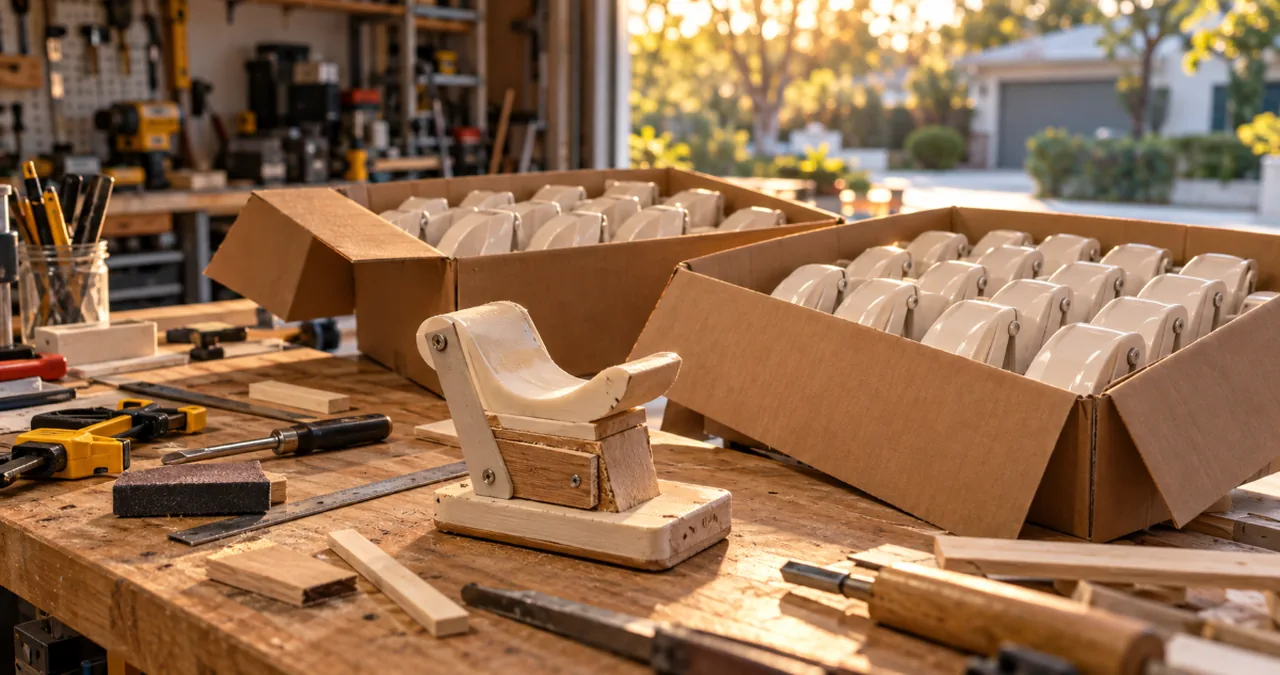
Stop making it by hand once demand outruns your hours and your own time isn't in the price. The signs are easy to spot. People who see your product ask if they can buy it. You're in the garage every night making orders. It's taking too long, and you're losing money because your time and effort aren't counted in the cost. And you're running the business like a hobbyist instead of an owner.
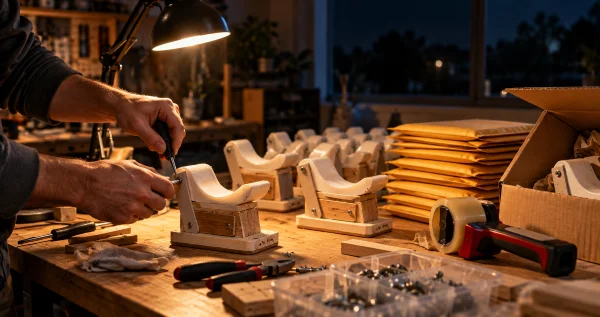
If that sounds familiar, you've already validated the idea. A better handmade version won't fix the problem. You need a version a factory can repeat at a cost that supports a real business.
Chute 21 started this way. Bryan and Tyler Wilcox built their own tailgate game, and Tyler had already built most of their custom cornhole boards himself. They tested heights, sizes and distances until they landed on a 3-foot tower with an 8 to 10 foot playing distance. At tailgates, people offered to buy their set and asked where they could get one. They came to us to design, brand and build it.
What a factory changes about your product
Going from handmade to mass production means a factory takes over the making and turns out identical units with custom tooling. Hand steps get replaced by molds and fixtures, retail materials by production-grade ones, and checking every piece by inspecting samples from each lot. You stop being the bottleneck, and each unit costs less once volume covers the tooling.
Ford's moving assembly line shows the math. Started at Highland Park in 1913, it got Model T build time down to 90 minutes, and the car's price fell from $825 in 1908 to $260 by 1925.
The same math works at maker scale. Tooling costs the same whether you make 50 units or 5,000, so at low volume the tooling alone can eat your whole margin. That's why our production runs typically start at 1,000 to 2,500 units.
Expect the design to change. From what we see, a handmade version usually isn't designed for a low unit cost, built for volume or identical from unit to unit, and a factory needs all 3.
Your listing changes too. If you sell on Etsy, its Creativity Standards treat your own design made by a third party as "Designed by a seller," and you must disclose that a production partner makes it.
Aim for 80% to 90% of your handmade original
Don't hold out for a factory copy of every handmade detail. Our sourcing team aims to land production designs at 80% to 90% of the original concept, because insisting on 100% can keep a product from ever reaching production.
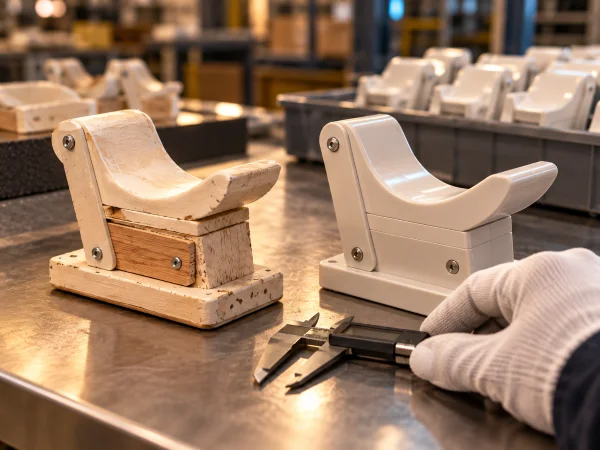
Plenty of design advice tells founders to push the factory to protect every detail. Our team's view is the opposite. Chasing perfection can undermine profitability, so get a strong version to market, then improve it.
KlockIt Golf shows the trade-off. Its founder came to us with a homemade prototype: a dog leash tie-out stake and a rope tied to a golf ball. The production version replaces the tied rope with a proprietary core that holds the rope for good and looks like a standard golf ball. Eggmazing's inventor brought a rough 3D model, and we kept redesigning it to bring manufacturing cost down without giving up its main features. The savings left the client money for marketing.
That view comes from the factory floor. Our product development team spent nearly 3 weeks in China, working through roughly 15 to 16 cities and an estimated 30 to 45 active projects between Hong Kong and Ningbo. Most days meant 2 factory visits, and the factories covered categories as different as cut-and-sew goods and electronics.
The hardest part was turning a new idea into something a factory could produce at scale. Even experienced factories may need new equipment, adjusted machinery or a process change, especially at the order sizes startups ask for. Being there helped. Across a 12-hour time difference, 1 question about a color swatch can take a full day by email. On site, the team corrected samples on the spot.
Keep version 1 simple. Every feature you add is another point of failure. One mistake we see is ordering a small first batch, say 500 units, then bolting on new features by gut instinct. Launch with 1 clear benefit and let customer feedback decide what comes next.
6 steps from handmade to mass production
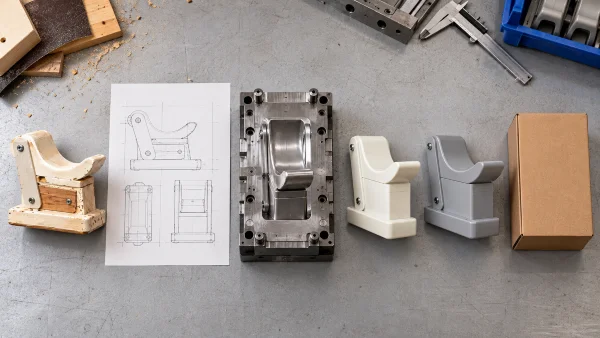
Every product we take to production goes through the same 6 steps, in this order. Skip one and the cost shows up later, at a step where it's more expensive to fix. If you already sell a handmade version, you don't start from zero, because we can begin at the technical package stage.
1. Turn your handmade version into a technical package
A technical package, or tech pack, is the full set of specs, 3D files, layouts and production instructions a factory needs to quote your product and build it. For a maker, it's where every call you make by hand gets written down: exact materials, dimensions, colors and assembly order.
It's also where design for manufacturability, or DFM, happens: material choice, wall thickness, draft angles, tolerances and assembly. We check those choices against real unit-cost targets before anything goes to a factory. Without that check, the problem shows up months later, when a factory quotes the part and the numbers don't work.
Make sure you own the files. Our clients keep their CAD models and packaging artwork, so they're never tied to 1 supplier.
2. Swap hand steps for tooling
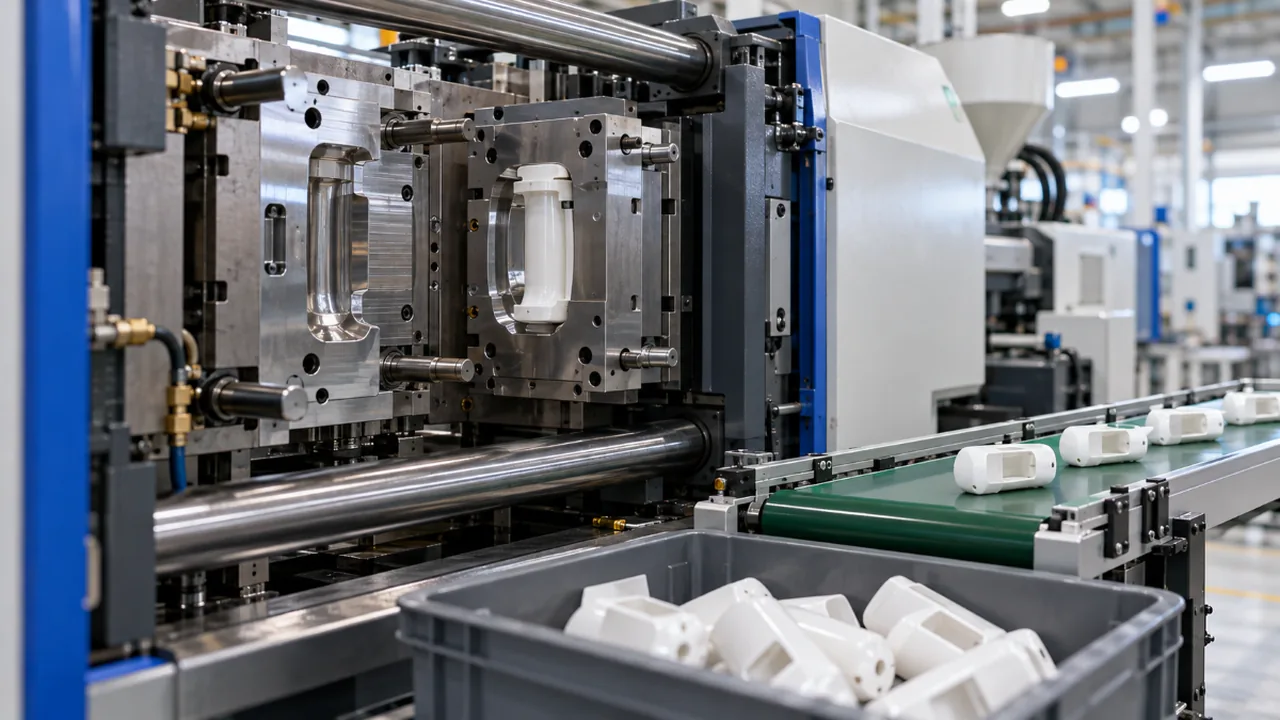
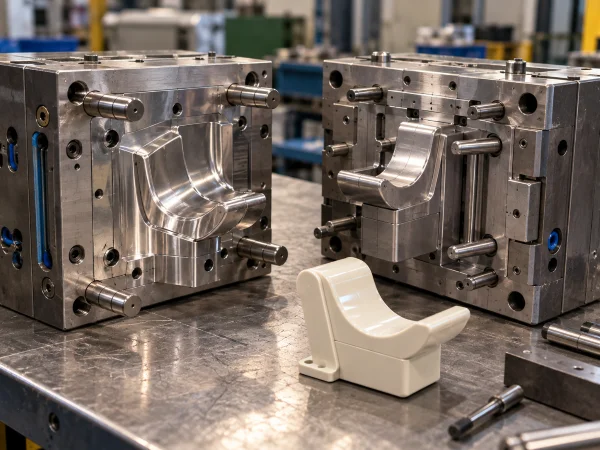
Tooling is the custom equipment that makes your specific part: injection molds, jigs and fixtures. It's usually the single largest upfront cost in manufacturing, because each tool is machined from hardened steel or aluminum for your product alone. That's why we check the design hard before any mold gets cut.
We 3D print constantly during rapid prototyping and only cut real tooling for production. Printed parts can't hit the cost, strength or finish a retail product needs, but revising a print costs little. Recutting a steel mold after production starts costs thousands of dollars and weeks of time.
Tooling gets easier with a track record. In our experience, once a client has moved meaningful volume, around 100,000 units, factories are typically more willing to make the next mold at a reduced cost or no cost.
3. Approve trial samples made on the real tooling
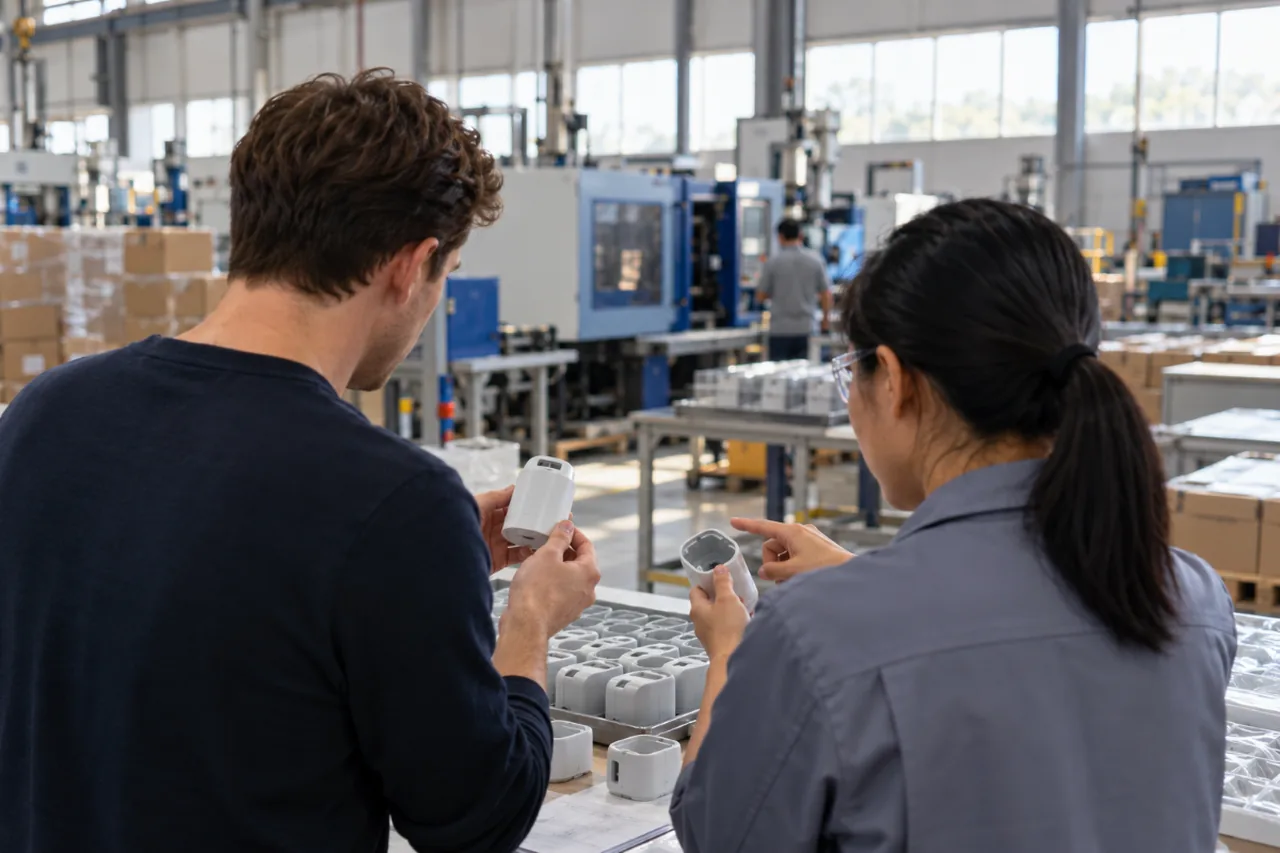
A production sample is a unit the factory makes on your production tooling, and you approve it before the big order. Our manufacturing team prototypes at the manufacturer: the molds go to the factory, it builds a first trial sample called T1, we fix what's off, and T1 becomes T2. That loop repeats until the product is ready to sell.
A simple housewares item may take about 2 rounds. Anything with a mechanism or electronics takes more, because each round answers a different question. Hold each sample next to your best handmade unit and decide which differences your buyers would notice.
4. Inspect finished units before they leave the factory
The factory is the cheapest place to fix anything. Our final quality check, or FQC, happens once product is finished and boxed. A team that's ideally been on the project since the first prototype checks a sample of units to confirm they work, look right and are packed properly. A third-party team also reviews random units and writes a report before anything ships.
Factories run their own QC, often against checklists our sourcing team helped write. That helps, but people checking their own daily work aren't a fresh set of eyes. If a lot fails, the factory may need to inspect every unit and rework the problem before re-inspection. That's still faster and cheaper than fixing it after the goods ship.
If your product is for children 12 or younger, add lab testing to this stage. CPSC requires a Children's Product Certificate based on tests from a CPSC-accepted third-party lab.
5. Place a first order you can sell through
Once the sample is approved, you weigh quantity, cost and lead time and place the first production order. Size it to what you can sell before the next order lands.
6. Ship it, clear customs and land the goods
Freight comes in 3 speeds. Air is fastest and works for small batches, like units for influencers ahead of launch. A fast boat into Long Beach, then truck or train across the country, runs about 20 days faster than standard ocean freight and costs about 20% more. Standard ocean freight through the Panama Canal is the slowest and cheapest.
Customs is the wild card. From what we see, roughly 1 in 20 to 25 containers gets flagged for a closer look. Most flags are paperwork checks that clear in 2 to 3 days, but a physical inspection can add 30 to 45 days, and it's out of the shipper's control.
Plan around the calendar too. Chinese New Year shuts factories and ports for about a month, starting in late January or early February. Golden Week in October slows factories as well, and the pre-Christmas rush squeezes container space, so freight often has to be booked weeks ahead.
How much does mass production cost?
Mass production costs come from development, tooling, samples and the production order, plus inspection, freight, duty and any required testing. There's no single price, but 3 checks keep a first budget honest.
First, count your own time. If your handmade price leaves out your hours, you don't know your real unit cost yet, so you can't judge a factory quote against it.
Second, start the factory budget from your parts list and triple it as a baseline. If the parts need a circuit board, software, communication with each other or licensing, multiply that estimate by as much as 10. In 1 case our team discussed, an AI-designed product called for 8 layers of internal circuitry it didn't need, turning a $20 part into a $150 one.
Third, check the margin. For e-commerce, we look for a gross margin of 70% or more. Redesign can close the gap. In 1 example our team uses, cutting an item's cost from $40 to $20 lets it sell for $49 to $59, where the original was aiming for $90.
| Cost | What it covers | When you pay | What moves it |
|---|---|---|---|
| Development | Design, DFM, prototypes and the tech package | Before any factory order | Complexity. Our programs run $7,500 to about $50,000. |
| Tooling | Molds, jigs and fixtures for your parts | Before production | Part count, size, steel or aluminum |
| Trial samples | T1, T2 and any later rounds | Before the first order | Number of rounds |
| Production order | Unit cost times order size | When you place the order | Minimum order, materials and labor |
| Inspection | FQC and a third-party report | Before goods ship | Lot size and any rework |
| Freight | Air, fast boat or ocean | Before goods leave port | Speed and season |
| Duty and tariffs | The rate tied to your 10-digit HTS code | At import | Your code and country of origin |
| Compliance testing | Lab tests and certificates where required | Before import or sale | Category, for example children's products |
Manufacturing and tooling are separate from our development fee. And finding a flaw in a $20 print beats finding it in a $20,000 mold.
Size your first run to what you can sell
Order what you can sell before the next order lands. Your handmade sales history is the best forecast you have, so use it. A low unit price is no help if it means ordering 10 times more inventory than you can realistically sell. And if you need fewer units than a factory minimum, a prototype shop is the better fit for now.
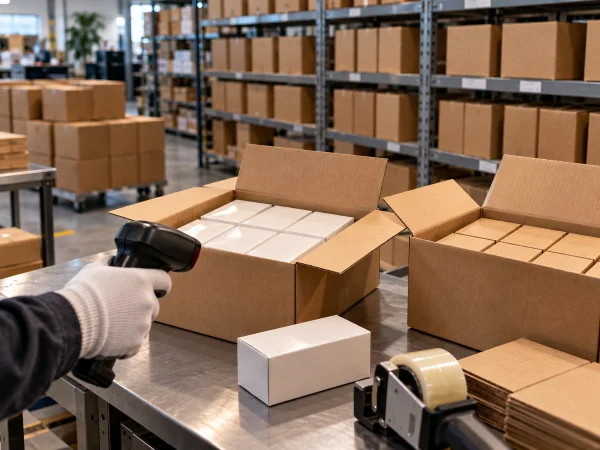
Lava Lunch shows how minimum order quantity talks work. The founder was stuck: she couldn't find a manufacturer for both the insulated bag and the patented Lava Rocks heat packs. We found a set of manufacturers for the 2 parts and had them assembled before shipping. Then we worked with both factories to bring the minimum quantity down far enough for a first round of sales.
Early sales and cost savings let her place a large production order. Lava Lunch has brought in nearly $3 million in revenue since 2020, and it sells hundreds of units a week on Amazon and lavalunch.com.
When you make things by hand, you can make each one to order. Factory production works the other way. At any point you need units in production, units in transit and units on hand, and to scale a product you grow all 3 together. A "sell out, then reorder" habit is how products run out of stock, and stockouts bring angry customers and bad reviews.
In our experience, break-even for a new product often lands at roughly 3,500 to 5,000 units sold. The realistic first goal is your first 1,000 customers.
Tariff codes and landed cost in 2026
Your factory quote isn't your cost. Landed cost adds freight, duty and fees to the unit price, and in 2026 the duty depends on a 10-digit code you're legally responsible for getting right.
Every import gets a Harmonized Tariff Schedule code, or HTS code. The first 6 digits follow the international Harmonized System run by the World Customs Organization, and the US uses a 10-digit number, according to the International Trade Administration. Rates move constantly. The US International Trade Commission has published 21 revisions of the 2026 schedule, the latest on October 9, after 32 revisions to the 2025 edition.
For goods made in China, the Congressional Research Service reports that most Section 301 tariffs remain in effect, with some exclusions. They run 7.5% to 25% on about $370 billion of imports. In 2024, some of those rates went up by another 25% to 100%. In July 2026, the US Trade Representative added a 12.5% tariff on Chinese goods, with some exemptions. The broader IEEPA tariffs were lifted in February 2026, after the Supreme Court ruled them unconstitutional.
The code is your responsibility as the importer. CBP says the importer of record must use "reasonable care" to classify goods. Pick the wrong code by mistake and you owe the correct duty. If customs thinks you picked it to get a lower rate, penalties can follow, and CBP's penalty guidelines allow up to 2 times the lost duty for negligence alone. A wrong code can hold a container, add surprise duty or trigger a penalty, and a first shipment has no shipping history to lean on.
3 moves cut the risk. Look up your code in the official HTS search. Have your freight forwarder verify it independently before the goods ship. For certainty, request a binding ruling from CBP before your product arrives. CBP's rulings guide says its commodity specialists answer prospective ruling requests within 30 days. For our clients, we manage the codes and the customs process so a first-time importer isn't guessing.
How long does it take to go from a handmade product to mass production?
Most products we work on are launch-ready in 8 to 12 months. Manufacturing runs after that and adds at least 6 months before a product reaches a shelf, and complex mechanical or electronic products take longer.
Those manufacturing months go to tooling, trial samples, inspection and freight, and customs can stretch them. Rushing raises the odds of a costly mistake, and 1 paperwork error or unchecked box can cost more time than hurrying saved. If you can, launch in a slower month like January, when you're not competing with big brands' holiday budgets.
Choosing between a US and an overseas factory
Both can work. The right answer depends on your product's materials, volume, margin and lead time, so we compare the real cost, timeline and tariff trade-offs for each product instead of defaulting to one. Our network of 170+ manufacturing partners includes domestic options.
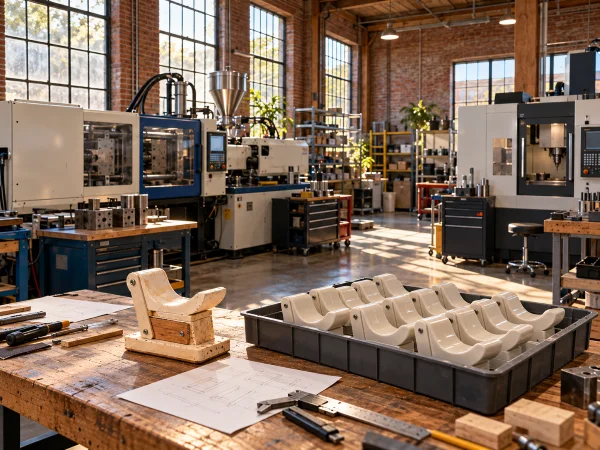
Unshrinkit went domestic. To lower the founders' price per bottle, we sampled packaging types until we settled on the classic container and found a lower-cost chemist to make the formula in the US. Eggmazing went the other way: a factory overseas made both the product and its custom packaging.
If you want to print Made in USA on the box, the FTC says the product must be "all or virtually all" made in the US. Its 2021 labeling rule added civil penalties for getting that wrong. For help finding or improving US production, NIST's Manufacturing Extension Partnership has more than 450 service locations covering all 50 states and Puerto Rico.
Importing adds paperwork that domestic production skips. Since July 8, 2026, CPSC has required importers of regulated consumer products to file compliance certificates electronically. The rule doesn't apply to domestic manufacturers.
Protect your design before the factory sees it
File on the version a factory will make, not the handmade one you started with. Filing a patent before your design is production-ready is one of the more expensive mistakes in this business, because you end up protecting a product you never make.
Watch the clock if you've been selling by hand. Under US patent law, your own public sales and disclosures get a 1-year grace period. File more than 1 year after your first public sale, and the USPTO can count your own sales as prior art against you.
Once the design is close to final, a provisional patent application can buy you time. The USPTO says it gives you 12 months of "Patent Pending" status, the window can't be extended, and the application isn't examined or required to include formal claims.
Every conversation at 52Launch is covered by a mutual NDA from the first form you submit. We don't file patents ourselves. We introduce clients to our 92 partner patent attorneys at more than 50 independent firms.
Handmade to mass production: FAQ
What's the first step from a handmade product to mass production?
Turn your handmade version into a technical package a factory can quote, with specs, 3D files, materials and assembly steps. This is the stage where design for manufacturability catches hand steps a machine can't copy. Our production runs typically start at 1,000 to 2,500 units, so the design has to work at that volume.
How much does it cost to take a handmade product to mass production?
There's no single price, because tooling, order size, freight and duty all move it. A useful starting rule is to triple your parts-list estimate, and multiply it by as much as 10 if the product needs a circuit board, software or licensing. At 52Launch, development programs run $7,500 to about $50,000, and manufacturing and tooling are separate costs.
How many units do you need for mass production?
Most of our production runs start at 1,000 to 2,500 units, because tooling costs the same whether you make 50 units or 5,000. Order what you can sell before your next order lands, even if a bigger order gets a lower unit price. A new product often breaks even at roughly 3,500 to 5,000 units sold.
Can you still call it handmade once a factory makes it?
Not in the same way. Etsy's Creativity Standards treat a seller's own design produced by a third party as "Designed by a seller," and sellers must disclose that a production partner makes it. If you also claim Made in USA, the FTC requires the product to be "all or virtually all" made in the US.
Do I need a patent before I mass produce a product?
No, but file on the production-ready version, and watch the 1-year grace period that starts with your own first public sale. A provisional patent application gives you 12 months of "Patent Pending" status, according to the USPTO. We've found that speed to market, strong branding and customer loyalty can protect a product better than a patent alone.
If you're hand-making every order and ready to take a handmade product to mass production, start with 4 numbers: your real unit cost with your time included, the factory minimum, landed cost and margin. Our team can run them with you. Book a free consultation and we'll cover feasibility, suppliers and a realistic budget range.